
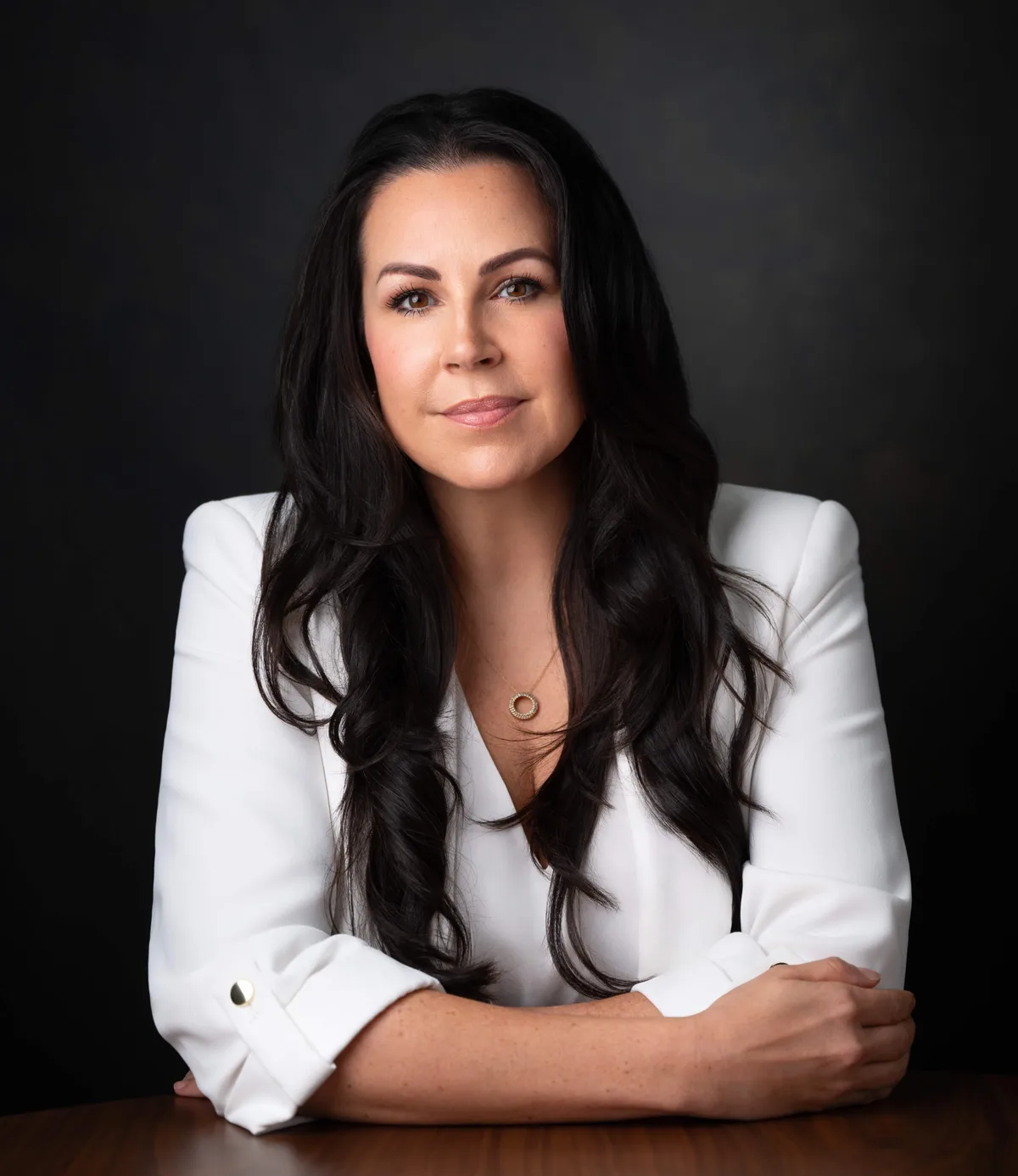
Maria Smith worked as a sales leader for Fortune 500 companies across three different industries, and now she helps leaders, employees, and organizations understand the science and benefits of goal-setting. In this episode of The Leader Assistant Podcast, Maria talks about aligning your goals with your executive’s goals, balancing short-term and long-term goals, and the power of a shared vision between colleagues.
Leadership Quote
“How are we supposed to lead meaningful lives, understand our 'why', and develop the roadmap for our purpose if we don't take the time to go through the most crucial and vital process to achieving success, thus creating the vision for our future?”
Maria Maldonado Smith
About Maria
Maria Maldonado Smith is the Chief Empowerment Officer of MMS Consulting and creator of the Executive Vision Imagery program. After 18 years of award-winning success in the corporate space, working as a sales leader for Fortune 500 companies across three different industries, Maria brings her unparalleled combination of experience to her proprietary process and interactive trainings, helping companies understand the science and benefits of goal-setting for their employees. She equips leaders, employees and organizations to clearly define goals and create a roadmap to achieving them, which allows for better alignment with corporate culture, leading to increased productivity and profitability. Maria has served numerous national and international clients, including US House of Representatives, Disney and Paramount Studios. Growing up as the daughter of an immigrant parent, goal-setting has always been a way of life for Maria. At age 9, she set goals to become the first college graduate in her family and to earn the title of Miss Kentucky. Maria graduated from the University of Kentucky with a degree in Political Science, won the title of Miss Kentucky and competed in Miss America in 2004. Her proprietary process has been an essential practice in achieving these goals and many more throughout her career and personal life.
Episode links
- Maria on LinkedIn
- mmsconsultingfirm.com
- Maria on Instagram
- Maria's YouTube Channel
- Creating the Vision Podcast
Transcript
Read the full transcript5,957 words
Maria · 0:00
Hi, my name is Maria Smith, and this is a quote, and I use this to start all of my workshops to get everyone in the right mindset. And the quote is, How are we supposed to lead meaningful lives, understand our why, and develop the roadmap for our purpose if we don't take the time to go through the most crucial and vital process to achieving success, thus creating the vision for our future?
Speaker 3 · 0:33
The Leader Assistant Podcast exists to encourage and challenge assistants to become confident, game-changing leader assistants.
Jeremy · 0:48
You. Are you tasked with ordering food for your office? Let me tell you about Easy Cater. With over 100,000 restaurants to choose from nationwide and 24-7 customer support, Easy Cater helps assistants like you and me succeed at work and makes our lives easier. Visit easycater.com/leaderassistant to find out more. Hey friends, welcome to The Leader Assistant Podcast. It's your host, Jeremy Burrows, and it's episode 251. Be sure to check out the show notes for this episode at leaderassistant.com/251, leaderassistant.com/251 to check out all the links to my guests and their resources today. And my guest today is Maria Smith. Maria has worked as a sales leader for Fortune 500 companies across multiple industries. And now she helps employees and organizations understand the science and the benefits of goal setting. So I'm really excited to jump into this topic of goal setting today. But first, Maria, welcome to the show and tell us what part of the world you live in.
Maria · 2:05
Thank you, Jeremy. Thank you so much for having me. I'm really excited to be here. And I am coming to you from actually a very rainy South Florida right now. So if you've been watching, yes, it's, yeah. Normally, it's beautiful this time of year, so.
Jeremy · 2:20
Yeah, a little bit of a hurricane rain hitting your state right now. So what about personally, do you have kids, dogs, cats, all the above?
Speaker 4 · 2:34
Also all of the above, yes.
Maria · 2:35
So three kids, 16-year-old, she's almost got her license, which is scary. 14-year-old boy and a seven-year-old boy.
Speaker 3 · 2:45
So girl, boy, boy.
Maria · 2:47
And we have one, they range between elementary, middle and high school. So we're covering all bases these days. It's really hectic, yes. But yeah, my husband and I have been together for almost 24 years and married 18 and a half. And we have just bounced around through relocations for corporate opportunities over those 18 years. So from Lexington, Kentucky originally, then moved to Atlanta, then Nashville, and now we reside in the Fort Lauderdale area of South Florida.
Jeremy · 3:20
And tell us about your first real job. What was your first real job?
Maria · 3:24
Oh, gosh. My first real job was working for the Kentucky Department of Agriculture. I was a political science major, and I really thought that I was going to have a career in government. And in what way, I wasn't really sure, but I thought, well, I'm going to dip my toes in the water. I'd interned in DC. That turned into an opportunity for me to go work for the Kentucky Department of Agriculture. So I did that until I actually was recruited and scooped up into corporate America.
Jeremy · 3:56
So then what was your journey through corporate America like? Were there certain industries that you enjoyed more than others? Were there certain departments or divisions that you enjoyed more than others that you kind of ended up spending most of your time in?
Maria · 4:15
Well, my career really was all sales based. I was pulled out. I was actually selling a salsa brand for the Department of Agriculture because we had this partnership called Kentucky Proud, and it was farm-to-table, which a lot of states now have initiatives like that. And so the idea was you wanted to promote your local farmers and food producers and shop local. And a district sales manager for a pharmaceutical company, a major one, one of the ones that created one of the vaccines, so if that gives you any indication during the pandemic, and she scooped me up. She said, you would be phenomenal in sales. I'm like, what I really just I just really enjoy talking to people. I loved presenting the material. I just thought it was a lot of fun. And so nine interviews later, I landed a job with that company and my career started. I knew very early on that I wanted to work my way up the ladder. I was enamored by the corporate structure. And I think because I had never thought that that would be my path, when I got into it, I saw all these opportunities for leadership development, for sales management, for the opportunities that I could grow and develop myself as a person. And I tried to take every opportunity that I could. I ended up deciding to leave pharma after five years. I was an early hand raiser for a severance package that was being offered because our divisions were being phased out. This was almost 2011 at that point. And it was post-recession economic turn down of end of 2008, 2009. And I made it through another year and a half and said, just the constant turnover change. It was a lot. Yes, yes. And I really wanted, I'm that weirdo that wanted longevity. I wanted to, you know, now they say the average person changes jobs. Well, pre-pandemic, it was five times in their career. And now it's about every two and a half to three years, people are hopping different positions for even making lateral moves for the potential to make more money. So I didn't want that, actually. I wanted what my parents had, which were to be with our companies for, you know, 35 and 41 years respectively, and to really be loyal. And so that was heartbreaking moment, but I spent it working for a former constitutional law professor of mine who actually now sits in Congress and fundraised for him and then pivoted right after that election was over and went back into the corporate space, was recruited to work for the company where I spent almost 11 years at.
Jeremy · 7:07
And so during your time in that, you know, maybe particularly in that company where you're there for almost 11 years and you're, looks like you're a sales management position. Tell us about interacting with executive assistants, administrative assistants on your team or across departments, and what was your experience like working with assistants throughout your career?
Maria · 7:35
There's a lifeline, for one. The dynamic of working for a large, large company is that the infrastructure is huge. So you work in terms of regions and not smaller teams. So you were communicating a lot with people who weren't even in your region or your time zone in order to make certain things happen. And so they were the ones who were turning the wheels and keeping them going. They were the ones aligning everything that we needed and the patience and the understanding and the grace that they gave to us when everything from booking travel to turning your expense report three weeks later or you're just understanding the corporate structure and needing guidance and assistance. I think that's the level of respect that I had for them because of all that they juggled at any one given time was massive. They were also some of the folks that were planning large sales rallies and large events, like large scale events where thousands of people were going to be in attendance. So on top of their daily tasks and items that they needed to accomplish to keep the business flowing, they then had added work of making sure that those events went off without a hitch.
Jeremy · 8:59
Awesome. So tell us about your transition from corporate America to what you're doing now, and tell us a little bit about what you're doing now.
Maria · 9:07
So my transition from corporate to what I'm doing now was not expected, wasn't something that I had planned. Like I said from the beginning, I fully felt that I would spend the rest of my life in corporate. I would climb that ladder all the way to the top or get to a place where I felt really comfortable and just really enjoyed and like dig in and build a career out from that structure. I would say things started to change when we made our transition to the South Florida area. I just noticed a shift in my overall perspective and my overall desire to stay in corporate. And that all culminated in September of 2019, standing on a bridge in Scotland, visiting some friends and realizing I'm feeling this entire mindset shift to leave corporate. My mind, my heart, everything in me is saying this isn't my path anymore. But like any smart person who goal sets, I wasn't just going to rip that band-aid off and decide to leave. I created a plan and MMS Consulting Firm was truly born out of the fact that I love helping people. In my leadership roles, in sales, I loved pouring into people and understanding why they were there, what they wanted out of the job that they did every day. 82% of employees feel motivated when their work is associated with a larger purpose. So knowing that, I wanted them to feel that they were aligned with a larger purpose, not just accomplishing a goal for the company's bottom line, but that they were collectively helping drive our team's initiatives. And so there was nothing, I would say that I knew that that's what I was going to do, because that was something that just ever since I was eight years old, started goal setting, writing three goals down on a piece of paper, putting on a post-it note, it would stay there on my mirror till I was a senior in high school. And those three goals were to become Miss Kentucky, you know, check, graduate college, check. I'm, you know, daughter of an immigrant, first generation college graduate. And then the third one was to become a United States Senator, which no, no.
Jeremy · 11:16
Change your mind on that one, huh?
Maria · 11:17
I did. I did. And I use that as an example. When I give workshops, I say this is this is the beauty of being able to evolve and change and grow and develop, because then you realize, no, no, no, I don't want to do that anymore. But I knew leaving that I would do something in people development. And where I found my conversations leading with my team were them not feeling connected. And I knew that I didn't feel that way either. At times, I felt extremely disconnected. I would show up at work as one person and I would show up in my personal life as another. I would say that even as an assistant, as an executive assistant, because you are working so much for someone else's goals and dreams and their cause, it's very easy to lose our identity in that person's goals and dreams and cause and what they're pushing. So I wanted to build a business and an operation that strived to work to develop the whole person into their most authentic self so that they still got to drive their personal initiatives while supporting the goals of the company or organization or leader or CEO or entrepreneur, whoever they're working for.
Jeremy · 12:27
Nice, nice. So what would your, like, if you meet somebody in, that was a great, great summary and kind of story of how you transitioned into that, but I'm just curious, if you meet somebody in the elevator and they ask, what do you do? What's your like elevator pitch?
Maria · 12:48
Yeah, I tell them that I build better and more cohesive teams and that I align people and build alignment, focus and purpose through the vision imagery process because that's the other aspect of it. And then typically when I mention vision imagery, they're like, and so it opens us up to more conversation.
Jeremy · 13:11
I like that. I like that phrase. It's definitely something that you don't hear much or I don't know if I've ever heard it. But you hear from assistants, I literally got a post yesterday in our community that said, hey, I'm trying to figure out what the heck to put down for my goals for 2024. So assistants are always thinking about like, well, what do I do? How do I quantify these goals? How do I track them? How do I set the, how do I line them with my executive's goals and the company's goals? I do so much. I'm a wild card for my executive. I do so much different, a variety of things. It's hard to just sit down and simply write down even just three goals for the year. So that's why we're talking to you today, Maria, and we want help. We want help. The assistants of the world want help. So tell us a little bit about maybe step one even, just practically speaking, when we get to that blank survey form that says, what are your goals for 2024, Mr. or Mrs. Executive Assistant? What do we put in there? How do we start? Let's start.
Speaker 4 · 14:31
Are you ready to elevate your career in 2024? I'm Maggie Olson, founder of Nova Chief of Staff Certification, the first of its kind online course for aspiring and existing Chiefs of Staff. With curriculum taken directly from on-the-job responsibilities, Nova's self-paced learning modules provides you with hands-on experience so you can feel competent and confident moving into a Chief of Staff style role. It's the perfect next step for executive assistants. Head to leaderassistant.com/nova to learn more, grab the syllabus and enroll today.
Maria · 15:08
I have a five-step process that I take all participants of my workshop through. We start with the word of the year. So if you're someone who's never done that before, I highly encourage you to do that. Everyone has some idea of how they want their year to go, whether that's to be more focused, to be more aligned, to show strength, to have peace in their life, to find purpose. There's a myriad of words. I always tell participants that Merriam-Webster's dictionary is massive and they keep adding words to it. So you have a plethora of opportunities and words to choose from. Find a word that you want to become synonymous with the year that you want to have. I'll use an example. My word of the year for 2023 was capitalize. A lot of people are like, that's interesting. Because I get it, it's love, peace, give, hope. I've had all of those too. I've done this for a really long time, so I'm trying to get even more creative. But I start with that word because the meaning that I wanted, it was as I took my business to the next level, I wanted to capitalize on every relationship that I had, every networking opportunity, every person I met. I wanted to capitalize on that potential for us to connect, collaborate or partner together. And it also had financial implications as well, because I am now an entrepreneur, so I have to support my family. I need to be able to pay bills and do all of the things to keep my business running and keep it profitable. So there was a piece of that that was capitalizing on that too. And then I wanted to just capitalize on little things that might come my way. Capitalize on not wasting time and truly leaning into, how am I spending my time? And so how do I maximize and capitalize on doing it in the best way possible? Then the next step would be after you have come to your word, and I make suggestions too. If you're toying between a saying or a phrase or a couple of words, write them all down. Write them all down. You're going to go through four more steps of the process. The next one is the core values, because you have to truly know who you are. It's really hard for me to show up for someone else if I don't know who I am. I find that in corporate especially, we have a lot of misaligned folks, and it's not their fault. We've never been taught to do this. We've never been taught to align our core values personally with the core values of the organization or the CEO or the person that we're working for because they're doing the work for us. Sure, I'll just attach myself to your core goals or your core values. They could be the same, but you need to know that. You need to really understand that. And then the third is a mission statement. You need to write a mission statement for your life because most organizations have mission statements. We know what Nike's is. It's just do it. I mean, that's more their slogan, their tagline, but that's essentially their mission is they are pushing people to just do it. Just go out and make it happen. So what is your mission statement for life? Mine is a few sentences long, and it incorporates some of the core values that I truly lean into, fostering deep connection, leaning into people and their passion, pouring into myself in that way as well. And then next, we dive into the goals. So once you've completed the first three steps, really the next three or next two really flow out of that, which is defining your core goals. I break them down into three areas only because science, design, even media all tells us that three is really easy to metabolize. Anything above that, our brain starts getting jumbled and overwhelmed. That's why when I meet with clients, either personally or in a workshop setting, and they say, I've got a to-do list a mile long. Exactly, that's your problem. You have a to-do list a mile long. We need to focus on bite-size manageable tasks every day in order to get to those goals. So we pick some overarching goals, a personal goal, a professional goal. The caveat to that is that you want to lean into who you are. I don't really need to know how you can be better for your boss or your manager. Take an executive assistant. What is going to help you be a better version of you as an executive assistant? If you go into it with that mindset of, I'm not doing this for anyone else but me, I need to know what is going to make Maria a better Maria. Because the byproduct of that is that I'm going to be better for whoever it is I work for. Whoever I'm assisting, I'm going to be better for them because I am leaning into myself and I know more about who I am. Then the same goes for the last goal. So personal professional and then the last goal is a do the dang goal. Everyone has one. It's the one thing we put off every year. It's the finally getting healthy. It's the running the marathon. It's the taking the trip. It's writing the book. You name it. For me, it was a podcast. So I did the dang goal this year and I started the podcast. I did it. And next year, I already have that do the dang goal outlined. And then the last thing is our goals are only as good as the systems and processes that we put in place. So if we don't have a strong firm foundation built on positive habits, then our goals are really just these lofty dreams and ideas. So if you're thinking about or you're struggling with how to get started, start with some of the foundation, the basics. How can you design a morning routine to set you up for success? How can you design an evening routine to set you up for success? And then start to layer on the pieces. So think about it like you're building a, I used to say a house, now I feel like a cake. Sounds really good. Just the holidays too. And I've been indulging in all of the good sweets.
Jeremy · 20:46
My boy's been watching Is It Cake?
Maria · 20:49
Yes.
Jeremy · 20:51
Awesome. So then what about, let's say, all right, that was a great process. Thank you for walking through that. What if we do that process and then we go to our executive? And there's maybe it's doesn't seem, at least on the surface, it doesn't seem like they're in alignment with their goals. How do we, yeah, how do we mesh the two and merge the two and really get on the same page when it comes to, you know, a shared vision between our executive and ourselves?
Maria · 21:31
This opens up the opportunity for that assertive communication and that advocacy in the workplace, because anytime we can be an advocate for ourselves and help our leaders understand that we're people too, and we need personal development, we need that self-development as well, just as much as everything we're pushing for them. That becomes that conversation when we can stand firm and what it is we truly want to accomplish in our personal lives. We actually seem, we're more appealing. People respect us more when we can advocate for that to say, this is what I want, and by doing this, I can actually help you accomplish what you want to accomplish. Everyone wants to know what's in it for them, right? They teach us that in sales, it's the with them. So if I can now pitch myself to my leader and say, listen, if I lean into myself and I am the best, fullest, most awesome version, of me when I show up to work every day and I'm on fire because I am pouring into myself and building a person that I'm super proud of and knows what she stands for and knows how she wants to show up in her life. Man, don't you want that person working for you? Because now when I go out and I talk about to you, I think I was listening to Kathy, Kathy Wrong, and she was talking about how she pitches or how she talks to other people. And I thought it was really beautiful how she used the connections, the network, the collaborations to advance herself, how she created her own job description, to be honest. She said, like, I'm just, there's no chief of staff, but I'm going to figure it out. And I thought that was really awesome because when we can do that, we can step outside of our own comfort zone, push beyond the limits of what we think our personal development should be, our goals should look like, and truly step into that fear, but address it in a way that we feel comfortable having those conversations. It's crazy what it can do. But it really starts with that assertive communication and that advocacy, just advocating for yourself, defining what it is that you want, and then putting it back in their court to say, don't you want that person? Don't you want that version of me to show up every day? Because like, she's awesome. She's going to be incredible.
Jeremy · 23:44
Right, right. Well, I love the, you know, the help me help you kind of side of it. It's like, listen, like, I'm not just setting these goals because I think that they're going to make me awesome. And, you know, I'm setting these goals because it's going to set me up to succeed. And me succeeding is you succeeding. And, you know, you reaching your goals is part of, is frankly what my job is. I always like to say, you know, your goals are my goals. And so, yeah, well said. And for those curious, Kathy Wrong was on episode 248. You can check out my conversation with Kathy at leaderassistant.com/248. Awesome. Well, Maria, let's get into a little bit of like, you know, long term and short term goals. And I know a lot of people, they have a lot of short term goals, and they're just like, oh, I'm going to do this this week, I'm going to do this this month. And but they lose sight of the long term goals or oftentimes, they don't even lose sight. They just they just fail on the long term goals because they're just so focused on the here and now and the short term vision. So how do we balance long term and short term long term gets us overwhelmed at times.
Maria · 25:11
And that's why in corporate settings, a lot of times we do plan on a quarterly basis. So we'll take a goal three months, three months, three months. I have private clients. I have workshop participants who will come to me and even say, is it OK for me to do four vision boards? Absolutely, you can. If that's how you there's maybe so there's no wrong way to do a vision board unless you just don't do one and or and then you and then you make one and you it ends up in a drawer somewhere and you've forgotten about it. So you got to put it in front of you every single day. And so that's how every workshop culminates. But we write out the manageable tasks in between. I think that's the biggest disconnect that we have sometimes with our long term goals. We're not breaking down the milestones along the way to get there, because really that milestone that becomes a short term goal of that of that longer term goal. Here's an example of one that everyone is palatable and everyone can understand. But running a marathon. I've never run a marathon.
Jeremy · 26:05
Me neither. I don't know if I ever will.
Maria · 26:07
But if I were, I know I'm not going to show up and run five miles on the first day. I'm going to run one mile and I'm going to chart that and I'm going to track my progress and I'm going to see, okay, great, I ran this one mile and it took me 12 minutes. And the next time I run the mile, I run it in 11 minutes and I did a mile and a quarter. And I'm slowly progressing towards that 92 percent. We're about to head into a new year, right? So 92 percent of people fail their new year's resolutions. 62 percent give up in the first month. The number one cited reason is overwhelmed because they throw, right? We do the smorgasbord. We throw all of our goals on one big platter and we're like, yeah, I'm going to accomplish this. I'm going to do that. I'm going to do all of these things, not realizing that most of them are long-term goals. They're goals that are going to take you longer than 30, 60, 90 days, even 120. So I'm a huge proponent of short-term goals. I'm a huge proponent of long-term goals. At the foundation of all of them are, are we building habits? Are we building habits that are setting us up for success to accomplish the goal that just needs to be done in one week or the goal that also is going to take us through the entire year of 2024? Well, we can start to outline it in that way and look at it. It's a process that I have with within my workshop, I talk about it, goal refinement, and it's just refining the goal. I'll give you another example. Oftentimes at the beginning of the year, and since we're headed into a new year, this is just a great one. I want to get healthy. The problem is, is getting healthy is really broad and it also means something different to every person. Getting healthy to one person could mean life or death. It could mean if I don't get my cholesterol down, I could have to go on a severe, significant medication. I could potentially have to have surgery. All of these things could happen if I don't get healthy. Another person could say, well, I want to get healthy because I want to go from a size, you know, 10 to a size 8 to fit back in those fun genes, or I want to increase my cardiovascular health so that I am in better shape to support my family. It's going to mean something different for all of us. And so defining and understanding that is key. Once you can understand exactly why it is you want to get healthy, then it becomes breaking that goal down and saying, okay, what do I need to do? If I'm someone who just wants to get healthy, I'll use myself. I need to drink 64 to whatever, 75 ounces of water a day, right? I need to have 20, 30 grams of protein per meal. So those are the things, those are the actionable and manageable tasks on a daily basis that I can control and track. Then I get through one whole week and now I've realized, oh, I've hit all of those target goals. So now I'm on track to accomplishing this. I can give myself a deadline or an end date, but health is something that's pretty much that moving target, right? We're always going to be chasing that. So what my goal is, is to instill habits that can carry me through. I can go on vacations to have a fun time. I come back home, I get right back into those habits because that's truly what's been setting me up for success. So the long-term short-haul, feeling aligned or misaligned, it's typically because we haven't developed enough of a plan around how we're going to get there, which typically means we haven't built a strong foundation of positive habits to reinforce what it is we're trying to achieve. So the first time we have a hiccup, we give up.
Jeremy · 29:32
Yeah, that makes sense. Well, this is all great stuff. I just wanted to wrap up with maybe one, give you a chance to make your own billboard or 30-second Super Bowl commercial. What would be kind of the one thing that you, maybe it's a practical tip, maybe it's a scientific fact or whatever related to goal setting, that you want the assistance of the world to remember? Remember from our conversation.
Maria · 30:11
So I want to change the world one vision board at a time. And that starts with writing down our goals. Less than 3% of Americans write their goals down, which is astounding. Globally, that number is still less than 20%. So if you, my pitch, my ask is, if you do anything for yourself, take the time to write your goals down. You'll be so glad that you did. It will give you something on paper to attach an alignment, a focus, a drive. It just keeps you engaged in who you are and what you are working to achieve. We get one life and that's it. So I don't want to get, and I hope I don't think anyone else does, they don't want to get to their deathbed and think, I wish I would have done this, or I wish I would have written that down so that I could focus on it every single day and make it happen. Because I definitely don't want that to be the end of my life. I want to lie in my deathbed like I'm ready to go. Take me, I've done everything I need to do. I'm good.
Jeremy · 31:18
Awesome. Well, that's a great tip. I actually, you know, it reminded me when I published my book a few years ago, I had my boys help me draw up a chart. And basically, I was keeping track of my first 100 book sales. And so I would, they would, they would help me, they'd fill in, every time I'd sell a book, they'd fill it in. So it was on the fridge and it, you know, it had the goal real big, you know, 100 on this end. And it was like a chart all the way across. And then there was a part, we had like prizes when I got every 10, every 10 I would sell. He's like, oh, we get a piece of candy or, oh, we get to watch a movie or, you know, do something that we would do as a family. And it was so powerful for us to visually walk by that every day and see the progress and for them to see that, oh, you know, all this work that dad's doing is actually going somewhere. So that was really powerful. And then there was actually a plugin that I had for a while where when I would open up a new tab in my browser, it would show me how many subscribers I had on my email list. And then it would show me the goal, which my goal was at the time was 10,000 email subscribers. And so like it would show how far I was from that goal. So every time I'd open a new tab to go to a different website, it would plop right in front of me and say, hey, this is your goal. This is where you're at. So yeah, I've personally just wanted to share that I've personally seen it firsthand, how having it written down, having it in your face on a regular basis really, really drives you to work toward that goal. So, great tip.
Maria · 32:55
Yes, yeah, there's science behind it. And I appreciate that you shared that you were celebrating your wins along the way, because that is so important and we don't do that enough. We think we've got to get to the end of that big goal, and then we can celebrate. But really, we should be celebrating along the way. So I love that you were creating those little moments. That's awesome.
Jeremy · 33:14
Awesome. Well, Maria, thank you again for being on the show. What's the best place for people to reach out? And I'll put all your other links and social media links and everything in the show notes at leaderassistant.com/251. But where's one place that you want people listening to to go right now?
Maria · 33:31
My website is mmsconsultingfirm.com. That's actually where if you're interested in having your team do a workshop, I do them virtually, I do them in person, and they're really fun. They're a lot of fun. It's a great team building activity to get to know yourself, get to know your team and get to to to align with the initiatives they're working on in their personal and professional life. So mmsconsultingfirm.com, you can also follow me. I'm most active on Instagram and LinkedIn, those the two channels. So I'm not a TikToker. Maybe one day. My 16-year-old is trying to make me one.
Jeremy · 34:04
But there you go. Write that down on your goal to be a TikToker someday.
Maria · 34:07
Yes, that's going on the board.
Jeremy · 34:08
Awesome. Well, thanks again, Maria. And those of you listening that want to check out Maria's website and connect with her on LinkedIn and other social media sites, go to leaderassistant.com/251. Thank you, Maria. Appreciate it.
Speaker 3 · 34:35
Please review on Apple Podcasts.