
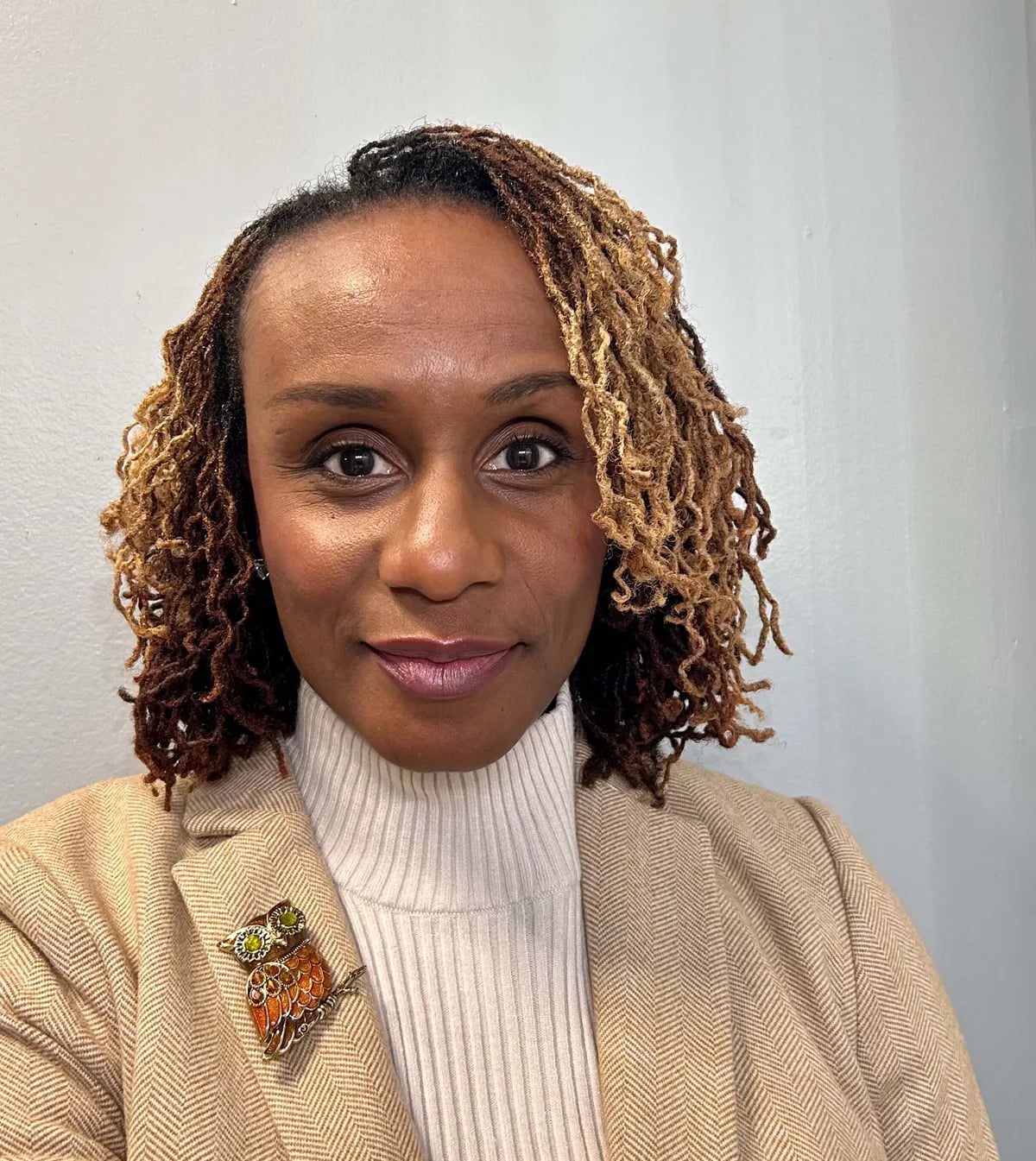
Izzy Gousby is the manager of an executive support team, has over 25 years of experience in the administrative field, and is also a Veteran of the United States Army Reserves. In this episode of The Leader Assistant Podcast, Izzy discusses the power of networking, what it means to own your work, managing a team of executive assistants, and cultivating confidence.
Leadership Quote
“The key to successful leadership is influence, not authority.”
Kenneth H. Blanchard
About Izzy
Isadora Gousby, also known as Izzy, is the manager for the Boston Executive Support Team at Analysis Group. There, she mentors and trains over 12 executive and senior administrative assistants. Prior to Analysis Group, she worked as an executive assistant to the CEO, CFO, and CMO at a biotechnology firm in Boston. Izzy has over 25 years of experience in the administrative field and is also a Veteran of the United States Army Reserves.
Episode links
Transcript
Read the full transcript3,992 words
Izzy · 0:00
Hi, everybody. My name is Izzy Gousby, and today's leadership quote comes from Kenneth H. Blanchard, and it reads, The key to successful leadership is influence, not authority.
Speaker 3 · 0:19
The Leader Assistant Podcast exists to encourage and challenge assistants to become confident, game-changing leader assistants.
Jeremy · 0:34
Are you tasked with ordering food for your office? Let me tell you about Izzy Cater. With over 100,000 restaurants to choose from nationwide and 24-7 customer support, Izzy Cater helps assistants like you and me succeed at work and makes our lives easier. Visit izzycater.com/leaderassistant to find out more. Hey friends, welcome to The Leader Assistant Podcast. It's your host Jeremy Burrows and welcome to Episode 249. You can check out the show notes at leaderassistant.com/249 to get all the links and the bio and all the fun stuff of my special guest today, which is Izzy Gousby. Izzy is the manager of an executive support team. She has over 25 years of experience in the administrative field and she's also a veteran of the United States Army Reserves. Izzy, welcome to the show.
Izzy · 1:32
Thank you so much, Jeremy.
Jeremy · 1:35
What part of the world are you in?
Izzy · 1:37
I am in Massachusetts.
Jeremy · 1:39
Massachusetts. Awesome. Are you from that area?
Izzy · 1:43
Yes, I was originally born in Brooklyn, New York, but I grew up in Massachusetts, so I claim it as my home.
Jeremy · 1:50
Nice, nice. Tell us a little bit about maybe one or two things about you personally. Do you have dogs, hobbies, kids, all of the above?
Izzy · 2:00
Oh, no. Who has time for that when I have a husband and a child? Well, actually, she just turned 21, so she's no longer a child, but yes. So it's just me, my hubby, and my kid.
Jeremy · 2:13
Nice. Awesome. And then let's talk a little bit about your career. And first of all, thank you for your service with the United States Army Reserves. And you can start before that, during that, after that. You know, I'd be curious to hear how you got into the world of administrative assisting. Was it during the Army Reserve? Was it after? Was it before? Just give us a little bit of your professional background.
Izzy · 2:42
Actually, it started when I was in high school. Yes. So I went to a really great high school in Cambridge, Massachusetts. And the best thing about this high school was it provided opportunities for juniors and seniors to work in a lot of great organizations. So I had my pick of the litter and I chose this one organization to work at part time. And it was then called BBN Technologies, but then later on became Raytheon Technologies. And I would go there part time after class for about three hours. And during the summertime, I would work full time. I pretty much worked up until I graduated and they offered me a full time position and kind of told me I can go to college part time. But I said, I'm sorry, but I have to pass. I want to go to school. But I loved it because it was my first time really understanding what it meant to be an administrative assistant and supporting someone. I was in the thick of it. It was a great organization. I didn't directly support someone, but I assisted someone who did. And I learned a lot from her. And the first thing she told me was to pay close attention to detail and to always be ready to help someone if they ask for help. And that always stuck with me even until now. So it kind of started then. And from there, I realized I actually love this. And I'm kind of good at it. You know, imagine someone who really depends on you. And all you have to do is just kind of like follow them around and tell them what to do and where to go and how to do it. So I felt like it was sort of like my calling.
Jeremy · 4:43
That's awesome. So how did you then go from that and realizing that you enjoyed it and all that to maybe the next stage of your career?
Izzy · 4:55
Well, I realized that the best thing about what I did in high school was I was exposed to a lot of different departments and a lot of different work. So it was never the same thing that I was doing. And I thought, okay, I'm not sure what I really want to do. I know I went to school for business management, but what do I do with that? And I thought, okay, well, let me find an administrative position. And I think that's when I started working at Blue Cross Blue Shield Foundation. And I actually started there after I came back from, I believe it was my first, yeah, boot camp. It was boot camp. So I went to boot camp and then I went to advanced training and I came back and I remember a friend that I went to college with and I remember I was looking for a job and she told me about Blue Cross Blue Shield and I've actually received this wonderful accommodation from the CEO at the time who was working there. And I said, well, are they hiring? Are they hiring? I didn't care what position it was. I just wanted to work there. And she said, yes, there's a project coordinator position. Well, actually it was administrative assistant, but it became a project coordinator and I'll tell you why. So it was an admin role and I said, I want to interview for it. So she had connections. So I actually got in through a connection, networking. And I went on my first interview and I mentioned to them that, oh yes, I was in the military and I received this wonderful accommodation letter from you and they remembered it and they just automatically hired me and I started my way. And it was probably one of the best jobs I had being a full-time administrative assistant. It was so great that they actually promoted me to a project coordinator because I was actually taking on more than just your traditional assistant work. So that led me to want to explore more. There was always more. I always wanted more and I didn't know what it looked like, but I knew that coordinator wasn't enough. So I wanted to see what the admin world had in store for me. So I remember working at Blue Cross Blue Shield and I had another connection, which was at an MIT. And she called me and she said that she was leaving her current position as an admin assistant too. And I would be a great fit. It was a position at OpenCourseWare, which is now, which was MITx, which turned into edX, which is, I don't know what it is now, but I said, okay, wonderful, let me apply. Sure enough, I, during lunch break, the recruiter calls me. She asked me, why do I want to work there? I was taken aback. I said, I heard nothing but great things about the organization. I would love to work there. Got an interview and I was hired. And yes, a lot of my positions you'll see has been either through a lot of networking or just knowing someone that knows someone who, or just really putting myself out there and having them know the work or the organization in which I worked at. So they have their own direct network. So I worked at MIT for probably the first year. It was understood that it was a temporary position, but then that soon ended. And because I did such a great job, I ended up taking a full-time position at MIT, which really, I think, led the way to me wanting to further my administrative career. So from there, I said, I want to do something different. I want to see what else I can do. I want to see what skill sets I have. So I didn't want to do administrative assistant. And that's when I started my journey on to doing something else, which was the Department of Elementary and Secondary Education. There, it was different. It was more project-based work, which I thought I was really good at. It wasn't supporting anyone. It was really just working on projects, working directly on kind of like Title IIA grants, you know, and assisting in other areas, which still had an administrative component to it, but it wasn't necessarily supporting an executive per se. And Jeremy, I was bored. I was bored out of my mind. And the only thing I kept thinking of was, I wish I was back in the assistant role because I miss it. I really miss it. And I said, is there a role in which I can be an assistant, but still take on more work? So I had another friend back at MIT who worked in development, and there was a position that was fairly new. It was a hybrid position. And that was the senior development associate position or assistant position. And it was a cross between a development assistant and a development associate. So I was kind of the guinea pig for that. They'd never tested it out. They usually have two supporting one director, but I was one supporting two directors. So you can only imagine how difficult it was. It was my first time managing two people. And if you weren't bored anymore, I don't I didn't sleep, Jeremy. That job was nonstop. It was nonstop. They traveled all the time. I was doing a lot of research and it was very demanding. And I had two different personalities I had to deal with. One that was very relaxed, that I had to really nudge, and another one who was going 100 miles per hour. And I just couldn't keep up with. So it was really the first time that I had to experience what it meant to manage up and to also prioritize my time and to really know how to ask for help. Because I always had that mentality, whereas I don't need help, I can handle it. And if I ask for help, I'll look weak. I didn't ask for help until there were a lot of issues in my role. And I was struggling and I was overworked and I didn't like what I was doing anymore. And I wanted a way out. So I found a way out. I think after working 70 hours per week, I deserved it. So I did end up working at Pine Street Inn. And again, that was actual connection because I've always kind of worked at Pine Street Inn part-time on weekends, so it didn't interfere during my full-time position. But working at Pine Street Inn really was a different role. This is when I first started learning how to be a manager. And there was no more administrative work. There was no more coordinated position, but it was now managing two different locations, 24 hours, 15 people under me. Yes. And it's dealing with the homeless population, not just homeless, but also the homeless population with mental health problems. So there was always activity. There was always something happening. But I learned to use my admin skillsets to kind of manage my team, to be more organized, to think critically, to be more agile. And I felt like, okay, I'm actually good at this. I don't know why, but I feel like I'm good at this. Maybe because I'm used to managing up. So all I need to do was kind of like manage down. But I'm actually good at this. And yeah, that's really the start of my manager role.
Jeremy · 14:06
So, you know, looking at your LinkedIn, it looks like you went back to Senior Executive Assistant to a CEO and then an Executive Assistant role. And then now your current role and your title is Manager of Administration and Operations, is that right?
Izzy · 14:24
So, yes, Manager of the Administrative Team in the Office of Administration and Operation. So I have about right now, I see 13 direct reports because I do have a temp. So I have 10 executive assistants and three senior administrative assistants under me in the Boston office.
Jeremy · 14:47
So is it, do they, so they all report to you and then, or do they all have dotted line to you and dotted line to their executive? How does that work?
Izzy · 14:57
So I am their advisor. So they, I do meet with them. I like to think of my role more as mentor, trainer and advisor. I do handle performance reviews. I do have meet with them on a weekly basis, but they do support the managing partners or the vice presidents. And I also meet with the managing partners and vice presidents to kind of discuss how things are going, if there's any course corrections that needs to happen, or to also nudge them if they're not utilizing their assistant in the right manner.
Jeremy · 15:36
So what would you say is your number one tip for those who currently manage a team of assistants or maybe they aspire to manage assistants down the road? What's like your top tip for managing a team of executive assistants?
Speaker 2 · 15:57
Are you ready to elevate your career in 2024? I'm Maggie Olson, founder of Nova Chief of Staff Certification, the first of its kind online course for aspiring and existing Chiefs of Staff. With curriculum taken directly from on-the-job responsibilities, Nova's self-paced learning modules provides you with hands-on experience so you can feel competent and confident moving into a Chief of Staff style role. It's the perfect next step for executive assistants. Head to leaderassistant.com/nova to learn more, grab the syllabus and enroll today.
Izzy · 16:34
Definitely be flexible and open to receiving feedback and to giving feedback. A lot of times I realize that a lot of managers, they're sort of afraid to provide certain feedback to their team or to be really open because it's that weird thing. It's like, you don't want to be too friendly, but you love your team and you want to develop a relationship, but you still have to manage them. So it's like you have to be flexible, you have to be open, but you also have to learn how to provide feedback and also receive feedback. So just be open to being a friend, but also someone who has to be firm.
Jeremy · 17:25
Yeah. Do you have any system or even like software or process that you've found that's helpful when giving and receiving feedback?
Izzy · 17:41
I think the good old-fashioned way is just meeting face-to-face. One thing I've learned, Jeremy, is that these are trying times, and there are a lot of people who are going through some personal things, and a lot of it can actually present itself in the workplace. And when it does, I like to meet with my staff face-to-face and have conversations and feedback because then I can provide that softer side, that empathy, but also be able to let them know I'm here to support you. We're going to be okay. We're going to make it happen. And that's the only way I like it. But if there's training that needs to happen, we will utilize whatever software training tools needed to make sure that they get back on track.
Jeremy · 18:35
Awesome. Well, what about, let's talk a little bit about confidence, and just how have you, throughout your career, cultivated your own confidence? And then maybe as a second part to the question, how have you helped your team be confident?
Izzy · 18:54
I think my confidence started when I made mistakes, and I realized that I can no longer afford to make that mistake, and I cannot internalize it. Once I internalize something, that's when there's a downward spiral. But if I have confidence enough to know that, okay, I'm human, I made a mistake, but I'm not going to do it again, and I'm going to figure out what to do better, I'm going to prove myself because I belong here, then I'm really giving myself empowerment to know that I can actually do the job, and I just learned to walk in a room knowing that I'm going to watch everything, I'm going to dot every I and cross every T, I'm going to listen intently, I'm going to do what you ask me to do, and I'm going to go above what you ask me to do, because I'm confident enough that I'm going to make sure I double, triple, quadruple check everything because it's been ingrained in me. And what I do with my team is we go over a lot of core competencies. I always come across EAs who've been in the field for a long time, and they think they know everything, and they don't realize times have changed, you know? And you can become so complacent that you end up making the smallest mistakes, or you end up doing things that take you four times longer than what it should take you. So I always do monthly, maybe every other month, a core competency refresher, whether it's diplomacy, active listening skills, managing up, things of that nature, just to show them that here's what not to do, here's what you can do, and here are things to think about when you're supporting the people that you support. So and at least it doesn't leave room for any mistakes because they have those tools and they can go back to it. And it actually helps build their confidence because a lot of them do put it as their screen savers every now and then.
Jeremy · 21:08
Nice. And then what I do typically when I have guests on the show is I like to pull from you or other guests, ideas on what they'd like to talk about. And one thing you mentioned was what it means to own your work. Can you talk about what you mean by own your work? And just, yeah, I'm all ears. What do you want to chat about?
Izzy · 21:37
So again, I'm basing this off of my team and what I've learned because it's an eye opener for me as well. When you talk about owning your work, you often think of, OK, just take the work and just do it. But I feel like there's a lot more involved when it comes to owning the work. It's kind of going back to remembering why you're doing this. You know, why are you an assistant? Why are you doing this work in this organization? And what contributions do you feel like you're making to the organization? And once you do that, then I feel like you'll become more proactive and you'll be able to manage out more. And you'll also be less afraid of the task at hand. I find that a lot of assistants and just in general, they take on a task sometimes. And if it's challenging, then it's like they forget the basics. They forget the basics and they're nervous. And I keep telling them, you have the power. You're in this role. You do not become an executive assistant overnight. It means that you've had some form of administrative, you know, experience, exposure, and you are more than capable of doing the work. And you need to own it. Owning it means that it is literally part of your everyday nature, your everyday walk. I met with one of my team members today and I gave her this analogy. I said, you know how you have your children and you have your home. In a sense, you own those. Your children are your responsibility, your home is your responsibility. The things that you have to do in support of both comes natural to you. Your role should come natural to you from this point on. And when it becomes natural to you, then you'll know how to do the things that you need to do in terms of supporting your partners or your executive. And you'll know what tools and resources you need to get the work done. And if you don't know, then you'll know who to connect yourself with or align yourself with in order to do the work. So these are natural instincts that as executive assistants, especially at that level or any admin that we should have. And for my new admins, it's just a matter of talking to other assistants. There's a network out there. So own what you're supposed to do. You're the expert in the subject matter. Own it.
Jeremy · 24:34
Yes, awesome. Well, Izzy, just really appreciate chatting with you today. Just to kind of wrap things up with a couple of questions. The first one is what is something that it could be personal, professional, could be macro with the world. It could be micro with your hubby and your kid. What's one thing that concerns you?
Izzy · 25:08
I think realizing that I'm not really, I guess I think it's one thing that I'm not really inspiring my team or even people around me. I take that personal because I am everyone's biggest cheerleader. My husband asked them, even my daughter, and she gets sick of me when I do this. I am everyone's cheerleader because I really want to see one win. But the moment that stops, then that scares me because it's like, what's next? What am I? Who am I? What is my purpose? What can I do now? You know, if I can't inspire you, if I can't encourage you or even try to empower you, what do I do?
Jeremy · 26:01
I appreciate the honesty. Okay, so we'll end on a little bit of a lighter note. So what's maybe one thing that you look forward to? Personally, professional vacation, you say?
Izzy · 26:17
A good vacation, Jeremy.
Jeremy · 26:20
There you go, there you go. Where do you want to go? What does a good vacation look like for you?
Izzy · 26:25
I've been saying I want to go to New Zealand for so long.
Jeremy · 26:28
Yes.
Izzy · 26:29
I just want to go, but my husband's schedule is all over the place.
Jeremy · 26:35
New Zealand's definitely on my bucket list. Are you a planner or are you like, let's just go and chill?
Izzy · 26:41
Go and chill. Yeah. If I plan it, it's like work.
Jeremy · 26:46
Right, right. Yep. I like to have the bare bones of like, hey, this day we'll do some tour stuff and this day we'll chill, but I don't like to be like, oh, we're going to go to this, we're going to do this, this and yeah, same deal.
Izzy · 27:01
Especially like hour by hour. I never understood people who do that.
Jeremy · 27:06
They must not be assistants, right? All right. Well, Izzy, thank you so much for chatting. And is there a good place for people to connect and reach out and say hi, if they would like to connect with you?
Izzy · 27:20
Absolutely. LinkedIn, please reach out to me. And I have no problems connecting with you and even give you my email, even my phone number if you want to chat. I love chatting with people.
Jeremy · 27:34
Awesome. Well, that's perfect. I'll put your LinkedIn in the show notes at leaderassistant.com/249. Again, that's leaderassistant.com/249. Reach out to Izzy and say hi and thank her for her awesome time on the podcast. And yeah, Izzy, best of luck to you. It's been great chatting with you. And I hope we can stay in touch and maybe connect in Massachusetts someday.
Izzy · 28:02
Oh, I'm going to be reaching out to you for training opportunities.
Jeremy · 28:09
Sounds good. Thanks again for being on the show. All right.
Izzy · 28:12
Thank you. Take care.
Speaker 2 · 28:13
Thank you.
Speaker 3 · 28:23
Please review on Apple Podcasts. goburrows.com.