
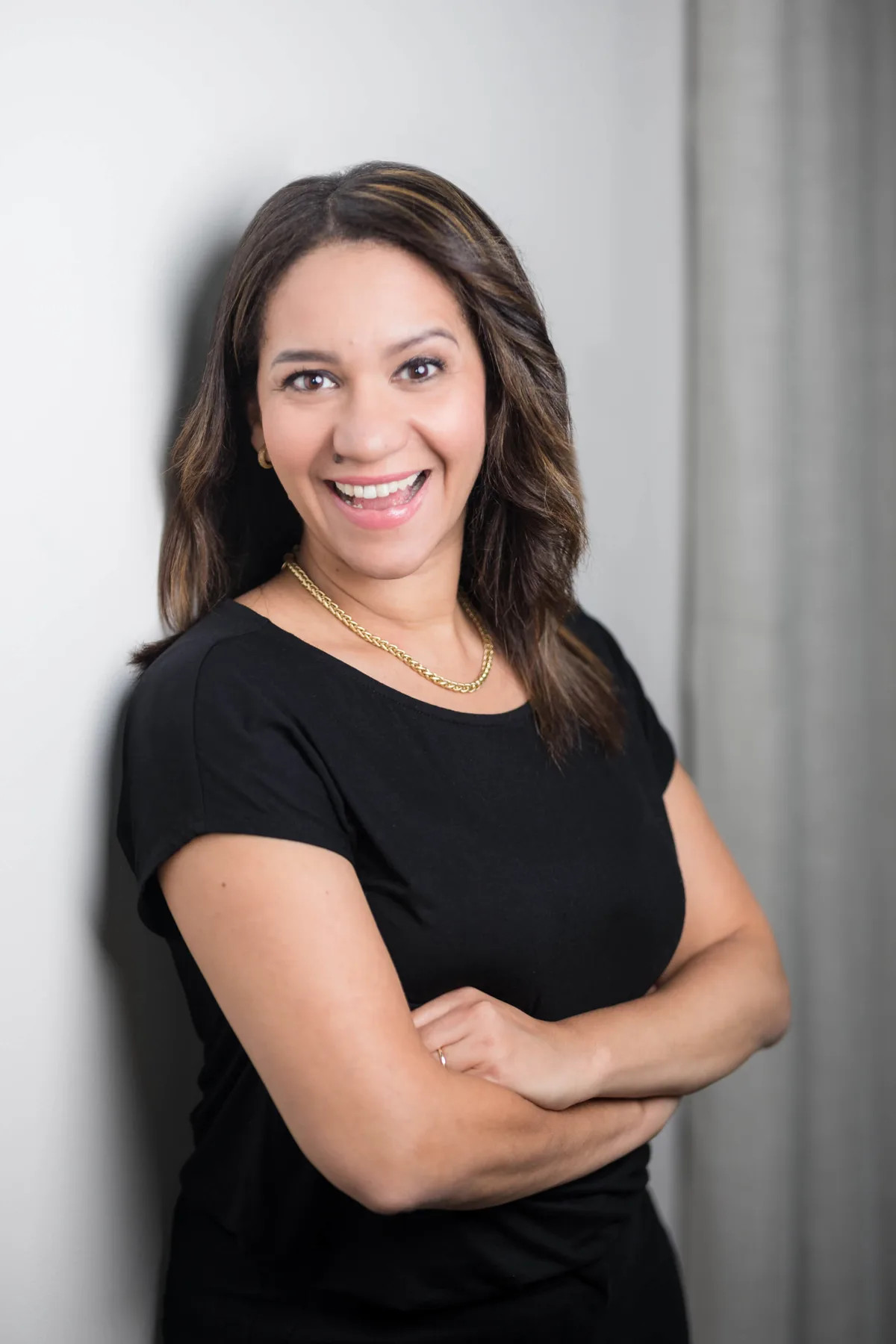
Leslie Martinez is a longtime executive assistant in the financial services industry, and is passionate about helping EAs. In this episode, Leslie talks about how to land your ideal EA role, facing your fear, telling your story, and tips on public speaking.
Leadership Quote
“A leader sees greatness in other people. He nor she can be much of a leader if all she sees is herself.”
Maya Angelou
About Leslie
Leslie Martinez is a Senior Executive Assistant with over 15 years of experience supporting executives in the Financial Services Industry. Leslie has worked at Merrill Lynch, Morgan Stanley Barclays, and most recently at an asset management firm with 10bn AuM. Leslie is also the creator of Intentions Manifested, a coaching program that takes an energetic and spiritual approach to help members clarify and achieve life goals that will bring delight and joy. Leslie is a mom living in NYC, who enjoys her full-time job while embracing her passions of writing and coaching others to achieve their goals, in her free time. Her core values are family, education, travel, and freedom.
Episode links
Transcript
Read the full transcript6,145 words
Leslie · 0:00
Hi, everyone. I'm Leslie Martinez. I'm an Executive Assistant at a NASA management firm supporting a partner. And today's leadership quote comes from Maya Angelou, and it is, a leader sees greatness in other people. He or she can be much a leader if all she sees is herself.
Speaker 3 · 0:24
The Leader Assistant Podcast exists to encourage and challenge assistants to become confident, game-changing leader assistants.
Jeremy · 0:39
Are you tasked with ordering food for your office? Let me tell you about Easy Cater. With over 100,000 restaurants to choose from nationwide and 24-7 customer support, Easy Cater helps assistants like you and me succeed at work and makes our lives easier. Visit easycater.com/leaderassistant to find out more. Hey friends, welcome to The Leader Assistant Podcast. It's episode 250. You can check out the show notes for this episode at leaderassistant.com/twofivezero. I feel like I should have a celebratory announcement or sound bite or something to celebrate episode 250. That's a big number. For some reason, while I'm saying that number, I'm thinking, wow, I can't believe I've done that many episodes, but I don't have a special sound bite. All I want to say is thank you for listening. I'm excited to be here and excited to have you listen to episode 250. So today I am speaking with Leslie Martinez. Leslie is an executive assistant with years and years of experience. And Leslie, welcome to the show and congratulations for being episode 250.
Leslie · 1:57
Thank you so much, Jeremy. I really appreciate the invitation and excited to add my voice as well to all the amazing assistance that you've had on the podcast talking about this role.
Jeremy · 2:07
Awesome, awesome. So tell us what city you're in and then what's your favorite thing to do outside of work right now?
Leslie · 2:16
So I'm in New York City. I'm a mom and I guess one of my favorite things to do is like listen to podcasts and read. But also aside from that, I'm a mom. So there's a lot of play dates, connecting with other moms, you know, things like that, going to the park. I do enjoy spending time with my my son. So that's what I do.
Jeremy · 2:36
Awesome. Awesome. How old's your son?
Leslie · 2:38
He's turning seven in January. So pretty small.
Jeremy · 2:41
Nice. Nice. Great. I have a 10 year old and soon to be 12 year old. So both boys. So fun.
Leslie · 2:50
Boys. They're special case.
Jeremy · 2:52
I know, right? Well, tell us a little bit about your career. And, you know, you've got over 15 years of experience supporting executives. So what brought you into the world of assisting?
Leslie · 3:12
Great question. Definitely not something I planned for. In fact, I remember being in a business class where they talked about the executive assistant role where it was like high visibility and some sort of impact, but there was no mobility. And that scared me. I was like, oh, this is no fun because I was sort of already kind of, you know, a coordinator in PR at the time. And a friend had just introduced me to the EA role at the time it was at Merrill Lynch. And that's where I started my career. I started as a floater, a floating temp. And what that meant is that I got to go around the entire organization covering for women that were either on maternity leave or vacation. So I really got early on to experience early on what it was like to support an executive and to see how other really experienced executive assistants did it. You know, they will have a sheet for us with training materials of like what needed to happen, all their personal information. And that was quite an experience. I feel like it was such a good entry point into this world because I got to see the different departments and that's sort of like how I ended up picking and like a department that I wanted to work for permanently and I ended up in M&A at Merrill Lynch.
Jeremy · 4:34
Oh, nice. So did you enjoy or when did you realize that the assistant role was something that maybe you wanted to stick with or something that could be truly a career?
Leslie · 4:50
It took me a while, to be honest. I started when I was in my early 20s, I think it was 24, I did the math recently. So quite early, I was still going through college while I did it and I was still pursuing a degree, trying to think about what I wanted to do and I simply could not figure it out. I realized now wanting to branch out into coaching that I've always been sort of like a teacher and someone who enjoy mentoring others. So I really just couldn't really find something at the time that I was like, I want to stick to this. So this was great because I was earning an income, able to afford rent in New York City, take care of myself, be exposed to incredible people, very smart people, obviously working in the financial services industry. They come from like the top Ivy League schools. It was great exposure. So it took me a while though. At first, it was just a job, a job that I did well, because no matter where I go, I feel like I always take pride in what I do. And it's been so different everywhere I've been, that I think that kept me interested and it kept me going. And I would say it has been, I think, I would say most recently that I started to connect with this role in a different way. Not that I didn't take it seriously, I always did, but within the role, I always felt like there was something missing. And I would add on additional responsibilities to my role just to kind of fill that gap. You know, what I mean by that is, you know, in the role before the one that I'm in now, I currently support a partner at an asset management firm that has about 10 billion assets on their management, just to give you a rough idea of the size of the company. It's about 120 employees. Prior to that, I was at Barclays, which is a huge organization. It's very compartmentalized, and the role itself was not as robust. But I was supporting a lot of people in that particular role, and that worked for me because I was starting a family, so this was perfect. It was like the perfect work-life balance for me. It was ideal for me for what I needed. But after I reached the stage as a mom, I was like, well, I find myself creating other things outside of this role and getting involved with the diversity networks. Or one of the things that I did was start my own public speaking group. I did it without first running it through the firm. I basically just posted on our internal board and I said, hey, I'm doing this pilot program to test it out, so that then we could pitch it to see if this could be a larger thing for the organization. I had directors sign up and give incredible feedback about how they used that program to create a speech for the board that they were in, the nonprofit board that they were in. I've always taken my role extremely seriously. I enjoy coming to work. I've always enjoyed the role, but I think it's now, I think in this last role that I started to realize, I really do, this is it. This role picked me in a way, and I actually have all the traits for this role. At least in my experience and the people that I've supported, I feel like my personality is a good fit for this type of role. I hope that answers your question.
Jeremy · 8:17
Oh, yeah, that's great. So what would be maybe your top two personality traits or characteristics of what someone in this role or someone that wants to be in this role needs to embody?
Leslie · 8:33
That's a great question. I think it's very personal to the person looking into this role because as I mentioned, there's so much variety in the EA role that you could have pretty much any trait and find the place where you would fit and belong. For me, I care. That's one of my personality traits. I care. I am a feelings person. I am very logical and I could do things well and I could do both left and right brain things. But at the end of the day, I do like taking care of people. And that's why I think I do really well supporting high-level executives because I actually am very mindful of what's going on in their entire life, not just at work. And I think that's highly valuable when someone could come in and support you in your business, but also be mindful of, hey, this is what's happening in this person's family life. How can I make sure that I am not overbooking him when he needs to be attending a school event or something like that? How can I be discreet about those things? I think that that's important and that has helped me a lot. But I want to say to those listening that don't focus on what I'm good at or what my traits are. Think about what are your values and what are the things that you're good at. And I guarantee you that you could find a seat as an EA supporting someone that would really benefit from those things that you bring to the table. And I don't mean to be general, but you have some people that are very logical, very methodological, everything is a method or very left brain. And they do really well with operations or COOs, people that need a little bit more structure.
Jeremy · 10:14
I love how it's like, you could say, okay, there's general characteristics that assistant should have or whatever, but I love how you are highlighting that everyone's unique and that even in your uniqueness, you can match up with an executive or a team that needs those skills, those unique traits that you have. And then someone else, another assistant in another world, could have totally different skills and totally different personality and traits, but match up well with their team.
Leslie · 10:55
Absolutely. I 100% agree with that and I have seen that happen. I stand by that and I don't think there's just a set of skills that you need to... Skills, yes, but personality traits, I think you really could come as you are and find the right spot for you.
Jeremy · 11:13
Yeah.
Leslie · 11:14
Nice.
Jeremy · 11:14
Nice. So, okay, I have to come back to this because you mentioned the public speaking training or workshop or whatever that you did for your internal team. What got you into that and then what's your number one tip for public speaking?
Leslie · 11:33
I love that question. What got me into that is my fear of public speaking and I said, I'm not going to let fear hold me back. So if fear is trying to get a hold of me, I'm going to face it. And so, of course, this didn't come easy. And the thing is that I had been struggling with speaking, as I mentioned also before when we spoke, we chatted a little bit, struggling with visibility and standing up in front of a stage. Doing this was extremely intimidating. I never would have done something like this years ago. Sometimes the things that we fear are our superpowers, and it just takes a while for us to connect with that. And so that's what I'm embracing more of and trying to align more. But bringing it back to public speaking, I've been working on this since I was in high school. So in high school, I got introduced to Toastmasters. And it was like a program that we had the options to sign up for. Actually, I think it may have been mandatory or we got some sort of credit, but I signed up. And I remember that that's how I got my very first internship because the person speaking said, don't be afraid to connect and ask people for an introduction. And at the end, I said, well, you said this, and I'm really interested in advertising. At the time, I really genuinely was interested in publishing and advertising. And I said, would you mind introducing me to HR? And that's how I got my first role as a media planner assistant, I think, at the time. It wasn't a media planner assistant. It was an internship, and then they promoted me to be a media planner, but without the title because I was like, not even 19. And that helped me get into Hofstra University because I came in with a lot of recommendations. But I just want to share something, pause before I continue talking about public speaking and share that right after high school, I was so confused about what I wanted to do. Again, this confusion of not having explored enough different options was a theme for me and feeling like I was not on the right path. I was in the Academy of Finance in high school and feeling like, is this my world? I'm not sure. I felt like it was, but I couldn't find where I fit in. I ended up going to the Catherine Gibbs School. I don't know if you ever heard of it. I had never heard of it, but they came to pitch us that in the high school, and I did it for a year, and it was incredible that really their focus is training EAs. That's one of their core things that they do. They were known for it. I actually researched it now, like a year ago. I was like, let me look into this because this is really interesting. They were known for training some of the best assistants out there. Something to look into, and it was just so weird in a way. Now that I look back at it, I'm like, I've been put on this path in a weird way. It wasn't really my choice, but going back to public speaking, so again, I didn't do really well in that class. I did get up and speak, but I was so nervous. I was shaking. Terrible. Terrible. Then at Morgan Stanley, I noticed that they had a Toastmasters chapter, so I joined them as well. Again, I was short to the meetings, but never got on stage, never able to break that fear. And then finally, at Barclays, again, I was working through that fear of speaking. And there was one of the really high level, like, share women brought in a nonprofit organization called Plus Acumen. You want to look it up. And they do a lot of, like, work, social work, I guess. And they train leaders in social services and all over the world. And they had classes that you can take. And one of them was storytelling for change. And again, I was still aligning with, like, how can I tell a story? How can I communicate? How can I speak? So I signed up for that course. And that course said, hey, invite your colleagues to join so you can make a better use of this experience. And I'm like, where am I going to get people that are interested in this? So I posted in the board and I said, let me do this as a pilot. Let me see who signs up. I had 30 people show up from all over the organization. I mean, this is a very big organization. So, you know, thousands of people. So I had people from middle office, front office, not so much. Maybe two that I invited myself because I was in front office then. Some people from finance, from HR, some people from technology showed up. And it was a full room. I was like, oh, my God, that's amazing. So a lot of us are struggling with that, you know? And it was very, very intense. It was about eight weeks with a lot of work, maybe two hours of work a week. So a lot of people dropped by the end. So I ended up, I think, with about 10 people out of the 30-something that showed up. And then out of that, maybe five completed all the exercises and actually utilized it in their work. But yeah, that's how that came about. And then we were in the process of introducing it through the Latino network when I left to go to another organization, but I kind of left that behind for them. So they had all the information. But we definitely went through the full program once and it was amazing. But that's how that came about.
Jeremy · 16:51
Wow, that's crazy. So what, so is the program kind of Toastmasters, I know I'm semi-familiar with it. Did they kind of guide you through the program and you kind of facilitated it for your group? Is that what happened?
Leslie · 17:06
Yeah, so Toastmasters is a bit more complicated because you have to sign up for a chapter. There's a whole process. But yes, there are modules and guides that you share with everyone. You learn about timekeeping and counting the ums and the ahs and just structure of the speech and all that, the different types of speeches. So yes, that's what that's about. I mean, you could do something unofficial because they have all their documents online, like tons of pamphlets you can use yourself if you wanted to do that. Then Storytelling for Change was an eight-week program in which they help you basically connect with your own story, so you could be a better storyteller. I think that that did a breakthrough for me because it was a little bit less left-brain, less logical, less this is a structure of a story, less of a speech, and this is more like, hey, what's your story? How can you connect with people and then move on from there? So that gave me permission to be more me and more open about my story. Also, hearing other people's story and how vulnerable they got in that room was incredible. Some of the experiences that we heard and we shared made us so connected after that. We will never forget that experience because it was so personal.
Jeremy · 18:19
Yeah, that's great. So one of the reasons I love doing the podcast is I have people from all over. My focus is obviously executive assistants, but everyone has a story to tell. And so my whole thing is if you're an assistant or you have an assistant, you have a story to tell that I want to hear and I want to talk to you about it. So let's dive in a little bit if you don't mind. What's one of those practical things that maybe you learned in that throughout that course and that process of the storytelling workshop that is maybe something that you can help others with as far as, hey, I need to get better at telling my story, what would you recommend?
Leslie · 19:13
I mean, I would recommend don't do it alone because I found that I made the most progress when I was doing it with somebody else. So definitely leverage any programs that you can find online or any resource or any help. And then in terms of what I learned in the program, there's so much vulnerability that goes into telling a story and not to fear that. So in order for you to be a good communicator, you have to own your story. Those stories are the ones that are going to come in and help you have conversations like this. So if you have resistance with that, it'll be very hard to open up. Or if you feel like, oh, I don't have enough experiences to share, it'll be very difficult to come up with ways to get up on stage. You'll see that any leader, even when they're presenting something business related, there's always some sort of story connected to it. So getting to know yourself really well will be super helpful in that journey of being able to communicate better.
Jeremy · 20:09
Nice. And then, okay, so I have a story and I'm going to, I'm anxious about public speaking and I'm about to go up on stage or go up in front of the team and I'm about to present what's one, like, you've got this public speaking tip.
Leslie · 20:31
Oh, yeah, great. This is one, this is one that I learned that I think is amazing. Breathing. You have to take a couple of deep breaths before you go in there and set an intention about what it is that you want the audience to receive and how you want to feel. So one of the things that I do before I got here is I said it, said out loud some of the things that I wanted to say. It wasn't really rehearsal. It was just sort of like saying it out loud. Do I like the way this sounds? Do I feel confident in this message? So a little bit of practice, of course, not too much. This conversation has been completely different than what I was saying out loud, but that's opened me up ahead of time, opened up those vocals. And so a little bit of practice ahead of time, taking deep breaths before that, before going on stage, and obviously setting an intention for what it is that you want to communicate and how you want to feel when you are going on that stage.
Jeremy · 21:27
Nice. Love it. Great tips. Thank you so much for sharing and humoring me on that. I wanted to really get in. I really find it fascinating, the whole public speaking, and I watch a lot of... I've worked with very good public speakers and supported very good public speakers, but then I've also like watching comedians and stand-up comedy and how they... One of my favorites is Mike Birbiglia. He tells a lot of stories in his comedy, and he's just such a good storyteller and presenter. And so I love to learn as much as I can about presenting and storytelling. And one of the things that I love that my kids hate because I always hound them on this, you mentioned counting the ums and ahs and the filler words. Speaking of filler words, I just used one. But the, you know, I'm like, hey, that's a filler word. You know, I asked my son a question and he starts, uh, uh, uh, uh, and I'm like, try not to use your filler words. So what's been the best thing that's helped you as you learned that and as you counted, you know, I know part of training is like you record yourself speaking and then you count how many ums and ahs and how many filler words you use. What's helped you avoid those?
Speaker 4 · 22:54
Are you ready to elevate your career in 2024? I'm Maggie Olson, founder of Nova Chief of Staff Certification, the first of its kind online course for aspiring and existing Chiefs of Staff. With curriculum taken directly from on-the-job responsibilities, Nova's self-paced learning modules provides you with hands-on experience so you can feel competent and confident moving into a Chief of Staff style role. It's the perfect next step for executive assistants. Head to leaderassistant.com/nova to learn more, grab the syllabus and enroll today.
Leslie · 23:30
I still do them often, but pausing, because I think we're afraid of the pause. Pausing, you know, as you're thinking about putting in that filler word. And yeah, pausing is really what helps in that situation, because that's all you're trying to do to avoid the pause.
Jeremy · 23:49
Right. Love it. I've heard it. Somebody said, what did they say? Oh, it's like be comfortable with the silence. Be comfortable with the silence. And the problem is we're uncomfortable with the silence, so we got to fill it with like and, you know, and all the filler words.
Leslie · 24:09
And you actually come across so much more confident when you pause, you know, come across as a thinker, your deep thinking, you know, into something, you know, something that you're going to say.
Jeremy · 24:18
Intentional and yeah.
Leslie · 24:20
Yeah. And it actually gives you time to, you know, think about what you're going to say a little more.
Jeremy · 24:26
Awesome. Well, Leslie, let's jump into the idea in the topic of how to land your ideal role. You've put together a resource that I'm going to link in the show notes, but it's a free guide called Five Overlooked Steps to Landing Your Ideal EA Role. Is that right?
Leslie · 24:50
Yeah, that's right. I'm so excited to put that out there for people to use in this time. I know a lot of people are out there looking for work. I see it.
Jeremy · 24:58
I've been applying. Yeah, so maybe give us a high level tease of that resource. And then what are your tips for those looking for their ideal assistant role?
Leslie · 25:13
Yeah, first, I want to talk briefly about three mistakes that I see people do a lot. And then maybe talk about how to change that a little bit. And then just give you an overview of what you can expect in that resource. But the number one mistake that I see people do when they are looking for a job is actually not thinking about what is their ideal. And they're scrolling around applying to every single job out there that is within their salary range or perhaps their industry without any focus whatsoever. So going back to that idea of like, what are you good at? What are your skills? You should be aligning with someone who could utilize that because that's natural. That creates a natural connection. If you're very left-brained and you like to organize things, hopefully what you're looking for is keywords and those job descriptions that describe that. Someone who's going to be meticulous about their work and planning. So scrolling and applying to every single job out there just because it's in your industry or salary range does not work because you might get a callback, but connecting in that interview is going to be really hard if you're just shooting blanks. So the problem here is that there's no clarity about the details of the position that you're seeking, and so it's hard to make that clear connection when you're having that conversation with, when you actually make it to the interview. It's hard to connect if you don't have this glue that is, hey, this is why I'm amazing at this and this is why this is so perfect. But not just that, right, because I don't approach interviews in that manner, but at some point that connection needs to happen. So the solution here is to get clear about who it is that you want to support, what kind of person do you want to work for, what kind of work do you want to be doing, what is important to you, what hours and schedules are ideal for you, what office environment are you looking for, what type of culture and values, like think about all these things, take a moment to just grab a journal and think about ideals without really thinking about like, oh, but is this possible or does it exist or am I being irrational? No, think the sky is the limit, right? Just think about what is ideal, design that ideal role, and if you get at least three of those 10 things that you wrote, you might be happier than if you get none. I think the first mistake is really just mindlessly scrolling and applying to every job that you find that is within your salary range or industry. Let me know if you have any questions on that, but I'm happy to share the second mistake that I see out there.
Jeremy · 27:54
No, yeah, let's go. Keep going. I love it.
Leslie · 27:56
Alrighty. So the second mistake that I see a lot of women make is that they think that there's lack of jobs out there. And this is a mindset problem that's going to align you with more lack. So if you're thinking there's not enough jobs, I apply and it's true, there's 200 applicants within like 10 minutes, that's fine. But if you're thinking like, I'm never going to get a call back or there's too much competition or there's not enough jobs out there, that's the energy that you're bringing to disabled. What makes you stand out? What makes you great? What is your thing that's going to make you stand out for those roles? I think it goes back to clarity because once you can make that connection in your story about why this is the ideal for you, you can move the needle in that direction and you can focus only on those roles that are perfect for you. And you get more momentum than applying to every single thing out there. But there's definitely not lack of jobs out there. There's definitely a lot of competition, but you can definitely stand out. So a solution for this is once you have more clarity about what you're targeting, you can play around and expand your search a bit from there. Let's say I know I like supporting people one-on-one. I think that's where I do my best work. I might branch out and look at other industries that are not financial services. I might look at startups or I might look at VCs. I might look outside of what I'm used to, but I still stick to executive assistant to CEO or executive assistant to a partner. You expand your search from there, not necessarily changing the core thing that is important to you. Again, let me just think of some things that come up when you think about lack of jobs out there. People are getting work, so why not you? You know what I mean? That's one way to look at it. I remember, just recently, I helped someone get a job within a month and a half, so there's certainly not a lack of opportunities out there. Okay, so the third point is not getting help. This is twofold. This could be help from your network or the people that you know or getting help from a professional or coach, someone that can help you uncover the things that you cannot see, your own blind spots. So not getting help is really, and if you're going to keep doing the same things over and over again and not getting results, how can you break out of that? Sometimes you need either, it could be a class, it could be a book, it could be a program, it could be somebody that you reach out to in LinkedIn that is another assistant that is doing what you want to do. Those things can really help you break out of the limitations that you have in your mind. So getting help is extremely important. And those are the three things that I have observed. There are more, but I'll leave it there for now.
Jeremy · 31:00
No, that's great. That's super helpful. And I'll link to your full resource free guide, Five Overlooked Steps to Landing Your Ideal EA Role. In the show notes, you can go to leaderassistant.com/250, leaderassistant.com/250 to grab that resource from Leslie, and it's a great resource. So thanks for providing that.
Leslie · 31:27
Yeah, no, my pleasure. And yeah, there you're going to get five real tips of things that you could tweak, that you could potentially make in your search. So I'm looking forward to seeing you guys come over to this site and definitely stay connected after you get the resource. I will send you emails.
Jeremy · 31:43
Yeah, perfect. Well, Leslie, thank you so much for being on the show. Thank you so much for your tips on public speaking and landing your ideal role. Just curious, you know, you've been in the financial services industry for a while. Have you, is there something that's kept you in that industry? I know assistance, our skills are transferable to any industry. I used to work in a non-profit and now I work in a for-profit software company. And my job is essentially the same, just a totally different industry, totally different world, but, you know, essentially the same job. So, yeah, what's your, what do you love about that industry? What's kept you?
Leslie · 32:30
Yeah, you know, that's a great question. I sometimes think about branching out as well. I'm very entrepreneurial. Definitely people put you in a box, but I will say that I have been intentional about seeking out these roles. And I have looked at startups as well, and I have made it through pretty advanced stages. But I think comfort is a, it could be an enemy in some ways, but also like, you know, it's a very steady, I like security and I somehow feel that a sense of security working in this industry, that it's not always there and available at say a startup or, you know, or at another organization. So I do value that sense of security that the financial services industry provides. I feel like it's a good fit because I've been, since high school I was in the economy of finance. I just feel like it's, and I study finance in college. So I just feel like it's a natural fit. I am, as I mentioned, I'm very entrepreneurial. So I am really curious about feces and, you know, as startups and, you know, places like that where there's more entrepreneurs, because I think that that could also be a good fit that I have not explored in the past. Awesome.
Jeremy · 33:47
Good deal. Well, thanks again for being on the show and sharing your story. If you just kind of as a last word, you know, you're in New York and I was just in New York in, you know, the Times Square and the billboards and all the craziness. And if you could put a phrase or a statement on a billboard that assistance of the world would read or would see, what would you say? What would you put on that ad?
Leslie · 34:25
Ooh, for assistance, specifically. Yes, yes. You, with a lot of hesitation, but you have more power than you realize.
Jeremy · 34:40
Love it. That's perfect. Let's get it. Let's sign up now. Let's get it on Times Square.
Leslie · 34:47
You have more power than you realize, you know. As assistants, we always try to stay on under the cover, but we're very influential with the people that we support. And I think we know that, but, you know, we sometimes still feel very subordinated sometimes in this role. We haven't worked on our mindset.
Jeremy · 35:06
Well said. Great. Great way to end the conversation. Thank you so much and best of luck to you. Hopefully we can connect next time I'm in New York. And, you know, LinkedIn, is that okay for people to reach out to you on LinkedIn?
Leslie · 35:20
Absolutely. Yes, definitely. My last name is a little different because Martinez is my married name, but definitely connect with me on LinkedIn.
Jeremy · 35:28
Okay, great. And I'll share that link in the show notes as well. And people can reach out and grab your resource and then also reach out on LinkedIn. So thanks for being on the show. I hope you have a great night and yeah, best of luck to you.
Leslie · 35:40
Thank you so much. I enjoyed it a lot. Thanks for the invitation. And yeah, I'm looking forward to hearing all the voices that come on your podcast. I just got your book today. I didn't want to read it before the show because I thought, you know what, I know there's going to be so much good stuff and be influenced by it. And I just wanted to save it for later. So I can't wait to dive in.
Jeremy · 36:03
That's great. Well, I hear it's an okay book, so I hope it's all right.
Leslie · 36:07
I read through the, you know, took a look at what's in it, the content, and I was like, yes, this is going to be really good. Please review on Apple Podcasts.