
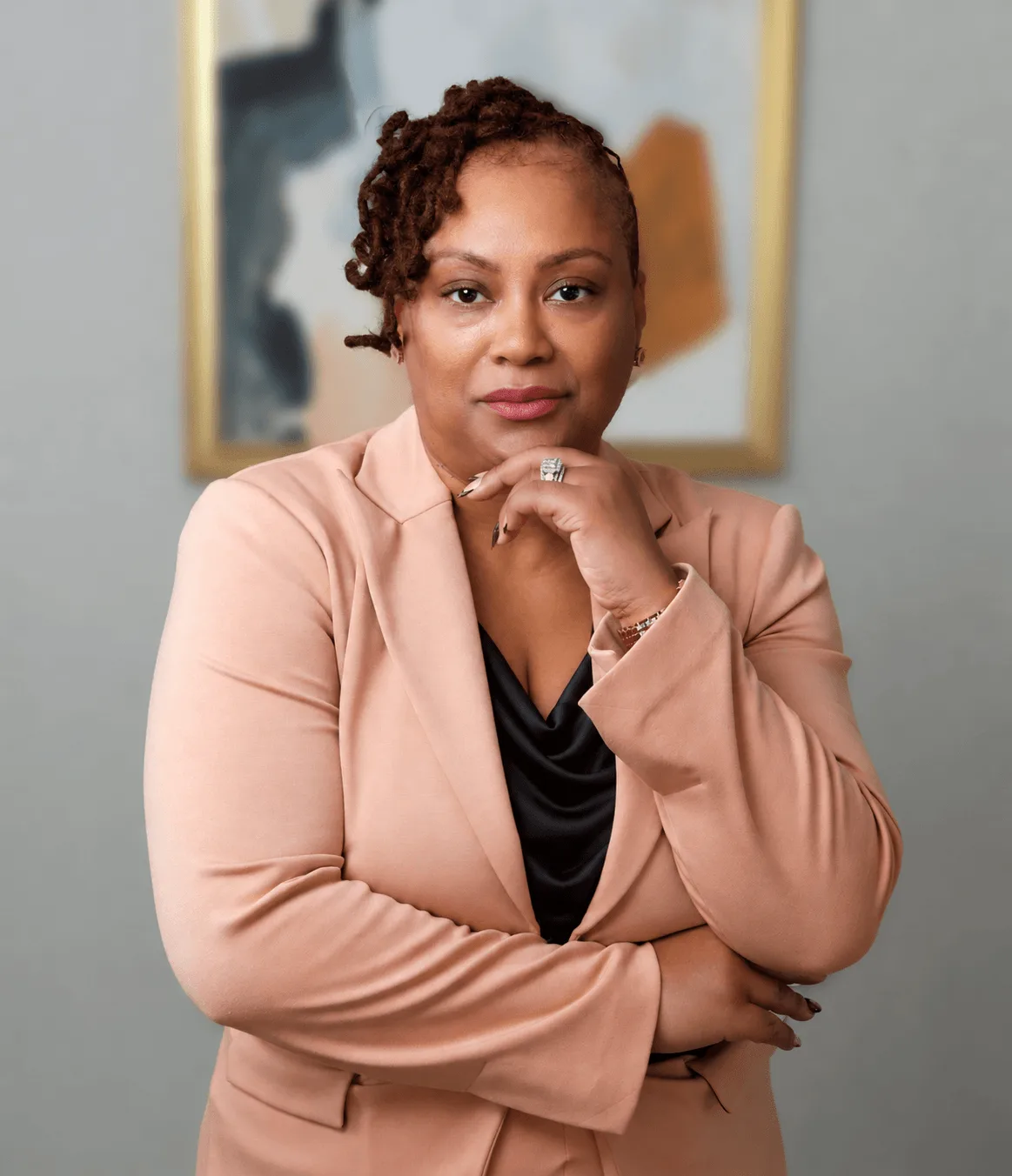
In this episode, I chat with Gwendolyn Young, Founder & CEO at Your Virtual Admin Expert LLC. Gwendolyn shares her inspiring journey from corporate healthcare administration to launching and scaling her own successful virtual assistant business after being diagnosed with lupus.
We discuss practical tips for remote work productivity, setting professional boundaries, finding ideal clients through relationships, and how to price services based on value and impact rather than just hourly rates.
Leadership Quote
“Leadership is not about titles, positions or flowcharts. It is about one life influencing another.”
John Maxwell
About Gwendolyn
Gwendolyn Young is an Executive Support Specialist, operational strategist, and Founder of Your Virtual Admin Expert, a premium executive support agency serving visionary CEOs, founders, and executive leaders. With more than 25 years of experience supporting executives and growing organizations, she helps leaders move from operational overwhelm to structured, sustainable execution.
Episode links
Transcript
Read the full transcript3,557 words
Gwendolyn Young · 0:05
The Leader Assistant Podcast exists to encourage and challenge assistants to become confident, game-changing leader assistants.
Jeremy Burrows · 0:14
Hey friends, welcome to the Leader Assistant Podcast. It's your host, Jeremy Burrows, and this is episode 397. I'm excited to be speaking with Gwendolyn Young today. Gwendolyn, welcome to the show.
Gwendolyn Young · 0:33
Thank you so much, Jeremy. I'm excited to be here with you.
Jeremy Burrows · 0:37
So, before we dive into your career, tell us what part of the world you're in and what you like to do when you're not working.
Gwendolyn Young · 0:44
Oh, that's probably very easy. I am in Chi-Town, so a south suburb of Chicago, Illinois, better known as the Windy City. Um, and we're going into fall time right now, so that is starting to become very true right now. Um, when I'm not working, I absolutely love being a Gigi. So I have little grandchildren who are my favorite humans, um, and going to the spa because water is restorative, um, for me. Spending time with my husband, of course. We've been married for 30 years this year. Yeah. And we're both still alive.
Jeremy Burrows · 1:31
Still alive and still married. That's a—
Gwendolyn Young · 1:35
Yes. I think that's a big accomplishment.
Jeremy Burrows · 1:38
Yeah, exactly.
Gwendolyn Young · 1:39
And then just traveling. You know, I love to travel. And sometimes I just love to take a nap, a really good nap.
Jeremy Burrows · 1:52
Nice. Nice. Awesome. Well, we're super excited to have you on the show. Um, tell us a little bit about your career journey. How did you end up getting into the executive assistant, executive support role?
Gwendolyn Young · 2:05
Oh, so I have to go back like 25 or so years. Um, it's been a long time. I think I just kind of fell into it. You know, I started working at temp agencies and I absolutely just loved the administrative work. And then from there, I started working at like an insurance firm doing dictation and things like that. And so I was like, oh, this is nice, but I kind of prefer the admin piece. And so when I was 28, I got my first real job, I say, at a healthcare firm doing executive coordination work. And that is where I just began to love, love, love and fall into the work. So that's kind of how I got into that environment. And so I stayed in corporate for about almost 15 years, was in corporate and ended up as in traveling through that journey of being the coordinator to executive assistant to chief nursing officers and directors of operations, and then eventually became the admin supervisor of 2 ambulatory care centers. And so I was overseeing medical records and the front desk and working with the physicians. And that is when I really, really fell in love. I love Jeremy because I understood how important the administrative side of things were, because at the end of the day, it affected the patient, right? So if the front desk didn't register the patient properly, medical records didn't pull the right chart. If medical records didn't clean the chart properly, the physician didn't have what he needed when he went into the room with the patient. And then if the, if the physician didn't code properly or something, then it would affect the billing for the patient. And so that's when I became like, Oh, we really have to make sure all these pieces are working as they should, because it's the patient that kind of gets the short end of the stick at the end of the day. And that's when I went like all in.
Jeremy Burrows · 4:09
Wow, that's great. So then tell us, yeah, where did your journey go from there? Did you, uh, you know, stay in the same industry? Did you have the same title? How did, how did that work?
Gwendolyn Young · 4:23
So ironically, no. As much as I would have loved to stay there, um, in 2013, I got diagnosed with lupus.
Jeremy Burrows · 4:32
Mm-hmm.
Gwendolyn Young · 4:33
And so I had to step back from the corporate world. I loved my job. I had no idea, um, what I would do. But during that recovery phase, I'm like, oh Lord, what am I supposed to do now, right? Because I'm learning this new normal. But I knew the corporate environment just would not work well for me anymore. And so that is when I heard, like, it's in your hands. And I'm like, what in the world does that mean? Um, and so I just started researching, and I'm like, do people actually need support, like admin support, back office support, like remotely? Like, are there people out there that could use that? And I discovered this entire industry, and I was like, wait a minute, people have been doing administrative work from home for like decades, and nobody decided to tell me that that was an option for me.
Jeremy Burrows · 5:26
Right.
Gwendolyn Young · 5:28
And so that's when I discovered the VA industry, just started to learn more about it. Um, and I started putting up job profile sites everywhere and just kind of telling people like, this is what I do. And I got my first client off of, uh, one of the job profile sites. She lived in Florida. And I said, well, we're about to test this theory and see, um, if it works. And it worked beautifully. And then you fast forward 13 years later. Um, And here we are sitting with you talking about the journey.
Jeremy Burrows · 6:02
Wow, that's awesome. So what— so you're, you're a virtual admin expert. So are you working with multiple clients? Do you have multiple, you know, assistants on your team? How does— how is it working today?
Gwendolyn Young · 6:20
Yes. So we have a small team right now that helps me to deliver the work. And so, yes, we support entrepreneurs stores. So mainly working with CEOs, founders, executive directors, supporting them as their executive assistant and sometimes operation support as well. And so that could look like anything from, you know, executive calendar management, travel management, um, any of those things, data entry, implementing systems, anything that helps to build clarity and structure and support around the executive is where we come into the picture. And so, yes, it is wonderful to see that starting 13 years ago by myself solo and how that has grown to now. I started getting referrals and referrals, and before I knew it, I had more work than I could handle myself. And so that's what led me to start thinking about building a team.
Jeremy Burrows · 7:18
Awesome, awesome. So lots of questions here because I know I know there are a lot of assistants who have considered doing the virtual, you know, fractional remote assistant role where they have multiple clients, et cetera. And then I also know a lot of assistants are hesitant to do it or don't know how they're gonna get clients. But then even the ones that do it, you know, wrestle with how much should I charge? Do I, do I do an hourly rate? Do I do like a retainer with an hourly?
Gwendolyn Young · 7:53
Yeah.
Jeremy Burrows · 7:54
Bundle. So I'm going to ask you, I'm going to ask you all the things if that's all right, Gwendolyn.
Gwendolyn Young · 7:58
That's fine. Let's talk about it.
Jeremy Burrows · 8:00
So, but first, let's do this. Let's talk about remote work. What's your number one tip for being productive while working from home?
Gwendolyn Young · 8:10
Oh, number one tip while being productive working from home. Have a dedicated space. I think that is what was really important for me was having a dedicated space and then making sure that other people honored your hours, right? So boundaries, a dedicated space and boundaries are probably the number one priority because working from home there's so many distractions. Um, you have to train other people that like, this is real work, I am doing a real thing here, so you cannot just like pop in. I cannot just take a phone call in the middle of the day to chit-chat because there is real work to do. And so learning to set boundaries and really having a dedicated space was, was a huge shift for me to be able to do that. And I think that's really, really important. Even if you don't have a dedicated, like, room or office, you know, if you're at the dining room table or whatever that is, setting it up like it is your actual workspace and making sure that people know when I am in this space, I am working and I'm not available.
Jeremy Burrows · 9:17
Love it. I agree 100%. I've been working remote Let's see, how many years has it been now? Probably 6 or 7 years now, full-time remote. And that's a huge, huge tip. I think that having a dedicated space and not just grabbing your laptop and sitting on the dining room table is a big, big deal.
Gwendolyn Young · 9:42
Yes, because it's too— home is too familiar. Yeah, right. It's too familiar. And then you get into— and this is just because of things that I know from being on the train— oh, I can go do a load of laundry, right? Or, you know, the doorbell rang or the phone rang and it's like, no, I am at work. If I were really sitting in an office at work, I would not be able to do all these things. And I had to bring that same mindset here.
Jeremy Burrows · 10:11
Yeah, definitely. Well, let's, let's move to the, you know, running your business and How did you— how would you recommend those just getting started as a fractional EA or a remote virtual assistant finding clients? What's your number one tip for finding clients to work with?
Gwendolyn Young · 10:33
I would say be clear around the kind of clients that you actually want to work with, right? And my number one recommendation is always to start with people, right? So like for me, I started telling people that I already had connections with, that I already knew, talking to them to ask them if there were people in their networks. Because when you start with people who already know the quality of your work, who already know you personally, right, they can then support you and they can speak well for you, right? Um, I would also say, um, making sure that your expertise is also visible, right? Because people hire executive support, they hire assistants because of trust, right? And trust is much easier to build through relationships than it is cold pitching. Cold pitching is very hard. I will say I have found it to be very hard, um, right?
Jeremy Burrows · 11:40
Mm-hmm.
Gwendolyn Young · 11:40
Relationships has worked really, really well for me in this space. And so letting people know specifically what you do, who you support, but also being clear who you want to work with and build on that.
Jeremy Burrows · 11:53
Yeah, go, go into that a little bit more as far as clear on who you want to work with. So what, what, as an example, how did you figure out the type of people or the type of tasks that you wanted to help with? And, and what do you do now? Like, what if somebody sees you in the elevator, right? Like, what do you love to help people with? Oh my.
Gwendolyn Young · 12:18
So for me, I love to just help people regain capacity, right? And clarity. So that may look different depending on the client, but that is my jam. I'm sort of like the, the fixer, right? Um, and so for me, it's like, what is the thing that is eating up the most of your time that I can help support you with? and really pull you out of, right? Not just take it off of your plate, but how can I own this for you so that you don't have to pick it back up again, right? That's what's really important for me. And I think before you can even start looking for clients, you have to be clear on who you want to work with. For me, it was trial and error because I didn't have anybody telling me this or giving me this information, right? So think about in your past, Who are the leaders that you've worked best with, right? What kind of businesses or departments or organizations did they lead? What kind of problems were they experiencing? Where do you find joy in, in, in offering the best support, right? So if you don't enjoy fast pace, the tech space is probably not for you, right? Because they move literally at the speed of light. And so for me, I had a little bit of a jump because of my experience in corporate, so I knew that I loved working with executives because that's something I had been doing this entire time. And I loved working with people who would allow me to have a voice and who would give me an opportunity to do larger projects in the realm of being an assistant. And so those were the kinds of people that I looked for when I started looking for clients, right? Do they value support? Right? Um, do they give the assistant a voice and they listen to them? They talk about— they give them space to talk about their ideas and their opinions, right? They're willing to take feedback from their assistant, right? That is the people I love to work with, and that's what I was looking for when I started finding clients.
Jeremy Burrows · 14:28
Love it, love it. So then, okay, so then you found the ideal client. You're, you're excited to work with them. How do you figure out how to charge for your services? And has that changed over the last 13 years?
Gwendolyn Young · 14:41
It definitely has changed. Um, I think I, I started, I think like almost everybody does, charging like $20 an hour, $25 an hour, because you're thinking that's what you do, right? You don't, you don't know. And so for me, again, it was trial and error. It was really thinking about First of all, let me get clients. Let me get some experience. Let me get some credibility under my belt, right? So that was really kind of what I was focused on in the beginning. And then as I started to build, I was like, this is a lot of work. What is the impact I'm making, right? Because then I started seeing, oh, I've helped this person take a vacation and she hasn't had one in 17 years. That is much larger than just being her assistant, right? I started looking at the impact and the outcomes I was helping people to make. And then that's when I started to say, okay, maybe I need to look at this pricing structure a little differently. I started to take some courses around pricing, what I should be thinking about looking at. And then, Jeremy, I just jumped in and I just started doing it. I said, okay, we're gonna try this package thing, right? And so I started doing packages, and then I said I'm gonna start raising my prices. And I would just start with the next client. I was so terrified to raise prices, so I was like, I'll start with the new person because they have no idea what the prices were anyway.
Jeremy Burrows · 16:13
Right.
Gwendolyn Young · 16:14
And so then I charge it a little bit for the next person, and then I started building in outcomes of what we could do. The service package started to grow, so the price started to grow. So it's very different now than where we started because we can speak more clearly to the value that we're providing, the outcomes that we help them to do, and we know the work that we're putting into it. And so when you bring all those together, it's not just about the number of hours that we're working for you, it's what is the impact and the outcome that you're getting because we put in those hours. And the thing that I, I really lean into the most is that you're getting the breadth of all of my 25+ years of being an executive assistant to your business, right? That is valuable. That is worth something. And so you're getting all of that when you hire me. You're not just getting, you know, a $25 an hour person, right? And so what that means is that I have to know my value too. I have to know that I can charge. I have to know that there are people out there willing to pay that price to do that work, to partner with me, because that's what I am with them. I hope that makes sense.
Jeremy Burrows · 17:35
Yeah, no, that does. So if you're willing to share, what would be some packages? And obviously subject to change for anybody listening, uh, you know, times change, prices change, but Yes. What would be like a couple of more popular bundles or pricing packages that you guys offer? And if, you know, if you would be open to sharing.
Gwendolyn Young · 17:58
Yeah, absolutely. Wide open. So for us, we have a small package that we start with leaders. And so it's a package of hours that they can purchase. And what that gives them is a very defined scope, right? Calendar management. Inbox and communication management, support with meeting prep and managing those, managing their task lists, right? We can support with travel coordination and itinerary makeup as well, a lot of document prep, file management. And so for, um, you know, one rate, our prices start at anywhere from $1,000 to $1,500 a month, and they can get up to 20 hours of support within that, um, and that's based on their priorities and needs. And so they can move up from there if they want, and they can move into what's called like our Executive Operations or Concierge package. And this is where we're actually supporting you with some of your operational work as well. So implementing your systems, right? Supporting you with your team— that could look like helping you to source new hires, right? Getting all of that data ready for you. That could be handling your client invoicing and billing, um, as well. And so now we're doing a lot more of these higher-value operational things to support you as well. And so that can look like anywhere from $2,500 to $3,000 a month for that kind of support.
Jeremy Burrows · 19:28
Gotcha. So is it, just to drill down a little bit farther, is it typically, you know, hey, this rate for 20 hours a month or 30 hours a month or whatever it is, but then it's more of, hey, you know, if the work that they requested or that they required for that month doesn't take you 20 or 30 hours, you— they still pay the, the retainer fee, right? Like, is that how it works?
Gwendolyn Young · 19:58
Because we are retainer-based. And so, um, what we do is within a specifically defined scope for that number of hours per month, right? So it has to be within that scope because otherwise it could run the gamut, um, of what they're asking. And so, you know, they'll get into, oh, can you do my sales and business development, or can you become like my tech partner, and all the things, right? Which is possible, but it has to be scoped properly within the package. And so yes, we are retainer-based. Um, what we do is we work with them to try to make sure they can feel that capacity for it, which is why we always recommend start start smaller because we can always ramp up if needed. Because a lot of times your clients are still trying to figure out what they need support with, right? And that's where your expertise as an assistant comes in. Because of your experience, you can say, have you considered— these are some of the things that we can support you with, right? And the more that we learn about your business, the more that we know what we can help with.
Jeremy Burrows · 21:09
Love it, Gwendolyn. This has been super helpful. Love all of your advice. I really appreciate you sharing a little bit of your journey. And, you know, I know for a fact there are many, many assistants who listen to this podcast who have just that desire to, you know, quit their day job, their desk job, and work remotely. And they just don't know where to start or how to consider, you know, how to charge and all those things.
Gwendolyn Young · 21:41
Yeah.
Jeremy Burrows · 21:42
So really, really appreciate you taking time. It's been super helpful. Where's the best place for people to connect with you if they want to reach out?
Gwendolyn Young · 21:48
They can reach me across social. My handle is Your Admin Expert everywhere. Can also visit the site at yourvirtualadminexpert.com as well. I would love to connect.
Jeremy Burrows · 22:02
Awesome. Well, I'll put all those links in the show notes at leaderassistant.com/397. And yeah, thanks again. Keep leading well. And we'll look forward to connecting again, maybe in Chicago someday. Yes.
Gwendolyn Young · 22:18
If you're ever here, let me know. Would love to meet up and have lunch or breakfast or whatever.
Jeremy Burrows · 22:24
Sounds great.