
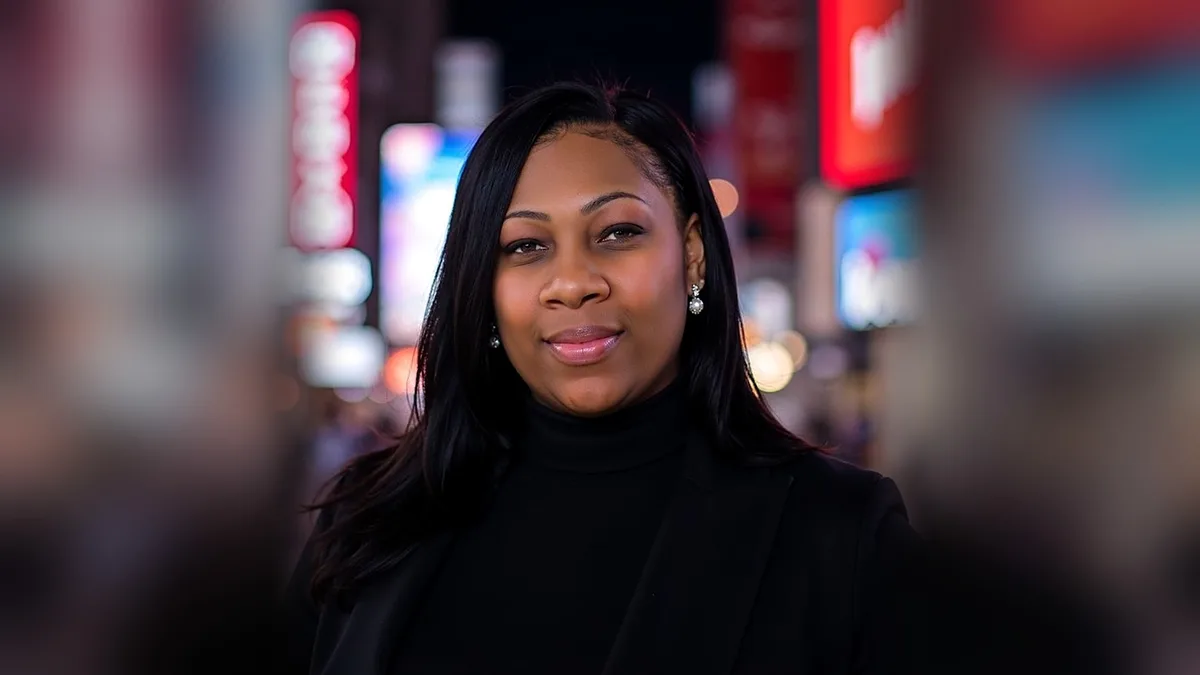
In episode 395 of The Leader Assistant Podcast, I sit down with Deasha Carter, executive operations strategist and founder of House of Lynn Advisory. We discuss her journey across healthcare, legal, and tech sectors, and why understanding the "how" and "why" of a business is essential for assistants looking to step into strategic roles.
We also explore the concept of "diagnosis before design" to tackle actual operational bottlenecks rather than just adding new tools. Deasha also shares details on her upcoming Certified Operations Strategist credentialing program.
Leadership Quote
“A bad system will beat a good person every time.”
W. Edwards Deming
About Deasha
Deasha Lynn Carter is an executive operations strategist, Lean Six Sigma Green Belt, and the founder of House of Lynn Advisory and House of Lynn Institute. She spent twelve years running operations across healthcare, legal, tech, nonprofit, HR, mental health, and local government before building the Engineered Operations Method, the four-phase framework she uses with real advisory clients today. Through House of Lynn Institute, she created the Certified Operations Strategist (COS) credential, the first credentialing program built specifically for the EAs, VAs, and operators who run the backend of businesses. The founding cohort launches in January 2027. Learn more at houseoflynnadvisory.com/institute.
Episode links
Transcript
Read the full transcript3,006 words
Deasha Carter · 0:05
The Leader Assistant Podcast exists to encourage and challenge assistants to become confident, game-changing leader assistants.
Jeremy Burrows · 0:14
Hey friends, welcome to the Leader Assistant Podcast. It's your host, Jeremy Burrows, and I'm excited To have you listening in today. It's episode 395, almost to episode 400. We just got a few more episodes to get to that crazy milestone. So excited to have you here listening. You can check out the show notes for this conversation at leaderassistant.com/395. Again, leaderassistant.com/395.
Deasha Carter · 0:53
Awesome.
Jeremy Burrows · 0:55
Today, I am excited to be joined by Deasha Carter. Welcome to the show.
Deasha Carter · 1:01
Thank you. Thank you. I'm so glad to be here.
Jeremy Burrows · 1:04
So what part of the world are you in?
Deasha Carter · 1:07
I am in Pittsburgh, Pennsylvania.
Jeremy Burrows · 1:09
Pittsburgh, Pennsylvania. Love it. And then what do you like to do when you're not working?
Deasha Carter · 1:14
I enjoy writing music. I, it's my therapy. So that's what I, that's what I do when I'm not Working and, you know, doing all the things. I'm writing.
Jeremy Burrows · 1:28
Nice. So like, do you mean like sheet music? Are you a piano player? Or do you write songs?
Deasha Carter · 1:35
Yeah, I write songs. I'm a songwriter.
Jeremy Burrows · 1:37
Oh, okay.
Deasha Carter · 1:38
And so like now I put— mental health is important to me. So now I put all of that into song.
Jeremy Burrows · 1:44
Wow, that's cool. Do you play instruments as well? Or—
Deasha Carter · 1:47
I do play the piano.
Jeremy Burrows · 1:48
Nice. Yeah. Love it. Well, really excited to have you on the show today. You have a, you know, I'm looking at your bio and you've had a great career as different types of assistant, EA, looks like virtual assistant, et cetera. So why don't you tell us about how you got into the assistant world and then where you're at now?
Deasha Carter · 2:12
Okay, awesome. So yeah, I started off as a customer service rep. I think a lot of people do. That's really interesting. I learned that recently. Um, but then I stepped into an admin position and like, I really loved it. Um, I like organizing people, so that was one of the things that really drew me to that. Um, and so I went from admin for a while, and then I went into the virtual assistant space, and then I became a senior administrative assistant, and then I stepped into the executive assistant role. And now I am an executive operations strategist. Basically, I do the same thing just on like a more detailed level.
Jeremy Burrows · 3:05
Gotcha. Gotcha. So what was maybe your Like, what have you enjoyed about the assistant role throughout your career?
Deasha Carter · 3:18
Honestly, being able to get to help people. The impact that we make as a profession is astronomical, and a lot of people don't realize that. But like, as I have worked through these years with different people, I've just seen the impact that we actually make in people's businesses and even in some people's lives.
Jeremy Burrows · 3:47
Totally agree. Totally agree. You have to, you have to be able to get up in the morning and get out of bed excited to help people.
Deasha Carter · 3:54
Right.
Jeremy Burrows · 3:55
Yeah.
Deasha Carter · 3:56
And I do.
Jeremy Burrows · 3:56
Awesome. Well, what, let's see, you are, yeah, tell us a little bit more about your current situation. And I love the you know, your title, Founder and Executive Operations Strategist.
Deasha Carter · 4:14
Yes.
Jeremy Burrows · 4:15
A little bit of a mouthful, but I love the title. So what's the assistant to operations strategist career path look like for— what did it look like for you? But then, you know, a lot of people talk about when in the assistant world, hey, you know what, you need to be more strategic, right? You need to be a strategic partner. You need to be more strategic. It's just kind of almost overused these days, but there's a lot of truth in that and, and just being able to, to level up your operations and strategic abilities. So tell us a little bit about your journey and then maybe what EAs can do to start making that shift as well.
Deasha Carter · 5:02
Yeah, definitely. I was I did a lot of different— across different sectors. I worked a lot across different sectors. So it was not just one sector that I was in. I worked through healthcare, legal, tech. So I had a lot of experience by way of different industries.
Jeremy Burrows · 5:25
Mm-hmm.
Deasha Carter · 5:26
It was just like, I start— it started to become really just kind of like, No matter what industry I was in, I never just wanted to know what I was being asked to do. I always kind of just wanted to understand the how and the why of everything and the way that it actually worked. So just being in those industries, and over time, I kind of realized it— I wasn't only just supporting the executives, I was learning the business. I was identifying problems, creating processes, and helping the operations run better. So eventually, I realized there was a language for that, and it fit directly into operations. And so, like, when we talk about being a strategic partner, that, that doesn't mean just assisting said executive or said business. That means really just getting into the business And seeing, answering the questions before they're even asked, figuring out the problems or what process needs to be created, or even if it's a systems problem versus a people problem. So I just think doing those things as opposed to just checking, checking off tasks on a list is what starts to get you into this strategic mindset of it all. If that makes sense.
Jeremy Burrows · 7:02
Yeah. So just kind of understanding the business as a whole, no matter what industry, and learning the ins and outs of, hey, how's the business work versus just sitting around saying, all right, I'm waiting for my next task.
Deasha Carter · 7:15
Right.
Jeremy Burrows · 7:15
Yeah.
Deasha Carter · 7:16
Yeah. Be— we want proactive instead of reactive. And that's kind of what sets it apart, in my opinion.
Jeremy Burrows · 7:23
Love it. So what is it that— and we'll get into a few other tips here for sure, but just curious what your current institute and organization, what is your specialty and what do you help people with and who do you help?
Deasha Carter · 7:43
Okay, so it's a 2-part, 3-part type of thing. So House of Lynn Advisory has 2 parts. It has the infrastructure and strategy side and has the operational support side. The infrastructure and strategy side just basically, um, diagnose and like audits the business to see what the bottlenecks are, um, what things, um, are, are missed that people missed, or things that you don't even know that is wrong that you— like I said, you could think it's a system problem, but it's really a people problem. Um, and so then the operation support side goes in and supports that business business in implementing what we found on the infrastructure and strategy side. And then there's the HLA Institute, which we train operators to do the work, to really go in and diagnose the business, and then go ahead and design something that would work for the business as a whole, not just for one executive.
Jeremy Burrows · 8:57
Hmm. So would you say you work primarily with the executives or the assistants, support team, or a little bit of both?
Deasha Carter · 9:09
Both, both. I do work with executives. I do work with assistants on the institute side. So it's a little bit of both.
Jeremy Burrows · 9:19
Nice, nice.
Deasha Carter · 9:21
Yeah.
Jeremy Burrows · 9:22
Awesome. And so digging in a little bit to some of the practices that you use and that you help assistants and executives use, you shared this idea of diagnosis before design. And you mentioned that briefly, like, hey, you know, you've got to take an audit, right? You got to kind of assess what's going on. What are the bottlenecks before you dive in? But you mentioned when, you know, guests that have, or people that have been listening to the show for a while know that I ask guests like, hey, what topics are you excited about? And one of them you mentioned was, you know, why diagnosis before design is the most underrated assistant skill. So, and then just this idea of identifying the real problem before building something. So talk a little bit about that for us. Okay.
Deasha Carter · 10:16
So, um, you can't fix what you haven't correctly identified. So you're going and you're trying to fix something and it's like it's not being fixed because what is the actual problem? Um, people often come to me with what they think the solution is. Like, like I said, we need a new system. Um, so I want to actually understand the actual problem before I go in and build anything. And just because you tell me what you think the problem is, that's 9 times out of 10, not necessarily the problem.
Jeremy Burrows · 10:54
Right.
Deasha Carter · 10:55
So I've found that in a lot of different instances. For example, I had a client, they told me that, you know, we need more systems, we need better systems. It's just What tools can you help us with? What systems can you put into place for us? And so I did my audit, and once I looked at the operations, it was definitely an issue with the process. They didn't have enough information outside of one person's head onto the paper to say, "This is the process, and this is how you do it, and this is how we make it repeatable." Because Honestly, that's what we want to do. We want to make it repeatable. So it was living inside of 2 or 3 people's head. It was never on paper. So actually, they didn't need more systems. They just needed to get that out and let's put it documented so that whenever you do have someone come in, it's repeatable. They can follow the instructions and be able to go ahead and know exactly what needs to be done, how it needs to be done. So that one person's not holding that, because I think that makes a business fall if there's one person holding something and you have to chase that person down to get it. That breaks things, you know? So.
Jeremy Burrows · 12:17
That's great. So how do you— do you have any best practices as far as the diagnosis part and identifying? So like maybe questions that you ask, you know, those you work with Or, you know, even like a quick, like, survey or, you know, what's something that those listening, they're like, you know what, I think this is a really good tip, but how do I really dig in and figure out what the real problems are that we should focus on?
Deasha Carter · 12:51
So basically, like I said, you start, I would start looking at the company at a whole instead of the individual you're supporting. You look at the tasks and You're you're you're noticing patterns. There's all there's nine times out of ten there's going to be repeated problems that they need fixed. So basically, you're not only asking what needs to get done. Ask them, okay. So why are we doing this? Look at what the impact is going to be. Like where does it have impact? Where all the places that it has impact because it's going to be more than one. And then is there— is there a process to your madness? Like, that's the first— I feel like that's the first question. Is there a process? Do you have a process? If that— if the question is no, then we're going to have— there's a lot of things that we're going to need to go through. But if the question is yes, I'm going to ask you, send me the process or let's go over the process. Um, and if we can go through the process without— let's just take that, for example, process. If we can go through the process without— when I— when we're asking all the questions about the process, because the way that an essential audit goes is you're— I'm going to have you send me all of your SOPs and things like that so that I can dive in. And then we're going to have a 60-minute session and we're going to go over everything. And if we are— if we get stuck anywhere, I feel like that is where you can really see it shift. Like, you can see, okay, well, we're stuck here, so then there must be a problem. So basically, you're just asking all the questions that a person doesn't normally ask, like why, how, what is it impact, what do you have, show me. Like, you're not just thinking about it task-based, like, oh, you need this done? Okay, let me check this off. How do I do this? How do I make your calendar more like, so it's just digging really deep into the problem as opposed to the surface level task.
Jeremy Burrows · 15:05
Yeah, I love that. So what are, as you've, you know, dive into these audits and these processes and trying to wrestle with these problems and identifying these problems, what Is there like a certain size of organization or industry or type of company that you like to work with, like that you've really enjoyed working with?
Deasha Carter · 15:33
So for the infrastructure and strategy side, I would say like sizes, not really, but like small businesses, I think that are Mid to larger size businesses are somebody that I would particularly work for, work with on that side, the infrastructure and strategy side, because you have all this data of, you know, and all these people. And so where is all the processes? Who owns what? So that's going to be easier, honestly, if you're doing a— if you're doing a medium to large size businesses, that is going to be easier for an infrastructure and strategy audit. However, on the operations side, it is a little easier on the small business side. So it just really kind of depends. Now, can you do both? Can they cross? Absolutely.
Jeremy Burrows · 16:30
Yeah, that makes sense. Well, this is super helpful. So I would love to hear more about the credentialing gap in the operations profession. So, you know, you've created or certified operations strategist credential. And so tell us a little bit about that. And I think it's built specifically for EAs and virtual assistants and operators who run the backend of business. But, but yeah, certified operations strategist. Tell us a little bit about that process. Yes.
Deasha Carter · 17:06
So Have you ever— you— I know you've heard of the, the PMP.
Jeremy Burrows · 17:12
Project management. Yeah.
Deasha Carter · 17:14
Right. So basically, that is like what they did for project managers is essentially what I'm doing for operators and executive assistants alike, because executive assistants and chief of staff and administrative assistants, they can also have the skill of a certified operations strategist. It's essentially just teaching them to diagnose and build systems for the whole business, workflows, and checking the bottlenecks and the operational architecture underneath the business, not the person. So, just being responsible for how the business actually runs. Now, this takes like making sure that you have a certain amount of autonomy, because I know a lot of us EAs and admins worry about that, about how valuable our execs and business owners see us and see our input. And so that is one thing that I stress to all of my clients or And anybody that I talk to who wants to get into this business is make sure that autonomy is at the top of your list. Because if you don't have that, how can you really help run the business, so to speak?
Jeremy Burrows · 18:46
Mm-hmm.
Deasha Carter · 18:47
So that is what the— that is what the Certified Operations Strategist is all about. Just really just getting in there, teaching them how to diagnose, teaching them how to build systems. And we're doing this on real life businesses. So it's not like it's a fake business and, you know, you just create a sandbox in, but we're doing this on actual real life businesses. So that's our first cohort is coming up in January. So I'm really excited about that.
Jeremy Burrows · 19:15
Awesome. And what's the best way for people to reach out? Obviously, I'll put all your links in the show notes. But what's the top place or the best place for people to reach out if they want to learn more about that or just connect and say hi?
Deasha Carter · 19:29
LinkedIn. I am Deasha Lynn Carter on LinkedIn. And then I have a website. It's House of Lynn Advisory. And you can find the institute and the advisory side on that website all in one.
Jeremy Burrows · 19:43
Gotcha. Awesome. Well, again, I'll put those in the show notes, leaderassistant.com/395. And Deasha, is there anything else that you would like to share with the assistants of the world?
Deasha Carter · 19:57
Um, I just— the biggest thing that I want assistants listening to know is that you may already be doing more operational work than you actually realize. Just start paying attention to the business as a whole, not just the task in front of you, and ask why things are happening. Look for patterns. Don't be afraid to recognize the value in the way that you think. And not just your executive. And that's a big part of why I created the House of Lind, because of that. And so also that the founding cohort launches in January 2027. And if it sounds like that you're already doing the work and you want to learn more, I love to— I love to talk to you and see where we go from here.
Jeremy Burrows · 20:44
Perfect. Well, that's super helpful and encouraging. thoughts for assistants listening. And I really appreciate you taking time out of your day to be with us. And yeah, best of luck with everything. And like I said, I'll point everybody to your resources at leaderassistant.com/395. And we'll look forward to talking again soon.
Deasha Carter · 21:08
Thank you so much. You have a good day.