
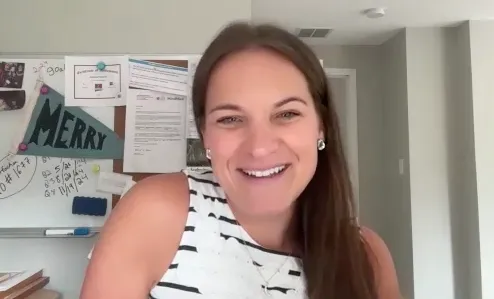
Jessie Hopkins has over 17 years of professional experience, including working for renowned cellist Yo-Yo Ma. She currently serves as Senior EA to the CEO at MindMed. In this episode of The Leader Assistant Podcast, Jessie talks about what she learned working for a grammy winning cellist, the value of an EA coach and community, staying motivated while working remotely, working in a field you’re passionate about, and more!
Leadership Quote
“The true mark of a leader is the willingness to stick with a bold course of action — an unconventional business strategy, a unique product-development roadmap, a controversial marketing campaign — even as the rest of the world wonders why you're not marching in step with the status quo. In other words, real leaders are happy to zig while others zag. They understand that in an era of hyper-competition and non-stop disruption, the only way to stand out from the crowd is to stand for something special.”
Bill Taylor
About Jessie
Jessie Hopkins has over 17 years of professional experience, including working for renowned cellist Yo-Yo Ma. She currently serves as Senior EA to the CEO at MindMed. In this episode of The Leader Assistant Podcast, Jessie talks about what she learned working for a grammy winning cellist, the value of an EA coach and community, staying motivated while working remotely, working in a field you’re passionate about, and more!
Episode links
Transcript
Read the full transcript4,996 words
Jessie · 0:00
Hi, this is Jessie Hopkins, and today's leadership quote comes from Bill Taylor. The true mark of a leader is the willingness to stick with a bold course of action, an unconventional business strategy, a unique product development roadmap, controversial marketing campaign, even as the rest of the world wonders why you're not marching in step with the status quo. In other words, real leaders are happy to zig while others zag. They understand that in an era of hyper-competition and non-stop disruption, the only way to stand out from the crowd is to stand for something special.
Speaker 3 · 0:40
The Leader Assistant Podcast exists to encourage and challenge assistants to become confident, game-changing leader assistants.
Jeremy · 0:57
Hey, Leader Assistants. Have you heard the NOVA Chief of Staff Certification course is about to see a price increase? But don't worry, you can enroll now, lock in the current rate, and start whenever you're ready with lifetime access. NOVA's mission is to give you the ultimate student experience. They've packed the course with dozens of templates, self-paced learning, hands-on practice, multiple instructor touchpoints, peer engagement, and even guest-authored assignments. With over 500 students across 22 countries, NOVA is the top spot for Chief of Staff Learning and Development. Don't wait. Enroll today and join the community at leaderassistant.com/nova. Hello friends, welcome to The Leader Assistant Podcast. It's your host, Jeremy Burrows, and this is episode 299. We're almost to episode 300. Super exciting. Can't wait. But 299 is just as special. And you can check out the show notes for this conversation at leaderassistant.com/299. Again, leaderassistant.com/299 to check out the show notes for this episode. And today, I'm excited to be speaking with Jessie Hopkins. Jessie has over 17 years of professional experience, including working for renowned cellist, Yo-Yo Ma. And Jessie currently serves as Senior EA to the CEO at MindMed. So, Jessie, I hope I got your bio right, but welcome to the show.
Jessie · 2:32
Yes, you did. Thank you. I'm excited to be here.
Jeremy · 2:35
Awesome. What part of the world are you in?
Jessie · 2:38
I live in Westford, Massachusetts, about 45 minutes from Boston.
Jeremy · 2:43
Cool. And are you from that area?
Jessie · 2:45
I'm originally from Southern Vermont, right on the Massachusetts border, in the Tri-State area there.
Jeremy · 2:52
Okay. Cool. And what do you like to do when you're not working?
Jessie · 3:01
Well, I am a mom, so that's basically my life. I have a five-year-old son and a three-year-old daughter. We also have a house full of pets. We have a dog and two cats. We have quite a large yard here, so I love to garden, do landscaping. I stay pretty active. I like to basically go walking and hiking with our dog, do strength training, yoga. I like to read when I have time, see friends. A lot of play dates, a lot of playground time in our life. A lot of soccer, ballet. Yeah.
Speaker 4 · 3:40
Yep.
Jeremy · 3:41
Awesome. So you said five and three?
Jessie · 3:44
Yeah. My son just got kindergarten.
Jeremy · 3:46
Okay. Wow. Those are fun ages. Mine are 10 and 12. So I got that to your difference. But definitely, a lot of things I miss about the five and three range, but also a lot of things I don't miss. So there's pros and cons to each stage along the way.
Jessie · 4:09
Absolutely.
Jeremy · 4:10
Cool. Well, tell us a little bit about your career and what got you into the Administrative Professional slash Executive Assistant slash Executive Strategic Partner, etc. world. How did you get into this world of executive support?
Jessie · 4:32
Well, after college, so I was an art history major. I really didn't know what I wanted to do. And, you know, as I was thinking about this, I was remembering how insecure I was about that, and how so many people knew what they wanted to do. And if they wanted to go get their masters or if they wanted to, they knew what career. And I just wasn't sure. So after my first job, which was in sales, I started working with a small recruiting firm in Boston, and they couldn't tell me the name of the person who they were looking to fill this role for. And it was for an administrative assistant. And I thought, okay, that sounds pretty cool. The recruiter was wonderful and got me lined up with them. And even throughout my first interview, I didn't know, they couldn't tell me who the person was. So then by the second round, I found out who it was and was pretty intimidated to meet him. But he was working in his small personal office for Yo-Yo Ma's small personal office in Arlington, Mass. And, yeah, I kind of grew from there. I was young. I was still unsure. But I knew that I was in a really cool position there to grow and to learn. And I was still working in the arts. So I was following my passion of the art field. And I was with him for just under nine years and went from answering phones and doing bills for the office and catering and getting his coffee to getting to be on a private plane with him to go support him at a concert and hold a cello that is worth a lot of money. And his view is very nerve-racking. And I grew so much there because I had to just go. I couldn't second guess decisions. You know, and it really was a wonderful, wonderful experience. I left working for him. I was with him for a really long time, was ready to try a new opportunity and worked at a company called Fuse, a tech company in downtown Boston. It was much larger, was very different. I supported a few executives there. And then when I had my son, I did not want to do the commute. So I took a job at a biosciences company in Lexington, supporting the medical officer and the scientific officer. I was there about two years through COVID, and then found MindMed, or MindMed found me. Our wonderful recruiter at MindMed contacted me just shortly after I actually got laid off from the previous role. And so it felt very much like fate. And I remember holding my six-month-old daughter walking around my kitchen island, talking to the recruiter, hoping to not have her cry during the recall, you know, and just being enthralled in what he was telling me about, and so excited about the opportunity and what MindMed is doing. And that's what brought me to MindMed. So, here I am now.
Jeremy · 8:02
That's great. So when was that moment where you thought this assistant role is not only a career option but it's a career option for me, like something that I'm interested in and pursuing? Was it during the Yo-Yo Ma supporting time? Was it as you got into the corporate world? When did you kind of the light bulb hit and say, hey, you know what, this is a career, but it's also a career that I'm interested in?
Jessie · 8:33
I think once I got the actual Executive Assistant title working at Fuse because it was a big company, it was a team of executive assistants, it was your cut and dry EA role supporting a few executives at a busy company and learning how to manage complex calendars. When I worked for Yo-Yo, it was just him. Obviously, it was busy, but the role was very different, it was varied. I think once I went to Fuse, but it wasn't really until I actually started at MindMed that I felt like it was a career, and I thought of it as a career, not just my job. And that's because of the passion that I have for our field and the personal connection that a lot of people have to mental health, and just how fascinating I found it being what we're doing. That wasn't, and also starting at MindMed and actually looking for, starting to look around and see what there was for roles once I got laid off, was when I realized how big the EA community and network was. And I found your book then, and that was when my eyes kind of opened to like, wow, this is actually a career for a lot of people, and I've been doing it for a while now, and I really like it, I'm really good at it, so maybe that's okay. Maybe I never found that I wanted to be a doctor, a lawyer, but this is a career and I really love it, and that's fine, you know, and I kind of really have grown in that letting go of those insecurities of that this is enough and it's, it's for me.
Jeremy · 10:23
Yeah. Wow, that's great. So tell us a little bit more. We've got lots of questions and a few topics I want to cover, but tell us a little bit more about MindMed. What does MindMed do?
Jessie · 10:37
So MindMed is a clinical stage biotech company. We are, our lead product candidate is called MM120, and it is a tartrate salt form of lysergide, so of LSD, otherwise known as LSD. And it has a really huge therapeutic potential to help people with generalized anxiety disorder, so that's our lead candidate. We're currently looking at it going into MDD, which is Major Depressive Disorder as well. So MindMed's been around for not a long time, 2019, and has grown. I don't remember what number of employee I was, but we're about 65 now, and we're seeing a lot of growth the rest of this year and throughout next year, as we grow a commercial team and get closer to hopefully a drug approval, and having really big impact.
Jeremy · 11:38
Nice. The Boston area, I've interviewed other Boston assistants and worked with them over the years, seems to be pretty heavy in biotech, is that right? Yeah.
Jessie · 11:48
So I'm actually fully remote. My boss lives in Wisconsin. He lives in New York, Florida. So we're very spread out. We have a few folks in Europe as well. But what brought me into biotech was Boston, because I was in the Lexington area working on a biotech there. Yeah. So there's a lot of biotechs in Cambridge.
Jeremy · 12:09
Got you.
Speaker 4 · 12:10
Yeah.
Jeremy · 12:12
Awesome. So then, has that always been a thought or a, I mean, working for Yo-Yo Ma and you said you had some art history, background, has that always been something where you're like, I really want to work somewhere that is in a field that I'm interested in?
Jessie · 12:30
Yes. It definitely is. When I was at Fuse, it was a communications platform that they created. It was a good product, but yeah, I didn't have that passion and that drive to be connected to it and what we're doing, and so I didn't feel a deeper connection to the greater organization, plus it was so large. Then at Kaleido, obviously, we were helping people as a microbiome company, and that's great, and I knew I wanted to stay with something that was helping people. But with MindMed, I have a little more of an understanding of it. I might not understand a lot of the biotech, the language, and a lot of abbreviations, but boy, I have learned a lot over the past two and a half years, and I feel like I can talk about it now. I sit in on meetings and it's not just going right over my head. The employees at MindMed never hesitate to take time to explain something to you if you're interested in it, and they love talking about what they do because they love what they do, and they're going to help a lot of people. So it's definitely been important for me to feel that connection, and I hadn't felt that before.
Jeremy · 13:56
That's awesome. So you mentioned working remote. So how do you stay motivated while you're working remote?
Jessie · 14:05
Yeah, I got used to working remotely during COVID, but I also had a toddler at home at that time. So that was a challenge. Luckily, now my kids are both in school. I stay motivated by loving what I do and by being really busy, to be honest. And I've talked to, so I work with the EA coach, shout out to Annie Croner. And I had a week or two there, and everybody does, where I didn't feel super motivated and I was feeling burnt out and I was feeling tired and I was feeling really badly about it. And she just said to me, she was like, not everybody feels motivated or inspired all the time. You just need to figure out ways to kind of bounce back from it and look at yourself, care, look at staying physically active. I try and get out for walks, I try and listen to music. I check in with my boss as often as I can so that I can feel connected to everything and joining a good amount of meetings as well helps you feel connected. We also do have a good amount of in-person opportunities where folks meet for off-sites, and that is very motivating to have that connection.
Jeremy · 15:24
Nice. Do you have to organize that, or do you have somebody else that organizes those off-sites?
Jessie · 15:29
I do organize, yes, the majority of them. We excitingly have just grown our EA team from one to two people. Very excited. She's on her second week here and is doing great. And so I'm happily have another person to help with that and to take some of that on because it can take a lot of time.
Jeremy · 15:54
What's like your one tip for off-site planning for a remote team?
Speaker 4 · 16:04
Have you heard? The NOVA Chief of Staff Certification Course Price is going up in January of 2025. Enroll now and with lifetime access, start whenever you please. Here at NOVA, it's our mission to provide the very best student experience possible. Our course is chocked full of features and resources designed just for you. Dozens of templates, self-paced online learning, hands-on practice, multiple instructor touchpoints, peer engagement opportunities, guest authored assignments, the list goes on. With 500 students across 22 countries, NOVA is the premier destination for Chief of Staff Learning and Development. Enroll today and join us.
Jessie · 16:49
Hmm, that's a good question. On tip, off-site planning. I think probably to get your budget, your expectations and your outline of how you want the event to go right off the bat before you start looking for hotels and getting quotes. Otherwise, you might be completely missing the mark and spending a lot of time doing research. So get all the information you need right upfront before you run with it and do your planning. Yeah. There's awesome, offsite.com is out there. There's a lot of people who if your company is larger and they have the funds and need external support, then definitely do that.
Speaker 3 · 17:35
Nice.
Jeremy · 17:37
Yeah, that's one of the big things because you get so overwhelmed at all of the details and the quotes and-
Jessie · 17:48
Yep.
Jeremy · 17:50
The different types of preferences and opinions on how an offsite should go. Yeah, definitely getting that info before you go down that trail of, all right, city, what budget, all that stuff is great. Absolutely. What about, you mentioned working, you mentioned Annie Croner, which is awesome. I interviewed her on episode, I'll go look it up real quick. I think it's two, I did it twice. So back in 2019, episode 26, so leaderassistant.com/26, if anybody wants to listen to that. And then I interviewed her again in May of 2023, published it, episode 219. So leaderassistant.com/219. That one we talked about burnout and boundaries and confidence and all those things that I'm also passionate about. And so tell us a little bit about the value that you've found, you know, maybe how you got connected with her and how you work with her and then just the value of having an EA coach and community.
Jessie · 19:05
Yeah. I have been working with Annie for about six months and just signed on for another six months. So my mind has been greatly supportive of that. And that's been very appreciated. I started as the sole EA. I had never worked for a CEO before and I had never been the sole EA. So I needed, I mean, I had already been two years in, but I think I was just so busy. So in it that I wasn't able to think outside of what I was dealing with in front of me. And I thought, I think I need some, I need a sounding board. I need better systems and processes. I didn't really know what I needed. But I don't remember how I found her. I think probably on LinkedIn and maybe listen to her podcast. And then we had an intro call and we hit it off really well. She's also a mom and has been in EA for a long time. So the value is huge. Some sessions have just been talking about what's going on at work, at home, and I'm thinking, we didn't accomplish much today, but to have a sounding board. And it's like EA therapy. I didn't have another EA here to talk to you about certain things and ask questions about, how should I deal with this personality? What do you recommend for this software? She introduced me to Trello, which I love and use now for task management. She coached me through the hiring process of hiring another EA, which I had never done before, along with the great support from MindMed and the interview team and HR. So now going forward, we're able to look at my goals and strategic planning with my executive, and what do I want out of my career? If this is it, that's great, and that's fine, but is there more? So I think it's really been invaluable for me, and I highly recommend it, especially if you're the only EA somewhere, or you're starting out at any point in your career.
Jeremy · 21:32
Yeah, the benefit of just being that sounding board, and a lot of my clients will say, you know, I feel like this is like you mentioned, like EA therapy, like, this is like, you know, and I can't call it therapy, I'm not a licensed therapist or anything, but it is that blend of like, you know, life coach, professional coach, counselor, therapist, friend, colleague that understands what it's like to be an EA. That, you know, because I, you know, only EA's understand what EA's go through, you know, and so that's great that you've got that connection. And Annie's great. Again, you can check out those episodes where I had conversations with Annie in prior podcast episodes. And yeah, so I want to talk about balancing work and motherhood. And so you mentioned, you know, holding your six-month-old while you're on the call with a recruiter, hoping they didn't make any noise. What's been maybe some of the challenges that you've had as your kids, or, you know, they're now three and five. So you've had a few years of working with young kiddos. What's been some of the challenges you've gone through? And how have you, through those challenges, how have you discovered that balance of, hey, you know what, I'm in high demand at my job and I'm in high demand at my home?
Jessie · 23:21
Yeah, I was thinking about this. And I was reading something earlier today about this exact topic, and it was referenced that you never, if you were trying to find a perfect balance, which by definition, it doesn't make sense. It doesn't exist. The reality is we spend the majority of our lives at our jobs. And so that's another reason why I have to feel that connection and that I'm doing something. I'm helping, you know, I'm supporting people to be able to support their work, to do something great. And, you know, by association, I'm part of that. Because I'm spending so much time away from my kids. Obviously, they're getting older, they're going to be in school anyways. But there's also evenings where I'm cooking dinner and I'm checking my email or I'm responding to a text. And so my attention is taken away from them. That being said, I'm very committed to my job and I know that. And so even my husband will have to remind me sometimes, you know, do you need to do that now or, you know, can it wait till later or tomorrow after the kids are in bed? So I think it's, I think I just circled, circled around, but they referred to it as work life integration. And I think especially working remotely. I say this all the time. I don't know how I could do it if I had to commute. You know, I can take, you know, if my kids are home sick, I can work when they're napping or when they're watching TV or I cannot work. You know, I have that flexibility. We have unlimited vacation time. I have wonderful, supportive boss and co-workers, you know, that have supported me throughout all the transitions of motherhood and the sicknesses of kids and doctor's appointments. So I think it's finding that support system at your job, which hopefully I know some people are not as lucky. So I'm very grateful for that. That's part of it. I think also creating your own boundaries with your work and with your co-workers and letting them know, yes, I am always available, but maybe this could be an email instead of a late night text. This is how, because otherwise I'm going to think it's urgent. So just setting the setting expectations from the beginning. I talked to Annie a lot about burnout. I am someone who will, if I had to do something personal during the day, I'll then make up the time after my kids go to bed, and that's what I've noticed leads to burnout for me. Because by the end of the week, I'm just, I'm fried. Then I can't give to my family or my job. So it's just knowing your own personal boundaries, personal and professional. So yeah, I don't think I have it down at all, but I'm trying my best and I try to embrace all the benefits of time off and time off, and we are a mental health company, and so I have to walk the walk too, and talk the talk because that's what we stand for. So if I am not taking care of my own mental health, doing my own self-care, taking care of my kids and myself, then what am I doing?
Jeremy · 27:01
So practically, do you have, hey, I'm logging off at 6 p.m. on Friday, and I'll check back in on Sunday for a brief check-in, but then I'll see you on Monday, or is it a little bit more loose?
Jessie · 27:18
More loose, yeah. Yeah. My boss also has young kids, which I felt that connection with him when we first chatted, and so he really gets it, and we have that conversation a lot. So while I'm trying to help him have a better work-life balance, I'm reminding myself to have it as well. So no, I mean, by 6 p.m., I'm eating dinner with my family. So it's not a nine to five. Today, I didn't get home from dropping my daughter up until 9.30, and then I had a dead disappointment. And so I'm logging off at four when my son gets off the bus, and then I might check in later. It's really getting everything done when you get it done. That flexibility is invaluable.
Jeremy · 28:06
Yeah, that's the thing with my executive, it's a similar situation where I work remote, and he has four kids, I have two kids. You know, we get that there's no work-life balance, there's just balance, and we all have one life, and as long as you get your work done, and get it done when it needs to get done, then it doesn't matter if you do it at 6 p.m. on a Thursday, or 10 a.m. on a Friday, like whenever you can get it done, you get it done as long as that's what the business needs. And then we also have a communication levels of urgency tiers and tiers. So like you mentioned earlier, oh, this could have been an e-mail, doesn't have to be a text. So if my executive texts me, which is rare, then it's pretty urgent. I need to get back within a few minutes. If he calls, I answer it.
Jessie · 29:09
Right, then it's really urgent.
Jeremy · 29:11
It's really urgent. Yeah. But some executives, they just call their assistant all the time, you know, and it's like, that's how they work and that's whatever. And it's like, it's very helpful to have those boundaries and those clear expectations of, hey, if I e-mail you, I expect to hear back within 24 hours. If I slack you, I expect to hear back within 15 minutes. If I text you, I expect to hear back within two minutes.
Jessie · 29:37
Right.
Jeremy · 29:38
Or five minutes. And then if I call you, I expect you to answer. But I'm not going to abuse that because I'm not going to just think that everything is urgent when urgent is actually rarely urgent.
Jessie · 29:51
Right.
Jeremy · 29:52
And so, yeah, so that's great that you've got that back and forth where, you know, I just saw an article today or yesterday or whatever about the CEO of Amazon is requesting everybody to return to work, return to the office and five days a week and all this. And just like, all right, well, this is going to be interesting. And that's that could be a whole other conversation. But just the idea that if you are productive and effective, doesn't matter where you work, doesn't matter when you do the tasks. What matters is that they're done well. And that you have that partnership formed, where you're helping your executive reach their goals.
Jessie · 30:40
Right. And, you know, uniquely, companies that are fully remote, we have the benefit of hiring our workforce wherever they live. You know, if we find someone wonderful who lives in California, great. It's not limited to that. For EAs, it was preferred to have somebody on the East Coast. But for other people, I like to think it's the future. And I like to think my kids will have the option to work remotely when they're working. But it obviously depends on your industry.
Jeremy · 31:16
So, right. Yeah, totally.
Jessie · 31:19
Yep.
Jeremy · 31:19
Awesome. Well, Jessie, thank you so much for being on the show. Lots of great conversations. Is there any other any other stories or tidbits that you wanted to share from your career, whether it's early on with with Yo-Yo Ma or more recently at MindMed or anything that you want to say to the assistants of the world? I'm all ears.
Jessie · 31:43
Oh, gosh, I think, um, you know, personally, um, it's been about a year and a half since I lost my mom. And I was writing some notes for the show, and I wrote in caps. And sorry if I get a little choked up here. I wrote caps, you know, at the end of the day, after everything is said and done, all I want to know is that my mom, all I know and that I want to know and think about is that my mom is so proud of me. And everything I've thought about, you know, working with Annie, you know, asking, promoting for myself at work, asking for a promotion, asking for, you know, support and paying for coaching is a confidence that I gained pretty much more recently. Asking you to be on this, asking if you'd be interested in having me on this podcast. Um, and I think that, I think it's important that don't, don't discount yourself and that what you've chosen as a career or as a career stepping stone, whether it's not for you forever, don't discount who you are and don't discount just, just being authentic and being yourself. Not worrying about your credentials or your experience or this or that. And, you know, when I started working for Yo-Yo, I felt pretty like, wow, they, they wanted me to, why did they pick me? And then now I'm thinking, yeah, I've worked really hard to get where I am and I really love what I do. And I'm really lucky and grateful for everybody who has supported me throughout, including my mom. And I know she'd be really proud of where I am now and stepping out of that comfort zone. You never know something until you ask or you try, you get up and you fight another day. So that would be what I want to end on is, yeah, just and also take care of your mental health. Plug for that. And watch MindMed. Pay attention to MindMed because we're going to do big things.
Jeremy · 33:57
Nice. Awesome. That's great, Jessie. Thank you so much for sharing and well said. And I'll put the link to your LinkedIn, if that's okay, for people to reach out and say hi and connect. In the show notes at leaderassistant.com/299. leaderassistant.com/299. Reach out to Jessie and say hi and connect with her on LinkedIn. And yeah, best of luck to you in your career. Thank you so much for taking a risk and being on the show. And yeah, we're excited to share this conversation with the world and excited to stay in touch for sure.
Jessie · 34:39
Thank you. Thanks, Jeremy.
Speaker 3 · 34:51
Please review on Apple Podcasts. goburrows.com.