
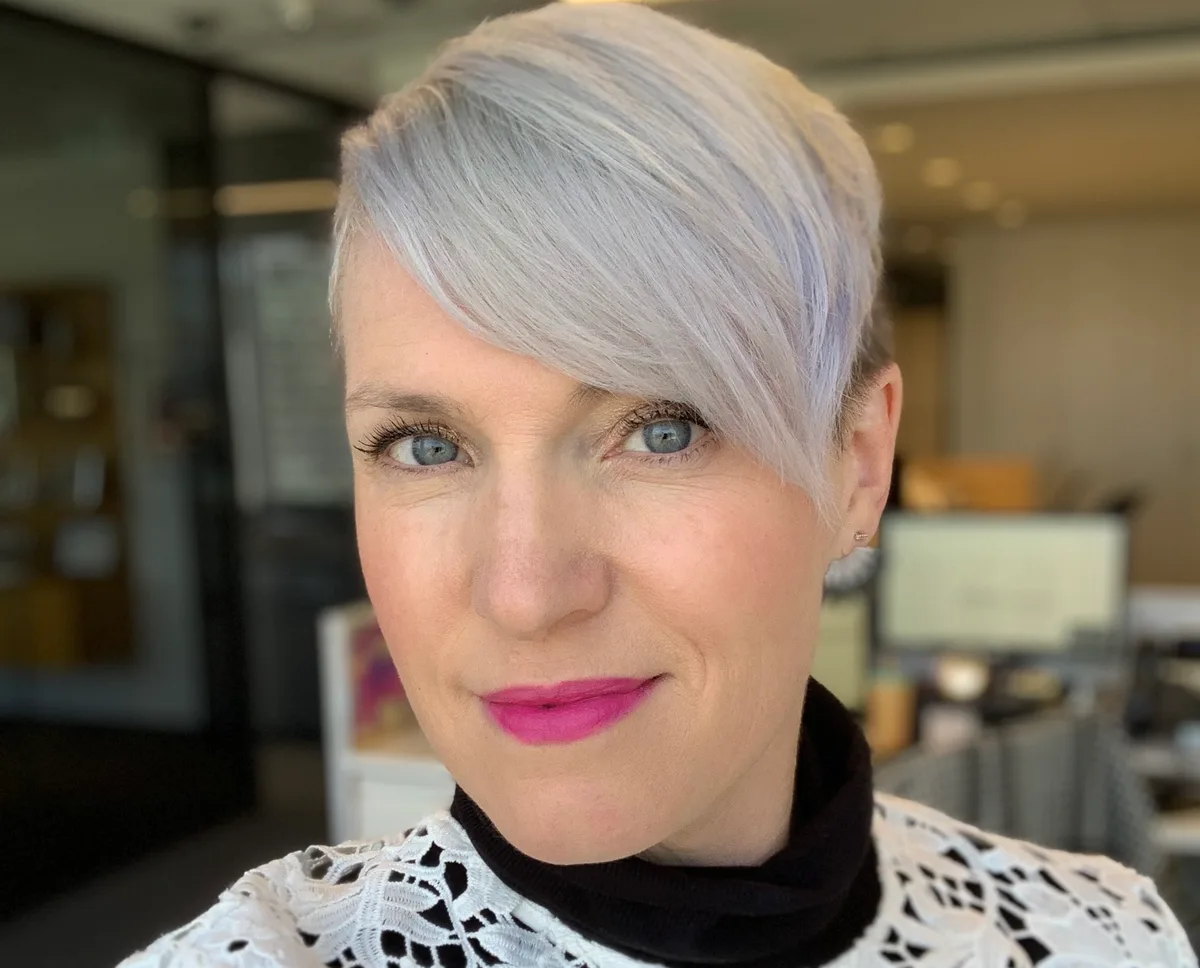
Chandra Severin is a longtime trusted right hand for senior leaders and CEOs in various industries. In this episode of The Leader Assistant Podcast, Chandra talks about managing a team of administrative professionals, networking, navigating change at work, and more.
Leadership Quote
“Every woman's success should be an inspiration to another. We're strongest when we cheer each other on.”
Serena Williams
About Chandra
Chandra Severin has over 3 decades of experience working as a trusted right hand and executive assistant to Senior Leadership and CEO's. She has worked in a number of different industries including the legal field, the fashion industry and now the publishing/media industry. She is an expert at navigating career changes and building relationships across all levels of an organization. Chandra prides herself on her ability to lead and inspire confidence in others, and regularly looks for ways to network and grow her personal and professional network. She currently works at the EA to the President and CEO of Canada's National Newspaper, while also managing the Administration and Facilities teams. In addition to this she sits on the Board of a Canadian charity which builds schools in Ghana, West Africa. Chandra lives in Toronto with her husband and two children.
Episode links
Transcript
Read the full transcript4,481 words
Speaker 1 · 0:05
The Leader Assistant Podcast exists to encourage and challenge assistants to become confident, game-changing leader assistants.
Jeremy · 0:23
Hey, Leader Assistants, have you heard the NOVA Chief of Staff Certification course is about to see a price increase? But don't worry, you can enroll now, lock in the current rate, and start whenever you're ready with lifetime access. NOVA's mission is to give you the ultimate student experience. They've packed the course with dozens of templates, self-paced learning, hands-on practice, multiple instructor touchpoints, peer engagement, and even guest authored assignments. With over 500 students across 22 countries, NOVA is the top spot for Chief of Staff Learning and Development. Don't wait, enroll today and join the community at leaderassistant.com/nova. Hey friends, welcome to The Leader Assistant Podcast. It's your host, Jeremy Burrows, and this is episode 297. You can check out the show notes as always at leaderassistant.com/297, leaderassistant.com/297 to check out the links to today's guests, Bio and LinkedIn and all the things related to this episode. So thanks again for tuning in and listening to the show. It's been a fun ride or inching closer to episode 300, which is exciting. And I appreciate you tuning in and I appreciate you leaving reviews on Apple Podcasts and sharing with other EA colleagues and friends along the way. So thanks for being a supporter of the show. All right, so let's jump right in. Today, I'm speaking with Chandra Severin. Chandra is EA to the CEO. She actually, her title is, I'm excited to ask you about this, because you've got a lot of different things in there. Manager, office services, facilities and administration. So Chandra, welcome to the show.
Chandra · 2:15
Thank you so much.
Jeremy · 2:17
I was going to say, it's like a long nameplate on your desk, or a long email signature, or a long LinkedIn title. We'll get into that here in a second. But first of all, where are you located, and what's your favorite thing to do when you're not working?
Chandra · 2:33
I am in Toronto, Ontario, Canada. When I'm not working, it's traveling and hanging out with my kids, and just trying to have a lot of fun.
Jeremy · 2:47
You love it. Love it. Are you from that area?
Chandra · 2:51
I am. I've lived here pretty much my whole life.
Jeremy · 2:55
Nice. When you travel, where do you like to travel?
Chandra · 3:00
Mainly the Caribbean, but also within Canada. Since COVID, we got really into cottaging. Every summer, it's looking to rent cottages, and just get out of the city with the family.
Jeremy · 3:15
Nice. Yeah, a little offline time.
Chandra · 3:20
Exactly.
Jeremy · 3:22
Cool. Well, tell us a little bit about your career. How did you end up in the assistant role, and where did you see that as a career, and how did it progress? Then we'll obviously have to hear all about this current title.
Chandra · 3:38
Yeah. So my career has been sort of all over the place. I've come back to the executive assistant role many times. So I began my career in a law firm, actually, as a legal assistant almost 30 years ago now. Did that while I was at the law firm, I started doing a lot of event planning and eventually took over their student program, which was mainly enhancing the culture of the office, getting students up and running, and just planning fun events for them. Then when I was there, I was taking fashion part-time because that was actually always my original goal. And then I had a great opportunity to work for a major brand here in Canada just before it launched. So I started as the Creative Director's Assistant, and then eventually hired him a new assistant. And then I moved into production, fashion show planning, model casting, publicity, PR, just everything that came my way. Then unfortunately, there was a lot of changes at the company. They let go of a lot of departments. So like many people, I was sort of thrown out, you know, trying to figure out what to do next. For me, it worked out well around a mat leave. So I took some time off, sort of figured out what I wanted to do next. And then my current role came up. So this was EA to the publisher and CEO of The Global Mail, which is the largest newspaper here in Canada. And so I took that job. I've been here now just over eight years and have sort of turned it into that long title you see now. It started out with a much shorter title.
Jeremy · 5:41
Awesome. Yeah. What was the first title in this role? Yeah.
Chandra · 5:47
So the first one was just simply the EA to the publisher. And in all honesty, when I took that role, I think I had one of those moments where in my mind, I had left the EA career, I had done some other things, and it was actually a moment where I had to think, do I really want to go back to it? And I had a moment where I did think, is this a step down for me? And I think a lot of people have different ideas about what the administrative role is. And luckily, the person I was working for was an incredible mentor and supporter. And so he really inspired me to take control of the role and turn it into something that I would be proud of. So it's really evolved in my time here. So from that to managing three teams here, and then as well as company events. And I work with HR a lot, a lot of social events.
Jeremy · 6:52
Nice. So what's the, tell us about managing the teams. Are they all assistant teams? Are there event teams? Like kind of how's that whole structure?
Chandra · 7:05
Yeah. So this, I do a lot of networking and I love to hear from a lot of EAs and hear what people do at other companies. And so I had a course that I had gone to here and just met a lot of EAs and heard that a lot of companies have administrative departments that are run by an administrative leader. We didn't have that here at the Globe and Mail. And I sort of felt like the admins here sort of all worked in silos. So I had proposed to my boss that we form a department and I manage that department. So that came about, which was amazing. So that's how it started, bringing together this team of admins and EAs. I have eight that report into this department, as well as some of them support an executive. And then over the years, as many companies do, we've gone through changes. And I'm always one to kind of put up my hand and offer to take on more work. So when there were some changes happening here, they were trying to figure out, okay, who should manage our office services department, and who should manage facilities. And so I put my hand up for that, even though I had no experience with facilities. But I have a lot of experience managing people and just working with people. So I think that's one of my biggest strengths, and that's how it came about. And so it's been, I think about four years that I've been managing these teams now.
Jeremy · 8:41
Nice. So what is the, maybe, a lot of assistance are curious about this because they want to someday either work for a team, because maybe they're like me where I'm the only assistant, the only executive assistant in the company. Or, and so they're like, I want to work for a team of assistants. I think that'd be fun. That'd be an interesting environment. But then also, there are those who are a part of a team of assistants, and maybe they're thinking, hey, I want to lead a team someday. I want to manage administrative team someday. So what are the pros to working with a team? And then how would you guide someone into, hey, if you want to lead a team of assistants someday, here's some things you should start doing now.
Chandra · 9:34
I mean, there's a lot of pros, and for me, even proposing the idea, one of the things that I thought is that, who knows assistants better than an assistant, someone who does that role? I think we all know that people often underestimate the role, or at least don't understand what goes into it. So I think one of the greatest things about leading the team is that I really love learning from people, I love mentoring and supporting people. So I think it's just sort of brought this team together and everybody just feels really supported by each other. We have weekly meetings where we share information. So everybody just sort of feels like someone has their back. And at the same time, me being the one who leads them, and yet also working for our CEO, it's like, I have the ear of the person at the head of the company. So I can really talk to the team about what the demands of the business are and what the needs are and the goals. But at the same time, I can reiterate the importance of the team and the value that they bring. So, you know, I feel like I'm sort of supporting up, down, across. But yeah, and that's probably the best part. I just really like feeling like I'm helping other people find the passion for that role. I think because I have it and I love to learn and like I said, I love to network. And I try to share that with the team. And I've seen them, a lot of the members of the team change from really feeling alone in their role to now feeling like they are part of a group. And a company like ours as well, we have a very small administrative group. So I think prior to forming that group, they were just a few people in this large company. And now we're actually a team who understands each other and who can just really sort of advocate for each other. And make sure we get the support that we need.
Jeremy · 11:32
That's great. So what would be maybe something you did or something that other people can do to level up, if you will, to lead a team like that?
Chandra · 11:45
I think the biggest thing always is just to constantly be learning and researching. I think that's something that admins are always good at anyway. We always have to find answers and we have to look for information. For me, it was really just making those connections, talking to other people, figuring out how this works at other companies. Then for me, I had to look at our company, figure out what the goals of the company were. At the time when I had come up with this idea, they were just really looking at efficiencies, how we could make certain things happen better, how we could save some money. When I looked at this team, we had more admins at that time, and it was just looking at how it's working, who they report to, are there things that they're doing that they shouldn't be doing? I had put together a proposal saying, I think we could streamline the team a little bit. I think we could help out various departments. Maybe you only need one or two people and they could help an entire department versus four or five people who are sitting there and don't necessarily have a lot to do, or people don't always know how to utilize them. When I put together this proposal, I figured out how we could save the company money. It was really putting it to the company as if you form this team, you don't have to worry about it, I'm going to handle it, I'll support them, but we're going to save you a ton of money. I think in general, companies love to hear that.
Jeremy · 13:18
Totally. I know there's a lot of opinions out there as far as should assistants report to their executive that they support, or should they report directly to a manager of an administration or a manager of a team of assistants? Should there be a dotted line to both? How does it work with your setup and why do you use that setup?
Chandra · 13:52
Yeah, I think people were confused on this end, too. I had to do a little bit of a flow chart showing how it would go and proposing it. So the way we have it here is EAs, so executive assistants, they report to their executive, but then they have a dotted line to me. Then the admins who support a department report directly to me. So everyone is part of the team, they attend our weekly meetings, we have socials together, we share information. But in terms of the actual reporting structure, that's how we work it. Then the ones who only have a dotted line to me, I check in with their executives from time to time just to see how they're doing, how I can lend support. Then to the EAs themselves, it's the same thing, checking in on them. How are things working out? I think it's actually been really good. Even the ones, like I said, who have this dotted line to me, I'm like this additional support for them. For example, if they're being thrown a lot of work or they're working extra hours and they don't know how to deal with that or what do I say, we can bounce ideas off each other, and then I can give them some guidance if they want it. Then as well for the executives, I think even for them, sometimes it's good because sometimes they're not sure what work they can give or is this too much, or sometimes they don't even know the capability of their assistant. I can be a proponent for them saying, actually, they're really knowledgeable on this, they can help with that. I think it's worked well on both sides.
Jeremy · 15:36
Yeah, I really like that. I prefer reporting directly to the CEO as I support the CEO, and I think a lot of those executive assistants do prefer having that kind of direct line and direct reporting and supervisor being their executive. But it makes total sense to me that you would have the administrative assistant level supporting departments, supporting teams, totally makes sense that you would have that structure. So I think you guys did a good job putting that together. Thanks. Well, what would be the tips for managing change? Whether you have a new executive to support or a new assistant joining the team, maybe there's complete culture change in your organization or your departments. How have you managed change throughout your career?
Chandra · 16:49
Well, I just went through probably one of the biggest changes. The person that I was hired to work for here, our CEO, I worked for him for seven years. He had been here for 25, and he actually just retired last year. So I had the tough job. Yes, huge change, but also it being secret for quite a while as we worked on all the details. So even during that, you just keep your cool, roll with the punches, figure things out. Then luckily for me, the new CEO was someone from within the company. So it was decided very early on that I would stay in my role and support him. But really, it's a big shock to the system. It's someone new who works differently. Even for me, I've been in the role forever and being very familiar with the company, but it was still such a big change. So what I realized was at the end of the day, my career and how it goes is really up to me. I really have to take charge of things. So I think in the beginning when I was figuring things out, I just had to have a moment where I realized I can take control of this. I can make sure I'm successful at this job. So I need to find out what he needs, find out how he has to work and tailor the way I work to him, because it's essentially him that I work for. So he works very differently than my previous boss. But there is that moment, you just really have to have a lot of FaceTime and you have to talk to them. I think just a really open and honest conversation about, I had to say to him, I don't know about some of this stuff that you do. He came from a different department, but also be keen to learn, which I always am. So it was just really opening myself up, being a little bit vulnerable, I think. But I think being honest is always the key. So just being honest with him that this was a huge change, but I wanted us to be successful and I really did feel like we could be a good team. But we just really had to figure out how to work with each other.
Jeremy · 19:09
Yeah. And I like what you said about not trying to hide that this was a big change and not trying to just act like everything's fine and everything's normal and just keep going, you know?
Chandra · 19:25
Exactly. Yeah. I think I actually, I had a moment as well where I had to step back and think to myself as well, this is a huge change for him. It's very easy to get in your head. I had a little bit where I was like, oh my gosh, this is so different. This way of working is different. How am I going to handle it? And then I had to think to myself, well, he's probably thinking all the exact same things. He's just stepped into a new role in someone else's shoes and he's like, I'm someone new for him to work for. So he also has to figure it out. So I think once you realize that and you can actually have those conversations, you realize you both just really want to be successful in your role, and you're both there to build a great working relationship. And then from there, it's pretty easy to start figuring it out.
Speaker 1 · 20:18
Have you heard? The NOVA Chief of Staff Certification course price is going up in January of 2025. Enroll now and with lifetime access, start whenever you please. Here at NOVA, it's our mission to provide the very best student experience possible. Our course is chocked full of features and resources designed just for you. Dozens of templates, self-paced online learning, hands-on practice, multiple instructor touchpoints, peer engagement opportunities, guest-authored assignments, the list goes on. With 500 students across 22 countries, NOVA is the premier destination for Chief of Staff Learning and Development. Enroll today and join us.
Jeremy · 21:02
Love it. Well said. You mentioned event planning and networking. So I'd love to hear your networking tips, especially for those of us like myself who are introverted and it takes a little more energy to put on our social hat and be extroverted and really network and connect. So maybe your number one tip for networking in person, and then maybe also a general networking tip as far as whether it's LinkedIn or through your teams or Slack chat with your EA team. Yeah, what are your top networking tips?
Chandra · 21:52
So I guess I'd have two things. One of them is, don't be afraid to say yes. Just sort of throw yourself into everything you can. I constantly am online, whether it's LinkedIn or just searching online generally and looking for anything that applies to me, my role, my interests. And if there's an event, I just sign up for it. If it's convenient for me in the time and the location, I just go. And sometimes it is nerve-racking. You don't know anybody. You might be going to an event thinking people are more qualified than you or just have different backgrounds in you. But I think just putting yourself out there and getting in that position where you go to things, kind of builds your confidence. And then the other thing I think I would say is taking a moment to also realize, you know, we're all an expert in something and figuring out what are you an expert in? And then that's the easy thing to kind of start talking about. It's really easy to talk about the things that you know well. It's harder, you know, like when you're trying to learn something and it doesn't apply to you. So, you know, for me, heading to events that are about admins and support services and even events, things that I do, like I think to myself, I'm great at these things. So why wouldn't I talk to other people who also love them and do them well and just share information and learn?
Jeremy · 23:16
Awesome. Any fun, like, you know, when you're doing the event planning itself, practically speaking, any icebreaker or activity, you know, organization that you've done that has helped people. You know, so, for example, I'm doing a dinner in Indianapolis in a couple weeks and I do events in different cities as I travel. And, you know, I'm always trying to, you know, generally, assistants are pretty good at like, oh, you're an assistant, let's chat. It flows pretty naturally.
Chandra · 23:53
Yeah.
Jeremy · 23:53
But what's something you've done to facilitate that as the event planner and organizer?
Chandra · 24:01
Yeah, I think it depends on the type of events. Smaller events are probably a little bit easier with that sort of thing because, you know, you can plan some kind of fun, you know, like I've done these fun icebreakers. I've had like a small team meeting and the people know each other a little bit, but maybe not that well. And, you know, beforehand I've had each person send like a fun fact about themselves. And then you sort of just pull them out of a hat and you're trying to match them up. People are trying to guess who said what. But I think it's just something that really just puts everyone at ease. And typically for me, you know, I love to have fun, I love to laugh. And so it's, you know, just something where everyone can just sort of have a good laugh and relax for a minute. That typically is what works for me. And when it's a big event, it's just having some really fun activations. You know, I love, I plan a lot of our events here, a holiday party every year. We have an awards program here for staff. And, you know, a fun photo booth is always great. And then, you know, just things that, again, get people out of their shells, like, you know, palm readers. And, you know, if the holiday party, I make sure, you know, we have things for kids of all ages. And, you know, that one's kind of easier because I find when you're there and you're there with your family, you're a little more relaxed. And then you're seeing other people in a different light. It's pretty easy to get to know people. Yeah. But at the end of the day, for me, it's just how do I get people to have fun?
Jeremy · 25:37
Yeah. Yeah, I love the laugh part because I was doing some research. I'm always trying to be a better public speaker. And when I do my training and travel and do in-person and online trainings. And one of the things that I came across in the last few months was essentially someone said, if you can get the audience or the group you're with to laugh in the first like two to five minutes, then it like breaks the tension in the room. It relaxes everyone. It just kind of, it's like a really good way to start. And so I'm always trying to kick off events with a little bit of self-deprecating humor or other EA relatable stories and whatnot. So, yeah, laughter is a good tool for sure.
Chandra · 26:36
I also really find being vulnerable really helps. I did a leadership presence course a couple of years ago. And, you know, there were people from like, I was the only person in support services and there were people in this group from various levels. And, you know, we learned a lot about storytelling and presentations and that sort of thing. And one of the things I realized was that, you know, I did a presentation and I got quite vulnerable. I told a very personal story. And you almost could feel the room change, where suddenly everyone, they just sort of connect with you and feel for you. And you kind of realize that in general, people want the best for other people. You know, people want to like other people. And by you showing you're vulnerable, other people sort of feel like, okay, you're relatable, I could talk to you. And it really changes the mood. Yeah.
Jeremy · 27:32
Totally agree. And I always try to do stories and, you know, share, you know, intense moments of my story and of my life, because it's part of who I am. It's a part of how I've gotten where I am today. And I think you're right on on that point for sure.
Chandra · 27:53
Yeah.
Jeremy · 27:55
Awesome, Chandra. Well, thank you so much for being on the show. Is there kind of a last word or final, you know, inspirational, you know, whatever, however you want to say it, word that you want to share with the assistants of the world who are listening right now?
Chandra · 28:14
I think I would just say, you know, take charge of your career, figure out what you want and go for it and ask for help when you need it, because you would be surprised at how many people are willing to help.
Jeremy · 28:29
Well said, couldn't have said it better myself. And I will definitely link to your LinkedIn. And I think you shared your Instagram account as well. So I can put that in the show notes at leaderassistant.com/297 for those that want to reach out and say hi and connect with you. And yeah, thanks again for taking time out of your day to share a little bit of your story. And congrats on a great career and best of luck to you in the next phase.
Chandra · 28:59
Thank you so much for having me.
Speaker 1 · 29:20
goburrows.com.