
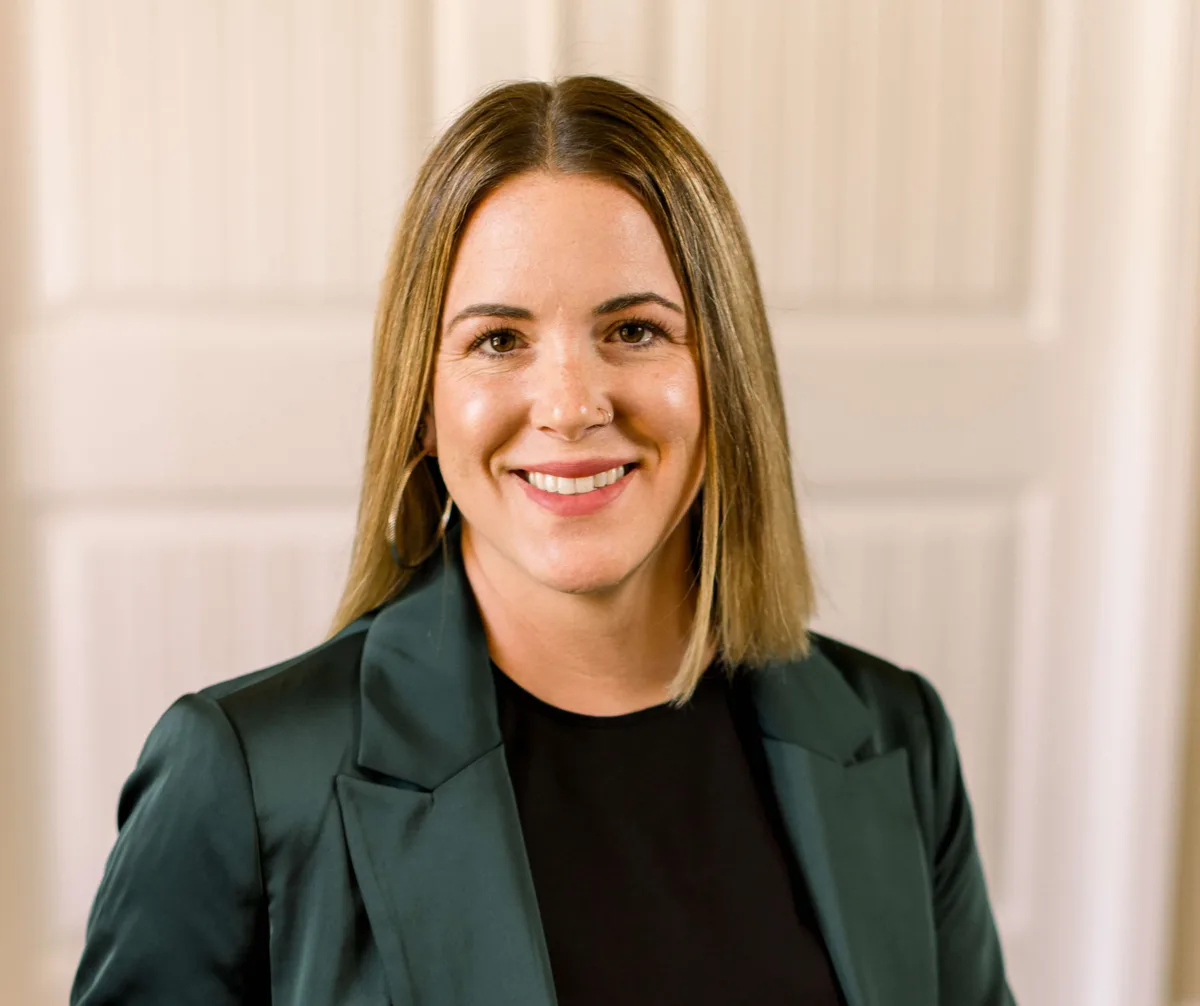
Stephanie Rubio has partnered with leaders in industries ranging from financial services, to interior design and artificial intelligence. In this episode of The Leader Assistant Podcast, Stephanie talks about the difference between being a leader in practice and a leader in title. She also talks about intuition and resourcefulness, spotting the gaps, and resisting burnout.
Leadership Quote
“You are never too small to make a difference.”
Greta Thunberg
About Stephanie
From Administrative Assistant to Executive Assistant to Project Manager to Executive Business Partner and bringing her background in sales and operations, Stephanie Rubio brings a unique understanding for connecting the dots to the leaders she supports. Having partnered with leaders in industries ranging from financial services to interior design and artificial intelligence, she believes it is not the industry that matters as much as how people come together as a team. Now digging back into her own business her mission is to support other existing and aspiring support providers to start thinking of themselves as individuals capable of setting and reaching their own goals and having their own dreams.
Episode links
Transcript
Read the full transcript5,483 words
Stephanie · 0:00
Hey, I'm Stephanie Rubio. Today's leadership quote comes from Greta Thunberg. You are never too small to make a difference.
Speaker 3 · 0:12
The leader Assistant Podcast exists to encourage and challenge assistants to become confident, game-changing leader assistants.
Jeremy · 0:30
Hey, leader Assistants, have you heard the NOVA Chief of Staff Certification course is about to see a price increase? But don't worry, you can enroll now, lock in the current rate, and start whenever you're ready with lifetime access. NOVA's mission is to give you the ultimate student experience. They've packed the course with dozens of templates, self-paced learning, hands-on practice, multiple instructor touchpoints, peer engagement, and even guest-authored assignments. With over 500 students across 22 countries, NOVA is the top spot for Chief of Staff Learning and Development. Don't wait. Enroll today and join the community at leaderassistant.com/nova. Hey friends, welcome to The leader Assistant Podcast. It's your host, Jeremy Burrows, and I'm excited to be speaking with Stephanie Rubio today. Stephanie is owner of Stephanie Rubio Assistant Services, and we're going to jump into some fun topics. But just so you know, this is episode 295. You can check out the show notes for this episode at leaderassistant.com/295. leaderassistant.com/295. Stephanie, welcome to the show.
Stephanie · 1:46
Hey Jeremy. I am so excited to be here. Thanks for that awesome intro.
Jeremy · 1:51
Awesome. Awesome. What part of the world are you in?
Stephanie · 1:54
I am in Florida, United States, right outside of Pensacola. So on the Panhandle, kind of South Alabama, but it is considered Florida.
Jeremy · 2:05
So are you from that area?
Stephanie · 2:08
No, actually I'm from Southeast Georgia, just from a tiny small town in from Savannah, Georgia a little bit.
Jeremy · 2:15
Nice. Is it pretty hot there right now?
Stephanie · 2:18
Very. Both places. Yes, very hot. Which I have really good friends in Oregon and she was like, it's 102 here. I was like, oh, so you're basically in Florida. That's like us all the time right now. Yes, very hot.
Jeremy · 2:29
Yeah. Yeah, we're about to get a heat wave, so it's going to be fun. Although I like to always forget, it's July right now and we're hanging out, getting ready for this heat wave. But by the time this publishes, I'll probably be raking leaves out of my yard. So you never know.
Stephanie · 2:48
I'll still be hot, but a different form of hot, not quite this bad, you'll be able to breathe outside.
Jeremy · 2:55
Totally. Well, tell us a little bit about you personally. Do you have kids, dogs, cats, ferrets, any hobbies and pets and young humans?
Stephanie · 3:10
Stephanie, the human. Yes, I, Stephanie, the human. She is married, two dogs and two kids, and a boy and a girl of each. Big spread, I guess on both. So I have an 11-year-old son and a four-year-old daughter. So we keep things interesting there. They're like two only children in many ways. And then same with the pups. We lost a pup last year and we had hands down said no more. That was it for us. It was very sudden. And we changed that very recently. We got a new pup two weeks ago, our original or the pup that we still had. He just wasn't the same. He really needed a companion. And now it's funny because they're kind of like two only children. I think he got stuck in his ways. Maybe we misinterpreted that. So yes, two dogs, two kids. We keep it interesting around here for sure.
Jeremy · 3:58
Yeah. And what's your favorite thing to do when you're not working?
Stephanie · 4:03
Anything outside. So we're about 30 minutes from the beach intentionally, and we have a pool outside. Obviously, we talked about the heat in Florida, and so it's kind of like we always want to be outdoors when we can. And there's about nine months of the year where it's nearly too hot to be that without water and air. So really anything outside.
Jeremy · 4:20
Nice. Cool. Well, tell us a little bit about your career now. Where did you get started in the assistant profession? Why did you become assistant? What did you like about it? What do you not like about it? Gives a little bit of that initial assistant career path story.
Stephanie · 4:44
Yeah. The beginning is the longest, I think. So just throw something at me virtually if I need to stop after a while. But it is the most interesting and I think why I still do it. I did start as an assistant and administrative assistant before I became an executive assistant. So kind of that move through and there was never an intention or a moment where I stopped and thought, I want to be an assistant until I realized I wanted to be an executive assistant. So it happened when we moved to Florida. I was looking for a job. I had been in sales. I had been a single mom for a little while. I just needed a job really at that point. And I wanted one for the first time where I could be home at night and on the weekends if I got to be picky. The funny part is I didn't get to be picky. I quit my job in Georgia and I moved to Florida, which was with my then-fiance and my son. And had an interview on the phone before I came with someone looking for, you know, a financial advisor, excuse me, looking for an administrative assistant. And I was really excited because I've been client facing for a long time. I liked the back end pieces and the opportunity there. But mostly, like I said, I just wanted to be at home with my family. Every night and weekend, it wasn't something I was afforded. So I became an administrative assistant. I got hired on the spot. Once I moved here, we had that pre-call phone interview. And then I did that for five years. It turns out I was really good at it. I helped him understand his business better than he did at some point. I don't have to tell you much about the administrative role, but I was an administrative assistant and digging into the back end, connecting the pieces, keeping his life together. It got to the point where clients would come to me with questions about their finances because they knew that I was that integrated. I could answer it for them. Transition to executive assistant right after the height of COVID for a couple of reasons. I realized that there was an opportunity to start remote working, to switch to that at the point that things were changing. I wanted to be more impactful. I'd hit a ceiling there. It's a company full of their own independent contractors, so who I worked for was never going to go anywhere else. I'd hit a ceiling there and I realized that I was miserable for quite a few reasons, some maybe topics we covered today. But it took me a long time to realize I was miserable because I was so thankful for those few little things I told you. I was home at night with my kids and my family, and I was so grateful for that, that I forgot to realize other things matter. It took a while to realize that I was a different person walking into that building than necessarily I wanted to be. That was my transition to executive assistant from administrative assistant. And I did that for several years for CEO of an ed tech company and a startup in the tech industry for an interior designer. And that's when I really saw the impact come through, and I started to have fun because I got to push the boundaries just a little bit more. I got to see the impact of helping someone realize I could take care of things that they necessarily couldn't because they didn't have time, skill, understanding, too many thousands of priorities, and then it started to become fun for me.
Jeremy · 7:53
Nice. So, what, you know, was it burnout? What was those things you eluded to when you were like, hey, you know, I was just happy because I could go home at night and hang out with my family? What, in hindsight, can you walk us through a little bit of that? Like, what were the, maybe unhealthiness or whatever you want to call it?
Stephanie · 8:17
Yeah, very unhealthy. It wasn't burnout at that point. I had pretty good boundaries in place. I've always been decent about boundaries as far as those time constraints. It was a smothering of sorts. That's where it became really unhealthy. I'm a helpful person by nature. I'm a leader by nature. That was smothered intentionally. If people were asking me for help, that was overshadowed. It was shunned. It was prevented. And it just got really healthy. There was like a possessiveness because of that kind of relationship I mentioned to you of people being independent contractors. So paying me out of their own pocket type thing, like you work here, this is your zone, that's it. But when there were other admin in the office and I had skills and knowledge and they wanted it for me, I thrive in being able to share that. And so that kind of possessive, really unhealthy smothering of abilities and things like soft skills that come naturally to me started to wear on me. It just gave you this kind of nervousness and like weight on your shoulders all the time of when can I help, when can I say certain things and I don't thrive in an environment like that. I'm not sure anyone could actually. Yeah.
Jeremy · 9:25
So what about the, whether it's during that season or your title is executive business partner? Is that right? Mainstay?
Stephanie · 9:39
It was. Yes, I started as executive assistant and project manager, and then morphed into executive business partner, which is a really great way of saying I was an executive assistant to the C-suite and helping the entire company.
Jeremy · 9:51
Gotcha. Gotcha. Yeah. So then did you experience burnout in that role? Tell us a little bit about, you know, I know many of those listening, they've heard me say this before, but I ask my guests, you know, hey, what topics do you want to talk about? And one of them you mentioned was burnout. So I just wanted to hear a little bit more of that.
Stephanie · 10:12
Yes. Yes. I would say that thanks to some of the mentors and people surrounding me, I walked right till the edge of burnout and I was able to walk myself backwards because I recognized the signs, not really enough to prevent walking all the way to that edge, but the signs being, like I just told you, I started to realize where I thrived and I really had a good time and being able to push the boundaries, make up processes on my own and that new role, because I was an executive assistant for the first time in a startup company, the constraints just don't exist. But when that excitement just gets obliterated, when that disappears suddenly, that's a sign for me of like I enjoyed this for a long time. suddenly, why is the joy gone? What is that? What's happening? Is it me? Is it something else? Again, because I had a couple of mentors that were big advocates for resisting burnout because they'd been through it too and they knew the signs. There were a couple of other people in high stakes roles around me admittedly going through burnout. And so I got to see them unfortunately experience that and not get the support from their leader that they needed. So those all attributed to me not only learning about it being an advocate, but being able to recognize what was happening in me and admit that I needed to take a step back before it got too far.
Jeremy · 11:32
What were some of the signs? What was the big aha moment for you?
Stephanie · 11:37
For me, it was that. It was that in the blink of an eye almost, I went from enjoying, being so excited, I would be talking to my family about what I was doing in my role or day-to-day or what was changing in the matter of a week, not wanting to show up and not wanting to go to work. That big flip of the joy just being gone almost immediately was the biggest sign for me, to stop and start thinking like what's happening, why is this happening? This is definitely burnout. It's because you've been going hard for it. You feel like your impact is being lessened. Why are you doing it? You're questioning why you're doing it. Why does it even matter? So let's stop, let's get clarity yourself, and then start the conversations with those around you.
Jeremy · 12:19
So speaking of conversations with those around you, what was there like a, hey, I need to take a vacation, hey, I need to change our working relationship in this way? What did that look like?
Stephanie · 12:33
It was a conversation. So the good thing about the company is that we could all take time at will. We had a flexible time off policy, take it if you need it. So I was already pretty good about that. But also, I noticed in something you may know, not only from yourself but working with so many folks, is that when you really enjoy something, you might overwork yourself accidentally. You're just having so much fun. It's less about you don't feel like you need that time off even when you do. So I would say it was a combination. Yes, I'm going to take some actual personal time. My time was always for something else. Even if it's for a vacation, it was to plan that vacation, go on that vacation, and come back from that vacation. So let's take time to do nothing. It was to start a conversation of I really need to get clear. So my role was in the middle of changing at that time too. So can we sit down? Can we work through a role description and have a conversation? So I understand what needs, what I need to be doing, what I do not need to be doing, and how I can help and be impactful, so that we're clear and I'm not questioning that. So those were two things, conversation, taking time off, and then helping get that clarity so that we could move forward and I could understand.
Jeremy · 13:43
Was that received well when you had to have that conversation? Was there a little bit of like, oh, it's fine, just push through, or was it pretty welcomed?
Stephanie · 13:55
It was with a couple of different people, so remembering that I supported much of the C-suite, and some people had left and others were coming in, and so there was a lot of change everywhere. I would say out of two that I had the conversation with, one that was split down the middle. Whereas one, it was completely, well, there's a difference, Jeremy, I think in supporting with your words and then supporting with your actual actions. Both were very supportive with their words. One was a bit more supportive in, I hear exactly what you're saying, yes, let's dig in, this is what I think, this is what you're going to do, does that sound right? Yes, we were able to dig in, collaborate, work together, and make an action plan to do what I wanted to do, do what I needed to do, what the company needed me to do, and the other one was really just a conversation that never went anywhere beyond that. Yeah. Interesting. I'm not in the role anymore.
Jeremy · 14:50
Yeah.
Stephanie · 14:51
As you know, I'm running my own business now.
Jeremy · 14:53
Yeah. Let's talk about that transition a little bit. So why that transition, why your own business, what specifically do you do, what's your business' goal and mission?
Stephanie · 15:07
Yeah. So the transition came about partially because I'm in school right now. I never had a shortage of things to do, which I think you could say the same. You're an EA still willingly, and you also have a podcast, and you are an awesome author. So similar to that, I always need to be moving and doing. I'm going to school. I'll be wrapping that up in August. And my role at the time was very accommodating that I worked part-time. All of this was still happening fully part-time, as I liked to say. It was part-time. It just depended on how much I was putting towards it. So that was part of it. And the growth there, again, in the startup, that was all a really great zone for me for a lot of those reasons. I could push those boundaries. I could create processes. I could really help people. So I was fulfilled in that way. But where I was lacking fulfillment is a tie to the mission myself. The mission of that company was not mine. The mission of who they were helping were like, okay, they kind of need help. But people that really need help and where I can really lean in and be impactful are people who did what I did. They're executive assistants. I also came up, like, had a bridge there of being a virtual assistant, which is really where my business started, before I transitioned into that role. And just trying to take charge and figure out what I wanted to do and where I fit in and where I found joy. And it is in that. It's, well, kind of what I was just telling you earlier, that was smothered in that initial administrative role, being a leader, helping other people, leading in and training others. I just started to listen. People reach out to me all the time and they're like, what did you do? How are you doing it? How can I do it? Like, how can I become an executive assistant? They were maybe an administrative assistant with me in another role. And so they have somewhat transferable skills. It's just not like supporting an executive yet, which is a little bit different. So being able to help people continue to do that, because the business is a mentor and a coach for executive assistants, virtual assistants, like those executive business partners and the chief of staff. That support role to help them recognize what it took me for an effort to recognize is that you have a seat at the table, your voice matters too, and you can take charge of what you do and quit just being like, yes, I'll do what you need me to do, and start telling people what they need to do as well.
Jeremy · 17:25
Nice. You alluded to some of this, but talk a little bit about how you saw this in your career and try to develop this in your career, but also how you're working with other assistants and executive business partners on intuition and spotting the gaps that are in your executive's workflow or your team or your company's environment, how did you use that intuition or develop that intuition in your role?
Speaker 2 · 18:04
Have you heard? The NOVA Chief of Staff Certification course price is going up in January of 2025. Enroll now and with lifetime access, start whenever you please. Here at NOVA, it's our mission to provide the very best student experience possible. Our course is chocked full of features and resources designed just for you. Dozens of templates, self-paced online learning, hands-on practice, multiple instructor touchpoints, peer engagement opportunities, guest-authored assignments, the list goes on. With 500 students across 22 countries, NOVA is the premier destination for Chief of Staff Learning and Development. Enroll today and join us.
Stephanie · 18:48
That's a really good question. Intuition, I wish I could put my finger on or I haven't quite yet on a way to develop that. Some of it feels like it comes naturally and we can give it different words. Resourcefulness, the intuition, something about the administrative role and being an executive assistant, where you see things that people don't. If we just take calendar management as a baseline example, so many people we start supporting their executives, they don't even understand that they need space between their meetings. They're back to back to back all day and you're filling in the gaps because you start to think of things like if you were walking through it yourself. Event planning is another example, especially when people are starting out. It's not hard to do this job. If you almost close your eyes and just walk through what it would be like. If you're planning an event and you're not even going to be there, does someone need to fly to get there? What are they going to do when they get off the plane? How long is the meeting? Where are they going to meet? You start just kind of asking yourself these questions easily and then you have a plan to put together and all these tasks that you need to do just because of that intuition of walking yourself through it. Okay, well, that's nine to five. They might want to eat at some point in there, so that means lunch. Well, eat what I only eat once if I was there, maybe, but what about 10 other people? Maybe we have a snack. Sometimes people don't even have to teach you that. That's how you become really impactful, major job security in the role, I think, because the first time you do that, everyone in the room is going to be like, wow, I never want to have to play a part in this again. I just want someone to do it all for me.
Jeremy · 20:19
Right. Yeah, that's great. Then when it comes to the resourcefulness, is there a specific niche, if you will, on, hey, my skill set, my experience, my resourcefulness in this area is what I'm going to highlight in my role because that's what I'm good at versus how much of it is, and maybe you've walked through this with some of your clients, how much of it is your weaknesses and your development gaps, and you're thinking, hey, you know what? The company needs this. I don't have a lot of experience in this, but I'm going to make myself resourceful by diving into that area and growing in that area. Does that make sense?
Stephanie · 21:18
A thousand percent, yes. I think that's the second superpower of the role, and I don't say second to put these in order of what's most important, but it's like they couple together. Being resourceful is the other key to easily being successful and really good in this role, and then when you're good, you feel good about it, and it's exactly what you just, the way you described it is exactly how I would approach it and what I looked for when I was hiring executive assistants in the role is that you don't have to know it right now, but you can find out, right? Or you can walk yourself through that with the intuition. I mean, Dr. Google can be our best friend sometimes. You can figure it out if you're willing to, or even go in that next step and it's not just a gap right now. So Dr. Google is not the answer. It's that this whole company has this gap that someone else identified because that's what they're doing, but they don't even use that system. And so now I'm going to become the expert in that system, and then I'll become the go-to, and then I can help everyone move along through it. So being resourceful enough that, again, Dr. Google may walk you through some of the baseline and give you a little bit to get through, but then you can really start to nail down in a specific area type system to then become the go-to for that. But it's not just for that system, it then expands into everything. So in my case, that was a project management tool. And I learned how to really get people collaborating in there and speaking to each other because not only was it a fully remote company, but it was a new and a startup and growing. So guess what everyone did? They worked in their little pockets, their little silos all the time. So we had to figure out how to get people talking across those lines. And that looked like a lot of different things. And I ended up taking the lead on that. And project management was one of the ways to do that. Just a software where you could see what was happening all the time. So I took it upon myself then to learn everything about it. And then people were coming to me, questions big and small about that system, but also breaking down the barriers. So it was like a twofold there, just for trying to lean in and help in one area.
Jeremy · 23:17
What was the software that you guys used? Just curious for the project management.
Stephanie · 23:23
Asana.
Jeremy · 23:24
Okay. Any quick Asana tips for those listening that have to learn Asana themselves?
Stephanie · 23:30
Yes. They're the easiest things to, I'm telling you. Make a task template. If you do something more than three times, that's a task template, make it a task template, and then you're not re-creating the will every time. Use the workload feature if you have a team, because the people that are nearing burnout, the people that are working and feeling like they're never making impact or working too hard, you can help them when you assign them a new task by saying, also, see, you have these three other things. This is actually top priority for me. Why don't we bump those three, and then you'll teach them to start doing that themselves. Look at the workload feature and create a task template and project templates too. Make the system work for you. The last one, I won't talk forever about this, but I could, is... I just lost my train of thought. Yeah, all the Asana things. Oh, rules. Use the rules. They are so easy to set up. So as simple as, you know, and they're just automations. That's all the rules are. So, you know, I love an automation. If a system will do something for me because I told it to one time, and it will do it a thousand, sign me up any day. And that's essentially it. And I'm talking simple task lists. You might have like upcoming to do and then done, and you set a little rule that every time you click that green check mark, it just moves out of the way. So it's out of sight, out of mind, you're done with it. You set that rule one time and your project runs like that every single time. So any sort of automations, which a task template will be one as well. And you can set task templates to be a part of your automations, but the rules, excuse me, not automations in Asana. Obsessed.
Jeremy · 25:04
Love it. Love it. Good tips, good bonus tips there for those in the Asana world or those about to be in the Asana world. Hopefully that's helpful. Thanks for sharing those, Stephanie. Okay. So this podcast is called The leader Assistant. And several people or probably dozens of people at this point have miscalled it or miscalled my book, which is also called The leader Assistant. They'll say The leader's Assistant. And I'm like, okay, there's a reason it's not The leader's Assistant. It's The leader Assistant because as assistants, I believe we are leaders even if leader is not in our title. And so talk a little bit about that and how you've tried to implement that in your career. What's the difference between having leader in your title and being a leader in practice?
Stephanie · 26:07
I love this question. I partially love it too because I was learning this in practice, learning this as I navigated my new role in transitioning, but also studied it recently, like theories of leadership. And the first thing that you learn is that anyone can be a leader. It doesn't matter if it's in your title or not. And one of the best examples given, and I'll just keep this as a very broad stroke because I'll get names or places wrong, but it was a real story. A plane went down with a sports team in the mountains, maybe in South America somewhere. And then it walks you through how it didn't matter who was the captain on that team, who was the pilot or anything. When everyone hit survival mode, it mattered who could remain calm. It mattered who could make a plan of how they were going to eat, how they were going to start a fire, who was going to take a walk for that day and try to get help. And it just reminds you that in an organizational hierarchy, it doesn't matter what your title is. There's leaders and there's followers. Followers isn't always the fun way to say it because it just sounds like you follow blindly. That's not what that means. It just means that if you have something to say and people listen, you're a leader. If you can get folks to do something based on what you say and how you set that example, then you're also a leader. So we'll think the leader Assistant hits the nail on the head. Now, when you're dealing with people that have leader in their name or are clearly a leader because they're an executive or manager of the company, it can be a little bit more complicated than I just made it sound. But you become a leader because you show up as one. Your seat is at the table. It's not behind the table. You have a place in the conversation. You connect pieces of the puzzle that your executive does not connect because they're not working in the inner workings like you are. They're working in a different kind of way almost sometimes. And so just remembering that you're a leader in your own right because of that is extremely important.
Jeremy · 27:57
Well said, Stephanie. I could not have put it better myself. Thanks for thanks for humoring me there as well. And I really appreciate you being on the show. Is there any final words or inspirational phrases or billboard copy that you would like to share with assistants of the world who are listening right now?
Stephanie · 28:19
Yes. Yes. I heard you asked this before on some of your podcasts, specifically the billboard. If I could buy a billboard and put it on there and it was just for executive assistance, it would say, you belong at the table. Which I think I've said that in some way, shape, or form a couple of times on this conversation already. But you belong at the table. I've sat at tables where unintentionally, the assistants were in a row behind, and that's just unintentionally, but it's setting the precedence that the people at the table have a say in the other's thought, and that's just not a collaborative way to work with anyone that you work with. Quite simply, you belong at the table. If you remember that, you'll speak up, you'll ask questions, you'll give insight, and it will be valued.
Jeremy · 29:04
Perfect. Well said. We got to get that billboard ordered right now. Maybe put it on the way to the beach in Florida.
Stephanie · 29:11
Yeah, perfect. You belong at the table, they might scratch that out and put beach, but we'll count it.
Jeremy · 29:16
Yeah, you belong at the beach. That's also true.
Stephanie · 29:19
Yes, both.
Jeremy · 29:20
Awesome. Well, I'm going to put your links and stuff on the show notes at leaderassistant.com/295. I assume you're all right with people reaching out to you on LinkedIn and et cetera.
Stephanie · 29:33
Yes, absolutely. Please.
Jeremy · 29:35
Awesome. Yeah, that's leaderassistant.com/295. Check out all the show notes there and all the links to connect with Stephanie and reach out and find out more about her business and yeah, just network. So thanks again, Stephanie, for being on the podcast and I appreciate you and your passion for helping assistance and best of luck to you and your business.
Stephanie · 30:00
Thank you, Jeremy. Thank you for the opportunity to chat and continuing to be a voice for other assistants. It's really impactful work.
Speaker 3 · 30:18
Please review on Apple Podcasts.
Stephanie · 30:27
goburrows.com.