
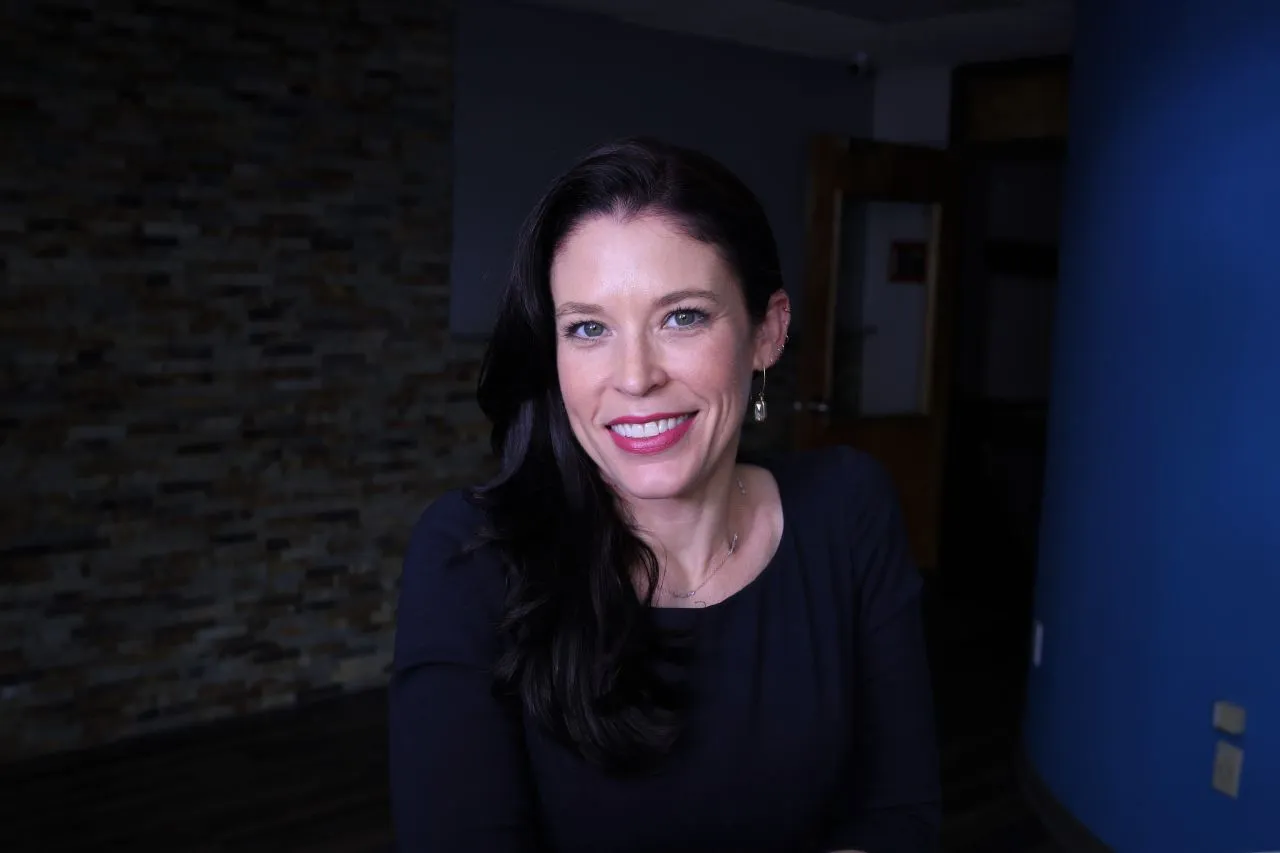
Monique Helstrom is a speaker, coach, and specialized administrative recruiter with over 27 years of experience developing humans and building organizations. In this episode of The Leader Assistant Podcast, Monique shares her best tips for interviews, gives us a peek inside the administrative recruiting world, and walks us through her advice for resume writing.
Leadership Quote
“The greatest contribution of a leader is to make other leaders.”
Simon Sinek
About Monique
With 27 years of experience developing humans and building organizations, Monique Helstrom knows that change is possible, and it all starts within. As a speaker, coach, and specialized recruiter for the Administrative profession, Monique helps her clients take accountability for their past, and command total control of their future.
Episode links
- Monique on LinkedIn
- MoniqueHelstrom.com
- instagram.com/moniquejhelstrom/
- youtube.com/channel/UCrz2UEjZterB-2AdKZuAYxQ
- facebook.com/MoniqueJHelstrom
Transcript
Read the full transcript5,244 words
Monique · 0:00
Hi, my name is Monique Helstrom. Today's leadership quote comes from Simon Zinick, and that is, the greatest contribution of a leader is to make other leaders.
Speaker 3 · 0:17
The Leader Assistant Podcast exists to encourage and challenge assistants to become confident, game-changing leader assistants.
Jeremy · 0:33
Are you a strategic senior executive assistant thinking about what's next? Whether you're ready for a promotion or loving the job you're in, NOVA Chief of Staff's certification course may be just the resource you're hungry for. With over 400 students across 20 countries and rave reviews, students graduate from NOVA's hands-on, self-paced online course with the confidence, knowledge, and power to make the move to Chief of Staff for their executive. But don't take my word for it. Visit leaderassistant.com/nova to find countless testimonials, the course syllabus, and lots of free resources to support you in your career journey. Hey friends, welcome to The Leader Assistant Podcast. It's your host, Jeremy Burrows, and this is episode 286. I'm very excited to be speaking with Monique Helstrom again. Hello, Monique.
Monique · 1:26
Hello, Jeremy.
Jeremy · 1:28
So for those of you who have been longtime listeners of the show, Monique was on episode 16 originally. That was back in June of 2019. So 16, so you can check out the show notes at leaderassistant.com/16 and you can listen to more of Monique's story in that episode. But she was also on episode 118, and then 166. We talked about how to have tough conversations in that one. And then 118, we talked about communication. And then in 16, we talked all about her former work as chief of Simon Sinek and her Philadelphia Eagles fandom and all that fun stuff. So definitely check out those episodes. I will link to them in the show notes for this episode, which again is 286, leaderassistant.com/286. I know, right? There you go.
Monique · 2:30
Look at that. We've been on this journey for quite some time.
Jeremy · 2:35
It's been awesome. So let's do a little recap. So I'm not going to make everyone go back and listen just to hear the basics. So what city are you in? And tell us about what you love to do when you're not working.
Monique · 2:51
I'm in Denver, Colorado. OG from Philadelphia, obviously, as an Eagles fan. I'm heading to Philadelphia tomorrow, actually, to visit the family. And so yeah, but currently live in Denver, Colorado with my dog, Birdie, and we enjoy a lot of the outdoors, lots and lots and lots of hiking. And you can do that for four seasons here in Denver. So that's what we do.
Jeremy · 3:20
Love it. And when we last spoke, you were doing speaking and coaching for executives, but also businesses and then also executive assistants. As a former administrative professional in your career, you have lots of experience in that world. And again, people can learn more about that time of your life. On the prior episodes. But tell us a little bit more about maybe the updates to your career journey and where your focus has been more recently.
Monique · 3:59
Sure. Thank you. Thank you for the stage. So, my journey or at least the way that my orientation has always been, has always been towards the executive assistant in an administrative realm. I was one, I've been one for a really long time, obviously, and throughout coaching executives as well on how to have an assistant, what to do with these wonderful machines called executive assistants who work so hard to keep them afloat. And it was only natural that I slid into recruiting for administrative professionals as well. And, you know, as we know, it is difficult to find the relationship, the real, that bond that you can have with an executive where you know things are just going to work. And as you know, you have a very good relationship with your executive. I have a very good relationship with Simon. And it was weird for me to realize that sometimes people don't have that. And they don't have great colleagues on either side, let's call it. So it made sense for me to try and help more executives find that. So I started recruiting, obviously getting administrative assistants, executive assistants, chief of staffs, for executives of all levels, of all different startups, all the way up to finance, agriculture, to all different professions. So I've been doing that for quite some time. But I'm still coaching, again, I'm still coaching executives on how to have an assistant. I'm still coaching assistants on skill building, and also adding resume services and how to interview better, and everything that goes around that hard, hard transition of getting a new job.
Jeremy · 5:54
Love it. So we're going to dive into those topics in this conversation. But before we jump into the specifics on like interviews and resume writing, what would you say is maybe one or two things that assistants should know about the recruiting world? Working as a recruiter, working with these companies and these executives, trying to find an assistant and find a match. What's maybe something that's inside baseball, if you will, on the recruiting world?
Monique · 6:29
Insider tip. Any direction? I mean, that's fairly broad. Any specific direction?
Jeremy · 6:34
I think if you're listening right now and you don't have a job and you're trying to find a job, you're probably thinking, okay, what do I need to know? Give me that edge. Give me that edge in the recruiter world.
Monique · 6:46
So I'll give you a little secret. The Inside Baseball, number one, as we know, this profession is slightly amorphous. We all do slightly different things. We all have slightly different titles. Most often, people don't know what we do in an organization. Then we try and get a job and we put on a piece of paper what we do for a living, where the person reading it on the other end might be HR or a recruiter firm or a CEO, who doesn't necessarily need to know A through Z of what you do. They want to know what the outcome is. They want to know why you do it and they want to know what you're doing it for or what it produced. I read a lot of resumes that are like, I do this and this and this and this and this and this. I'd rather see in order to keep my executive on time and never wait for a meeting, here's some of the steps, here's what I do. Give me the outcome. Tell me what these steps are for because executives, they don't know what you do and then they have to read on a piece of paper and say, that's what I want. Write it in a way that an executive is going to say, that's what I want or HR is going to say, that's what I want, not in how we want to describe what we did.
Jeremy · 8:08
Yeah. An example would be, let's say my resume says, I scheduled meetings. Yeah. How would I rewrite that?
Monique · 8:22
How would I rewrite that? Again, it depends on who you're working for or what the context is. I'm going to give you a really broad overview, but what was the purpose of scheduling meeting? I'll tell you in my case, it was to help Simon inspire the world. If I keep his schedule organized, he can go out and inspire more people to do the things that inspire them. That's truly what I was doing. That's how I wrote it in my resume. Yes, I scheduled 275 meetings a week and used three different systems. Yes, I did all those things, but what was the outcome? The outcome was Simon grew from X amount of audience to X amount of audience. One of the ways that we did that was saying on time and on force. I am a master at doing that. That was a really odd explanation, but you see.
Jeremy · 9:21
No, no. Yeah, it makes sense. I think for me, if I was going to think about my current role with my current executive and a meeting that I just helped schedule that he had a couple of days ago, turned into a $250,000 investment in our investment round. And so for me, it's like, OK, when you see those quantifiable results from these meetings that you schedule, then yeah, it's a lot more than just I scheduled meetings.
Monique · 9:56
Absolutely. And if you have exact quantifiable details, that's even better because then you can, you got numbers and if you're not putting that in your file for why I am so cool, then you should. And if you don't have quantifiable data, so what if you kept your executive or executives or whomever you work with or for on point, what would that do? What does it do? What is keeping them on schedule? What are they getting to do? Are they doctors who are getting to help people? Or, you know, so it's kind of a switch of the focus.
Jeremy · 10:40
Yeah. Definitely.
Monique · 10:44
because again, who's reading that? Who's reading your resume? It's not other EAs reading your resume.
Jeremy · 10:49
Right. Right. So speaking of reading resumes, is there, and actually I kind of have a side question on the recruiter side first. You know, is recruiting or working with, if I'm an assistant, which I am, but if I'm an assistant looking for a job, which I'm not at the moment. Is it kind of like working with real estate agents where it's like, you know, you signed up with one real estate agent and then it's a big no-no to go buy a house with this real estate agent. Like, what's the whole recruiter code? You know, like, can I have a relationship with this recruiter and, you know, put some time with this one too? And like, what are your thoughts on that?
Monique · 11:43
I mean, obviously, being a recruiter, exclusivity is fabulous. And for certain types of recruiters, it's really needed almost, you know, for me finding a specific human being to be the perfect type of executive assistant to the CEO for this type of business. If you have multiple people looking for that person, you're going to get skewed results. So you would want to be the exclusive and frankly, the other person would want you to be the exclusive as well, to be, you know, all of it coming through one central hub. So, you know, some of those higher-end exclusive recruiters also want you to be, you know, want you to have be only with them, but I don't think some of the more generalized places like Robert Half and, you know, Searchwide, some of those, I don't think they require you to be exclusive with them. I do.
Jeremy · 12:46
Right. Yeah. Fair enough. Fair enough. Okay. So you've, you're working with a recruiter and you, they present you for some jobs and you get some interviews. What are a couple of tips, maybe in prep for the interview, but also in the middle of the interview? What can you share to impart your wisdom with the assistants listening who are maybe either going into an interview tomorrow and a little bit of confidence?
Monique · 13:17
In prep or in the middle? Okay. So in prep, know who you're talking to. Do some research, research, research, research. You'd be shocked at how many people don't go to a company's website before they interview with the company. So make sure that you know who you're talking to, maybe what their position is, what the company does, what their website is. Look on their LinkedIn, look on their social. You should be doing this anyway before you even submit your resume. But if you have already submitted the resume and have the interview, show up and know what you're talking about. Reference something that they say on their website, reference something that you read on their website that sparked your interest. Shows them that you are paying attention, that you're interested in this topic. And during the interview, I guess, what's one thing I can advise? We're human. If you get flustered, it's fine. You know, we don't all do these types of things well, interviews and things. And so if you lose your train of thought, don't cower or do anything. just, oh man, I lost my train of thought. You know when that happens? And then get back on track. You know, we're all humans. We're all messy. It's okay. just be the messy individual that you are sometimes because they're going to see that anyway, right? Depends on us.
Jeremy · 14:45
Right. Take a deep breath and start over.
Monique · 14:48
Take a deep breath, get back on track. Finish what you were saying.
Jeremy · 14:52
Yeah.
Monique · 14:52
Take a hit of pause.
Jeremy · 14:54
Love it. Okay. So then, actually, last one on interviews question wise is after the interview. I know a lot of people say, you know, you've got to send a thank you email. You've got, you know, you've got to follow up. You know, you want to be persistent, but not you want to be pleasantly persistent. You know, all those things. What's the best thing, you know, after you go home from the interview? What should they do?
Speaker 2 · 15:25
Are you ready to elevate your career in 2024? I'm Maggie Olson, founder of Nova Chief of Staff Certification, the first of its kind online course for aspiring and existing Chiefs of Staff. With curriculum taken directly from on-the-job responsibilities, Nova's self-paced learning modules provides you with hands-on experience so you can feel competent and confident moving into a Chief of Staff style role. It's the perfect next step for executive assistants. Head to leaderassistant.com/nova to learn more, grab the syllabus and enroll today.
Monique · 16:02
I always recommend a thank you. I love getting the thank yous. Again, something specific that lets me know that you didn't copy and paste the same email to five different people who you had interviews with. Thanks for the interview. I hope you have a wonderful day. Something I really enjoyed talking with you about blah, blah, blah. I feel like you were interested, like you were paying attention, like you were listening. I like the thank you. I like a generalized follow-up. Again, this depends on the job because if I'm trying to place this job in a week, that's a different schedule for you to follow up than if I'm trying to place this job in a month. Yeah. I guess it really depends on how soon they're trying to have a warm body in the seat. But follow up occasionally. I definitely don't need every day. Frankly, it's not going to really sway my decision anyway.
Jeremy · 17:06
Yeah. Cool. So what about, let's talk about resumes then, because I've seen a lot of comments and talked to a lot of assistants right now that are just discouraged because they see on LinkedIn or they see on Indeed or whatever sites they're applying for these jobs and they're like, oh, it says that a thousand people applied for this job, or it says that 2,000 people have filled out a application for this role on LinkedIn or whatever. It does all those little social cues and FOMO stats. So one, what do you say to that specific comment that I've seen over and over again of like, since there's a thousand people, do I even need to apply? Is there even a point? So that's the first part. The second part is just like, what can you do when you're crafting your resume to cut through the noise?
Monique · 18:00
Okay. So, okay, the two-parter. You like the two-parter questions. I like it.
Jeremy · 18:05
You know, I'm a two-parter. It's a two-parter day today for some reason.
Monique · 18:09
It's a two-parter kind of day. Okay. So part one was, if there's a thousand resumes already being submitted, should you even do it? Depends on how bad you want the job. If you're going around and I know people do it and there's nothing wrong with any of these behaviors, but if you're just going on and applying, applying, apply, apply, apply, apply, apply, apply. The ones that have a thousand, forget it. because you're not paying attention to it. You really don't care about it anyway. Leave it alone. Let the other thousand people buy for the job. If you read the job description and you're like, this is me, I must get this job, then yes, you have to apply and you have to have your resume stand out. Which leads to the second part question, how do you make your resume stand out? In addition to what I said before, make sure that you're describing the tasks that you did in a manner that's going to make sense for the other person on the other end depending on who's reading it, HR or the executive. It's usually more outcome-focused and it is performance-focused, action-focused. But also, what is it? Again, do some research and let me know that you've read my job description end-to-end. When I get a cover letter that says, all I was reading and description of the CEO was exactly the type of CEO that I work for, here's a story about it, and they tell me that they read it. I love it. I love those letters that I can read, that someone tells me why this is the job of their dreams. That means a lot to me more than just the resume, because the resume itself has to stand out itself. But if you're just sending the resume, make sure that that matches too, and yes, I'm giving you extra work, should you customize your resume for every job. Sorry to say this, but yes, if you really want to get the job, make sure that the way that you're describing the things that you do or the things that they need on their side. They're saying, I need an executive assistant who is price conscious when booking air flights. I've made that up, but when you're describing what you do, don't talk about the private jets and the private jets that you have scheduled for in the past because it's too different. So now your audience read the job description. Tell me that you read the job description. That's one of the ways to stand out.
Jeremy · 21:01
Yeah. Are you a one-page or two-page resume person?
Monique · 21:08
I don't mind reading two. I don't even mind three if it captivates my attention. If it's single-spaced paragraphs on four pages, which I've gotten as well. No. One page is hard. I mean, especially if you're an esteemed assistant and you've been doing this for a while, one page is almost impossible, so nothing wrong with two.
Jeremy · 21:34
Three. Then what about even just some inspiration or encouragement? Doesn't even have to be a practical tip or anything, but there are assistants in our community and Leader Assistant community who have been applying, who have customized cover letters for months, and had interviews, had eight rounds of interviews, made it to the top three, didn't get selected. The next wave, had another seven interviews at this company, everything was going great, got down to the top three, didn't get selected. How would you encourage those listening that are going through that right now?
Monique · 22:24
Yeah. It's a transition. You're going through it. Don't shush it away, I guess, is those are the words of encouragement I will give you. You're going through a transition. It's hard. It sucks. Getting rejected sucks. There's lots of feels that come along with that, and the whole process of the up and down, and the anxiety and all that. But, not but, and, and that's your body's way of telling you that you're alive. So the anxiety and the butterflies and the things and the worry, that's your body and your brain telling you that you want to be in a better place, and you want to be in a different place, and that you're ready, and that you're going and you're disappointed because you haven't been there yet. So thank your body for telling you that you're alive, and, you know, you're, it's, there's probably a reason if you didn't get those other jobs, you probably have a terrible boss or something like that maybe. But what are you going to learn from this whole situation? You know, going through the process, feeling the anxiety, feeling the emotions, feeling the disappointment, again, don't run away from it. Sitting in it. Sit somewhere and cry if you need to and be like, this sucks. But don't push it away and pretend that you're not upset about it, because those kind of feelings always come back to get you at the end, they make you sick. So just go through it and then figure out, what can I learn from this? What can I do better? How can I tweak my resume a little bit better next time? Or how can I show up better on an interview? Or what am I learning about the type of person I want to work for? Or I've had six interviews with Oil and Gas and I keep not getting hired. Maybe that's not the direction I should go. So pick up stuff along the way. Don't make it a wasted opportunity.
Jeremy · 24:17
Yeah. Yeah. Yeah. It's like I tell my kids when it comes to their baseball tournaments and soccer tournaments and they lose and it's like, all right, you either win or you learn.
Speaker 2 · 24:30
Yeah.
Jeremy · 24:30
You know, it's losing sucks. It's never, it's always more fun to win. Yeah. But what can we learn from it?
Speaker 2 · 24:39
Yeah.
Monique · 24:40
I prefer to be what do you, when you either win and learn or you lose and learn. because either way, you're learning something.
Jeremy · 24:46
There you go.
Monique · 24:48
What to do more of or what to do less of. So learning is everywhere.
Jeremy · 24:55
So, okay. So these are great tips, fun conversation. I want to hear a little bit about your coaching for assistance specifically. And how does that process work? I know there are a lot of people that are, oh, I want a mentor or I want to coach, or what's the difference between a mentor and a coach? And they don't know. And it's like, so what's your philosophy on coaching and how do you work, you know, specifically again, with assistance? And you mentioned, you know, you help them with their resume and you help them with interview, working through interviews and all that as well. But yeah, I mean, I know a lot of assistants could use coaching and a lot of them need coaching. But what have you seen has been the benefit for the assistants that you've worked with?
Monique · 25:49
Okay. So I consider myself, what I call to be a transitional coach. I help people through transitions to getting from where they are to where they need to be, or who they should be, where they need to be, who they've always meant to be. That's where, that's my sweet spot. So if you're, you know, professionally speaking, you want to get a promotion, you're trying to get that better job, you're trying to get a different executive, you're moving up to the C-suite, or you're changing jobs and you want to go to a different position, those are all transitions and those are professional transitions. And so I can help you with that resume, with that, who are you now and who do you want to become and how do we get there? So professionally, also just in life. I, you know, many of my coaching clients currently at this moment, are not necessarily gunning for a specific position. You know, they're not like, I want to be this Chief of Staff or I want to be the blah-dee-blah. They just want to be better at who they are. They want to know more about themselves. They want to know better about how to communicate. They want to upgrade. They want to upgrade their own evolution. And so that's really where my sweet spot is. You know, some some coaches slash mentors are long term, you know, and they you're especially a mentor. You can be you can be a mentor or mentee for years, for a decade, you know, and and that's one type. My again, transitional type of coaching is for a specific need. You know, I want to get a new job. I want to transition into this person. Most of my coaching is eight sessions, 12 sessions. And then my clients will check in every quarter or something like that. So it's it's again, I help you go from where you are to where you need to be.
Jeremy · 27:43
Awesome. Love it. And where's the best place for people to find out more about you and reach out if they want to learn more?
Monique · 27:49
It's not hard to find me. Monique Helstrom is my name and Monique Helstrom is how you find me. That's my website. It's all my instance. It's all of my social. A friend told me the other day, she was like, you're not hard to find. That's true and I've done that on purpose, but that's also very scary. And I am easy to find. moniquehelstrom.com. You can find me everywhere.
Jeremy · 28:14
Awesome. Great. And even though it is easy to find, I will put your LinkedIn and Instagram and all those, and the website and everything, all those links in the show notes at leaderassistant.com/286, leaderassistant.com/286. And I think the last thing I wanted to just ask you about, just because I'm personally curious, you worked with Simon Sinek for a long time. Was it like seven years or something? I can't remember.
Monique · 28:44
Almost nine, I think, or somewhere dancing around the nine years.
Jeremy · 28:48
And it's been how long since you've parted ways and?
Monique · 28:55
2020, 2019, yeah, four.
Jeremy · 28:58
Okay. So I'm just curious, I've worked with executives for long periods. I worked with my last executives six years. I actually worked in the organization for 12 years. I've started, well, actually, I'm in the middle of year eight with my current executive. But there's always those, at least for me, it seems there's always those looking back and thinking back on the good, the bad, and the ugly with former organizations and former executives. And I always, I don't know again, maybe it's just me, but I always think like, okay, like, this was, that was crazy. Like, if I would have known this, then that would have changed everything, you know, and not like regrets or anything, but just like maybe lessons learned or now that it's been four years since that role as his assistant slash chief of staff. Has there been anything that has, you know, I don't know, stories or ideas or, you know, great gratitude moments or, you know, is there anything that's come just now that that separation has been there that you would like to share or that put you on the spot?
Monique · 30:27
It's a broad question too. Yeah, put me on the spot. So anything that I felt since?
Jeremy · 30:32
Yeah, I mean, are you like, I miss working at that team and, you know, it was a fun world or like, you know, I still see things in the media or with them and it gives me this like, you know, feeling of, oh, you know, those were good days or like, oh, I'm glad I'm not working there anymore. I'm happy with where I am.
Monique · 30:56
You know what you want to hear? Okay, so takeaways. All right, round to that. I guess if I just to summarize a decade of working for someone in just a few moments. I mean, wow, it was, I do think back and I think we'll really summarize it. I think one of two things. First one, I think is, what a crazy freaking life that was, that we led together for so long. The travel and just being everywhere and meeting so many people. I mean, I would be with or around thousands of people in a week, thousands, and then we went into COVID immediately after that. So it was just, it was such a one in the lifetime experience. It was amazing. It was just sometimes I have to look back and I'm like, whoa, that's nuts.
Jeremy · 31:55
Did that actually happen?
Monique · 31:57
That really happened. I guess that translates into me being grateful for everything that happened. Every time I fell down and went boom, taught me a lesson. Every time I screwed up and Simon caught me on it, I learned something. Every time I did something well and I got caught on that too, I learned something too. I wouldn't be who I am now if it wasn't for him and that organization without a doubt. With Kim, with everyone that worked in that organization, I wouldn't be me. I wouldn't be this version of me, I guess, without them.
Jeremy · 32:38
Awesome. Well, thanks for sharing. Thanks for letting me put you on the spot. It's good to catch up always and I appreciate you over the years being supportive of me and my crazy journey and writing the, I did want to share the funny. You wrote the forward to my book, which was awesome and so glad you did that. I'm very appreciative always of the fact that you did that. But what's funny is I get tagged every once in a while on social media and it's like, oh, hey, I'm reading Jeremy's book and here's a quote that I really liked from his book and they'll put the quote in the LinkedIn post or the Instagram shot or whatever. And I swear three out of every four of those posts that people tag me in and whatever, the quote that they pull is from your forward. So I'm just like-
Monique · 33:39
Or is it a few different ones?
Jeremy · 33:40
It's a few different ones, but it's always from your forward. And I'm just like, okay, all right, you know what? You know what? That's still cool. That's still cool.
Monique · 33:49
That's so cool.
Jeremy · 33:50
But it's just funny because like, oh, Jeremy's quote from his book. And I look at him like, I don't remember writing that. I'm like, oh, that's because Monique wrote that.
Monique · 33:55
That's because Monique wrote it. Side tag me so I can see them too.
Jeremy · 34:00
Yeah, I usually try to.
Monique · 34:01
I can get the dopamine from it as well. Oh, that's sweet.
Jeremy · 34:04
And I'm like, OK, I'm like, either either they're just reading the forward and then put the book down because they're like, yeah, let's go. No, or, you know, anyway, I just wanted to share that.
Monique · 34:15
Maybe it's the opposite. Maybe they read the whole book and then afterwards, they read the forward and it was it was the afterward, not the forward.
Jeremy · 34:24
Awesome. Well, Monique, thanks again for being on the show. Best of luck to you and we'll see you.
Monique · 34:30
Two hundred and seventy episodes later, buddy.
Jeremy · 34:33
Yeah, we'll see you. We'll see you at three hundred and something.
Monique · 34:38
Three hundred and something. We have to see you then.
Jeremy · 34:40
Awesome. Well, thanks so much. Appreciate it.
Speaker 3 · 34:53
Please review on Apple Podcasts.
Speaker 2 · 35:02
goburrows.com.