
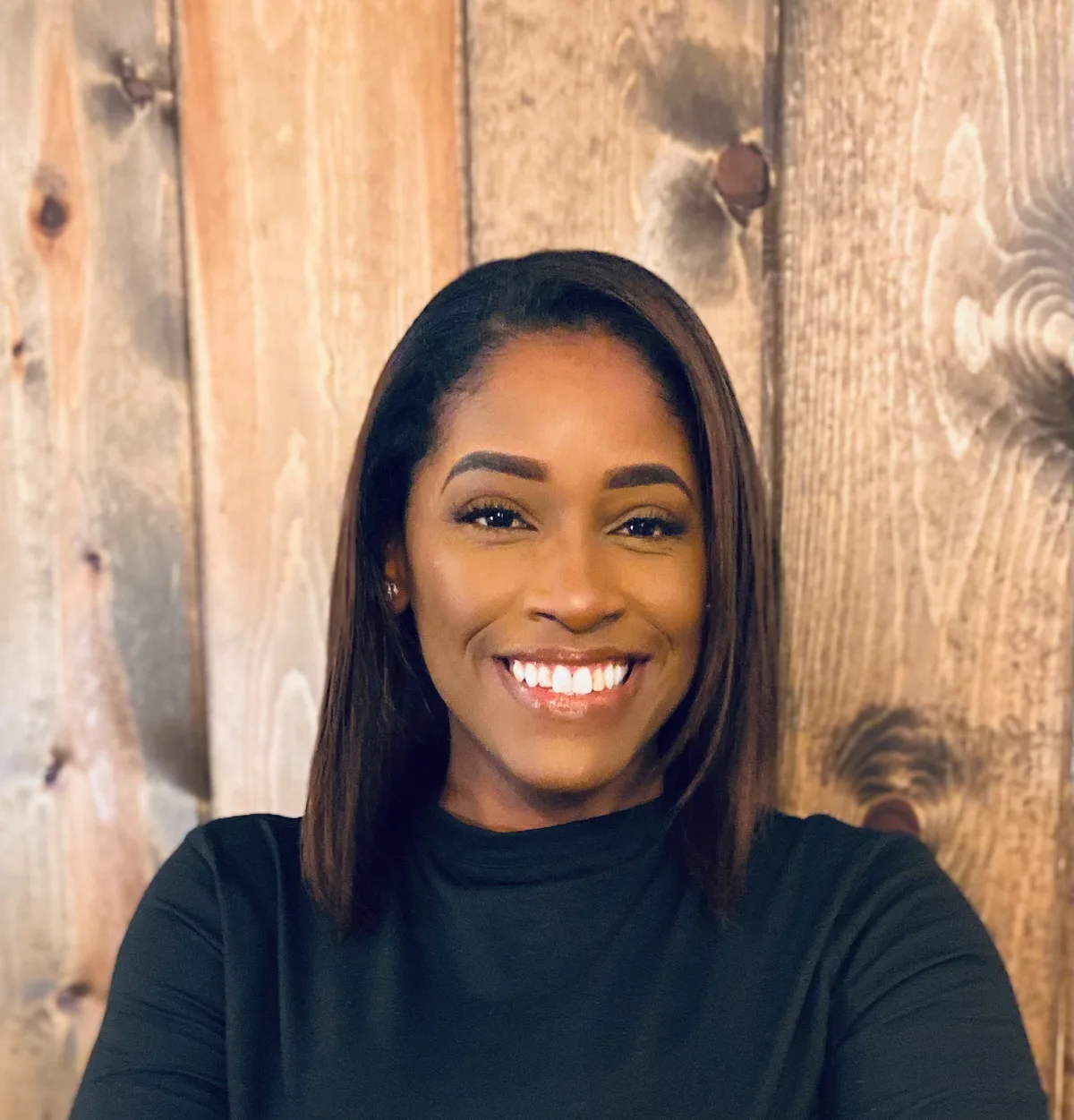
Aisha Everett-Khalif has over 20 years of professional experience and is currently a Business Manager at TruStage.
In this episode, Aisha shares a bit about her career journey, talks about the power of connection and community, and dives into the value in building cultures of belonging.
Leadership Quote
“Our deepest fear is not that we are inadequate. Our deepest fear is that we are powerful beyond measure. It is our light, not our darkness that most frightens us. We ask ourselves, 'Who am I to be brilliant, gorgeous, talented, fabulous?' Actually, who are you not to be? You are a child of God. Your playing small does not serve the world. There is nothing enlightened about shrinking so that other people won't feel insecure around you. We are all meant to shine, as children do. We were born to make manifest the glory of God that is within us. It's not just in some of us; it's in everyone. And as we let our own light shine, we unconsciously give other people permission to do the same. As we are liberated from our own fear, our presence automatically liberates others.”
Marianne Williamson
About Aisha
Aisha Everett-Khalif delivers the greatest impact in these key areas: Internal & External Communication; Building Culture & Engagement; Centering DEIB; Strategic Planning; and Project Management. She earned her Credit Union Development Educator (CUDE) designation and successfully completed the McKinsey & Company’s Black Leadership Management Accelerator program. Additionally, Aisha is completing her B.A in Organizational Leadership and Finance at The Pennsylvania State University.
Episode links
Transcript
Read the full transcript4,287 words
Aisha · 0:00
Well, hello, I am Aisha Everett-Khalif, and today's leadership quote is taken from Marion Williamson, and it reads, Our deepest fear is not that we are inadequate. Our deepest fear is that we are powerful beyond measure. It is our light, not our darkness that most frightens us. We ask ourselves, who am I to be brilliant, gorgeous, talented, fabulous? Actually, who are you not to be? You are a child of God. Your playing small does not serve the world. There is nothing enlightened about shrinking so that other people won't feel insecure around you. We are all meant to shine, as children do. We were born to make manifest the glory of God that is within us. It's not just in some of us, it's in everyone. And as we let our own light shine, we unconsciously give other people permission to do the same. As we are liberated from our own fear, our presence automatically liberates others.
Speaker 3 · 1:08
The Leader Assistant Podcast exists to encourage and challenge assistants to become confident, game-changing leader assistants.
Jeremy · 1:24
Are you a strategic senior executive assistant thinking about what's next? Whether you're ready for a promotion or loving the job you're in, Nova Chief of Staff's certification course may be just the resource you're hungry for. With over 400 students across 20 countries and rave reviews, students graduate from Nova's hands-on, self-paced online course with the confidence, knowledge, and power to make the move to Chief of Staff for their executive. But don't take my word for it. Visit leaderassistant.com/nova to find countless testimonials, the course syllabus, and lots of free resources to support you in your career journey. Hey friends, welcome to The Leader Assistant Podcast. It's episode 280, and you can check out the show notes for this conversation at leaderassistant.com/280, leaderassistant.com/280. Today, I'm very excited to be speaking with Aisha Everett-Khalif, and Aisha is in Michigan, is that right?
Aisha · 2:29
That's exactly right.
Jeremy · 2:30
Nice. What part of Michigan?
Aisha · 2:33
I'm in East Lansing, Michigan.
Speaker 2 · 2:34
Nice.
Aisha · 2:36
So for context, it's probably like an hour and 15 or 30 minutes away from Detroit.
Jeremy · 2:43
Okay. Are you from that area?
Aisha · 2:46
No, no. So my hometown is Chicago, born and raised, lived there for a number of years. And then my mother and my brothers and I moved to Atlanta, and I lived in Atlanta for a longer period and just recently relocated from Atlanta to kind of bounce to Madison and then landed in East Lansing. So this is where our roots are growing right now.
Jeremy · 3:12
Awesome. And do you have pets, kids, both, none?
Aisha · 3:20
Well, I don't have any fur babies, but I do have human babies and they're actually 25. So I have five kids and their ages range, 25 is my oldest, 23 is my next oldest, 21, 20 and 19.
Jeremy · 3:42
That's amazing. That's awesome. So I'm one of four. So and my parents, I'm the oldest and I was born in 84, my brother in 85, my other brother in 86, and my sister in 89.
Aisha · 3:59
Well, we have some things in common.
Jeremy · 4:00
Four bunches together.
Aisha · 4:03
I'm one of four and also the oldest, but the only girl.
Jeremy · 4:09
Nice. Well, what do you like to do then? You know, it sounds like your kids should be mostly, you know, independent, I would think at this point, but what do you like to do when you're not working?
Aisha · 4:24
That's a great question. I love the outdoors. I love exercising. I love traveling. I love cooking. Um, binge watching on occasion is fine. And I would say that my kids are older, but what I've learned in this journey of parenthood is they just require something different at different stages. So three of them are still in college while the other two have completed college already. And so my interactions and what my two oldest need for me are very different than what my three youngest require.
Jeremy · 5:00
Yeah, I totally agree. My boys are younger. They're 10 and 12. And, you know, my wife and I always talk about how there's those different stages so far. And we obviously are about to hit the teenage stages, and so those are going to be fun. Maybe I'll have to ping you for some advice, but, but yeah, it's like there's different, different, different parenting hats to put on, if you will, in those stages.
Aisha · 5:29
So, yeah, I would absolutely agree. I would absolutely. The only off the only advice I would offer is buckle up. Teenage years are fun and it is quite the journey. So just buckle up and be prepared.
Jeremy · 5:45
Sounds good. Sounds good. Well, Aisha, tell us a little bit about your career journey. How did you end up in the, you know, assistant role, you know, throughout your career and in operations and administrative professional type roles? And then just give us a little bit of that story from beginning and then how you ended up where you're where you're at today and a little bit more about what you're doing right now.
Aisha · 6:14
Well, that's a really good question. I appreciate even the desire to learn more about me. I have been in a professional setting for a little over 25 years. And I want to say that what first introduced me to the world of administrative work is watching some of the work my mother used to do and not intentionally, right? Like not watching her to follow in her footsteps, but just watching what she did. And then she would, as the oldest of four, she would give me certain tasks to do at home. She would say, Aisha, I want you to file these papers. And she kind of kept a stack of papers because a single mom, as you can imagine, when she gets home from work, she doesn't have the energy to devote to all of these other smaller tasks. And so that's kind of how I started just understanding what does it mean to keep something in order? What does it mean to keep track of something? What does it mean to help someone and support someone else in that way? And so from there, as I started looking at job opportunities, those were the easiest roles for me to sort of enter into because of the experience that I had. And the requirements weren't super demanding. It was more or less, do you have the presence to be able to greet people warmly? Can you keep things organized? Are you, how do you engage with other people? That sort of thing. And from that, what I learned along the way is that some of my, some of the things I just sort of experienced as being the oldest of four were things that I can transfer into my working space. And I just took, I took full advantage of that. I was like, okay, I can do this. And it was almost, you know, there's this dance of not being, not necessarily providing too much direction, but providing just enough support so that the other person who's really in charge knows that they're in charge and you're helping them accomplish all the things that they need to do and check the things off their list. So that path led me through supporting a number of executives at different levels. And my experience is at different levels, they require different things. So there was always an opportunity for me to sharpen my skills and develop new ones. And so I went from supporting people at director levels, then to officer levels, then to executive director, senior officer levels, and then C-suite levels. And I really enjoyed it. I really enjoyed it. What I experienced over that period of supporting different people at different levels was this personal satisfaction of watching them succeed, watching them win, watching them feel accomplished, watching the team around them have this sense of joy and excitement. And I really love that. And then I learned that there's probably some things I can do on my own. I started having these interests peak a little bit around having my own business. And I received a nudge or two from some family members who thought, Aisha, you have this niche. You have these five kids, they're stair steps, and they're all doing so well. Maybe this is something that can turn into a business. I didn't really want to do it at first, to be honest with you. I appreciated the comfort of just simply going to work every day and allowing someone else to be the boss. But I did find success and a really, the work that I did as a business owner for those years was a level of fulfillment that I had not experienced before. And it was like one idea helped me to think of another idea, which then brought on another idea and it just continued to grow and blossom. And then there came a point in time where I had done that for probably eight years and thought, you know, this ride has been really busy and demanding. Maybe I want to take a step back. And some of that was also due to my responsibilities as a mother. For as long as I've worked, I've always tried my best to balance the two. Being a professional woman in a setting, while still being the present and attentive mother that I wanted to be. And not that I was ever forced to make choices. There were times where I just chose to do certain things. And in choosing to do certain things, it automatically meant that other things were not going to be an option available to me at that time. And towards the end of that stint for running a business, I decided, okay, I want to go back to the professional setting, but I want to elevate from serving as an executive assistant or assistant director of operations. I really want to get to the point where I can sit in a chief of staff seat and help the most senior leaders lead teams to drive business results. And so I returned to the corporate world, stepped into an executive assistant role. 12, 14 months later, found out about a new opportunity and applied for that position, which is the one that I'm currently in as a business manager. And so this is where I get to leverage a different skill set, work with a more cross-functional senior leadership team, and sharpen some additional skills that I've kind of collected along the way. So that's my journey story in a nutshell.
Jeremy · 12:09
And what was maybe the number one thing you learned in running your own business that has helped you in the assistant or business manager roles?
Aisha · 12:18
I would say one thing that I've learned is resilience, and in a more meaningful way than I probably would have viewed it before. Having your own business and the responsibility of that business is huge. For me, that particular business that I owned had everything to do with humans. It was an early education business, so it wasn't something that I felt like I can make mistakes and then wipe the slate clean the next day. These were individuals whose, you know, a part of their life experiences and perhaps even some of their desima opportunities that were made available in our program.
Speaker 2 · 13:18
Are you ready to elevate your career in 2024? I'm Maggie Olson, founder of Nova Chief of Staff Certification, the first of its kind online course for aspiring and existing Chiefs of Staff. With curriculum taken directly from on-the-job responsibilities, Nova's self-paced learning modules provides you with hands-on experience so you can feel competent and confident moving into a Chief of Staff style role. It's the perfect next step for executive assistants. Head to leaderassistant.com/nova to learn more, grab the syllabus, and enroll today.
Jeremy · 13:55
Nice, nice. What has been maybe the difference or the progression from the assistant to business manager? Is business manager, it can mean a lot of things. It's kind of a general title. And so is it a, would you still call it like, is it kind of like a chief of staff? Is it kind of like a senior executive assistant to a CEO? Is it a little bit more removed from the administrative professional role? Does that make sense?
Aisha · 14:35
Yeah, yeah, yeah. And I think that's a great question. So it is, it is a bit removed from administrative work in that one of my counterparts is a senior executive assistant. So a lot of the work that I used to do is not work that I do any longer. And it is definitely a form of chief of staff. You know, some organizations and companies have these particular roles nestled in their org charts, while others might have the same functionality of this particular position, you know, sort of situated somewhere along their senior leadership team, but they may refer to it as a chief of staff. And the roles are about the same. So, you are very much a generalist. You work horizontally across that particular business unit or team or group. And some of your main focus areas would potentially be like mine. My main focus areas are communications. Another one is engagement. Another one is diversity, equity, and inclusion in terms of how we weave that into all the things that we do as a business unit. And another area that's connected to that is culture. Now, obviously, I work alongside several officers within our department. And so, my job is to help ensure alignment cross so that we can execute the things that need to happen down through the different levels of the business unit. So, it requires a certain level of savviness, but not a lot of administrative responsibility rests on me anymore in this position.
Jeremy · 16:23
Gotcha. Gotcha. Do you miss the the assistant administrative stuff? Are you like, no, I don't really miss it, I'm excited for the change?
Aisha · 16:36
I don't miss it. And the interesting thing is the reason why I selected that quote that I shared in the beginning of this, because I find, first of all, I was just in a meeting earlier today and I acknowledged that Administrative Professionals Day is April 24. That is a special day for me as a former administrative professional, because I understand the significance of that work and that role that's done. And it serves as a glue to the different areas of that team that often will be unrecognized, not appreciated outwardly. And I think that's a missed opportunity. And so for me, I love the fact that I'm in the position that I'm in to also inspire other people that desire to elevate from an executive administration role to serve in something that's a bit more broader, a little bit more larger scale, to take some of those skills that they've kind of honed over the years and learn how to apply them in a different space. So I don't miss it, but I do have a ton of respect for people that continue to serve in those positions.
Jeremy · 17:57
That makes sense. So let's talk about a couple of the topics that you brought up when scheduling this time for us to chat. One of them is the power of connection and community. How have you seen throughout your assistant career and now your business manager career? How have you cultivated connection and community? And then what's what has been some of the bigger benefits to you or to your colleagues of connection and community?
Aisha · 18:33
That's a really fantastic question. I'm glad that you asked. You know, for me, I think that relationships at their core matter and they have a lot of influence over what you do and what you're able to do. I like to lead with curiosity and empathy. So regardless of the task at hand, I want to get to know the people that I'm working with. I'd like to know their style. I'd like to know their preferences. I don't often ask a lot of questions. It's a balance of asking questions and just actively listening and observing. I find that when you do that, you're able to build a connection with that individual that sort of transcends the tactical work that needs to be done. You end up building trust along the way in those organic engagements. You get to know this person beyond their title and their name. And I think that's super helpful. So for me, the building a community and the significance and importance of engagement cross is huge because it will, you know, there's something that I think about when I think about people in leadership roles, right? So if there were someone in a leadership role and they were just very transactional with me, and they just only came to me when they needed something, I'm like, okay, they need something. I'm going to do it. Probably won't go, you know, out of my way and do something extra because they just asked me for this one thing. However, with someone that I built a relationship with and we've interacted on some different things, or through conversation, they've learned something different about me that's outside of my title, that's outside of, you know, their normal curiosities. And they come to me and say, Aisha, would you be willing to do fill in the blank? Aisha, what do you think about this fill in the blank? You stand to get more out of that person from that ask because you've built that relationship over time. You've built this community. You've engaged with them. And you can see other businesses have done it. Studies have proven that when you have engaged employees, when you have people that genuinely feel like they belong at different organizations and companies, they are willing to do above and beyond what they would normally be asked to do because they feel like they're welcomed in that space. They feel like they're a valued member of that space and everybody wins.
Jeremy · 21:19
Yeah, that's great. So, you know, it's kind of that relationship versus transactional aspect. And how do you, let's say you're new to the role. Let's say you're new to the organization, actually, more specifically. How do you build those connections and how do you build that community if you're just starting with that new team?
Aisha · 21:47
Yeah, that's another great question. You know, I encourage people to be curious. I encourage people to do something that may feel uncomfortable, but will yield results later. So, for example, some things that I've done, when I attend meetings, and these are things that I do both at my company and outside of my company. If I'm at a meeting, a webinar, conference, whatever the setting is, I'm taking inventory of the people that are speaking to me. So that might be people on a panel, that might be a keynote speaker, that might be a host, but I'm taking all of that information in, because I want to know who I'm interacting with. And I'm going to find some time to, after jotting their names down, look them up and see, okay, well, what kind of work do they do? What are their areas of interest? Do we have any synergies? After listening to whatever their presentation is, or reading whatever material they may have shared, I'm going to think deeply about what was communicated and reach back out to that individual and say, hey, I thought what you shared was fascinating. This was a remarkable presentation. Would you mind meeting with me for a virtual coffee chat to discuss more? I'm just curious to learn more. Quickly, people are willing to meet with other people about and discuss the things that they're truly passionate about or about a recent presentation or recent conversation. I have found that the doors have been widely opened for those sorts of engagements and interactions. I can probably name on one hand the number of times wherein I've reached out to someone and they've either not responded or declined an invitation. So by and large, there's a willingness for people to want to connect. And I'm talking something like a 25 minute virtual coffee chat. I allow them to tell me what time and day works for them because I'm asking to have an audience with them. And that sort of curiosity, that way of finding something that resonates with me and then reaching back out to that person has opened a lot of doors. And so when I meet with people, I encourage them to do the same. Another trick would be to think about your areas of interest and passion. They may or may not be related to the work that you do, but if you're out on LinkedIn or you're on some other learning platform and there's someone that's presenting or talking about an area that really resonates with you or you feel like there's some synergy, step out. The uncomfortable thing to do is to reach out to a stranger, but sometimes the uncomfortable thing is what leads to this expansion of relationships and an expansion of your network.
Jeremy · 24:48
Yeah. So essentially, don't be afraid to ask and in your career, you have found that most people are open to connecting, so that's great.
Aisha · 25:00
Yeah, absolutely.
Jeremy · 25:06
What about building that connection in community with your colleagues? But what about overall culture of belonging and the value of that, and then even the business impacts that can come from a culture of belonging?
Aisha · 25:25
Yeah, I think that's so important. And there's been a lot of discussion around this, but this is, it's not new, right? So this is something that I believe we've known for a very long time. We've just started articulating it more and differently. There is extreme value in sort of showing up the way that you want to be seen and learning how to engage with people in the spirit of curiosity and genuineness, like really leaning in to learn more about individuals, figure out based on what you've learned or experienced in these interactions, is there something that you can do to influence an environment so that another individual feels more welcomed, feels more valued, feels more appreciated? Because you know that if they do feel and sense all of those things, they're going to be excited about the work that they do, they're going to find value in the work that they do. It's going to reinforce their why in terms of why do I show up and do this job every day? Why am I a participant on this team? Why do I want to engage with these individuals in this ERG space or on this stretch project? And so you find a way to do all of that. For me, I've used myself and my experiences as a use case. I know what it feels like to be excluded. I know what it feels like to be included. I know what it feels like to be valued. I know what it feels like to be overlooked. I know when I'm able to do my best. And I know sometimes that I feel like I really don't want to give all that I have. And the common denominator in those experiences is the culture that's been created in that environment and the way that it's supported and shaped. So any way that I can positively influence a workspace and a work relationship or an environment, I will absolutely do that because if I use my own personal experiences as sort of a reference or something to harken back to, I'm going to do what I would have wanted done for me to these other individuals and watch those, watch the effect of that intentionality, create this space where people want to be a part of that space.
Jeremy · 28:00
Love it. Love it. Well said. That's awesome. What would you put on a billboard on the busiest highway in the world where all the assistants commuted on that highway to go to work? So this is a billboard directly targeted to executive assistants of the world. What would you put on that billboard?
Aisha · 28:23
Well, that's a really, really, really fascinating question. I would probably say be brave, be fearless, and be kind.
Jeremy · 28:42
Perfect. Let's order that billboard now. That's great. You know, there's people that spend thousands of dollars, the marketing agencies, to come up with a good billboard, and you did it in like two seconds.
Aisha · 28:55
I felt like I was pressured. I was on the spot.
Jeremy · 28:59
Awesome. Well, Aisha, thank you so much for being on the show. Is there a good place for people to reach out if they want to connect and say hi?
Aisha · 29:08
Absolutely. Anyone can find me on LinkedIn. My LinkedIn profile, you can just look me up by name, Aisha Everett-Khalif. That is the best way to reach me. It's the fastest way to reach me. Email would be amazing as well. My personal email is wonder, W-O-N-D-E-R, Aces, A-C-E-E-S, as in Sam, the number 20 at gmail.com, wonderaces20 at gmail.com.
Jeremy · 29:38
Perfect. I will put both of those in the show notes as well. leaderassistant.com/280, leaderassistant.com/280. Aisha, thank you so much again. Best of luck to you and your career and your family. Hopefully, we get a chance to connect in person someday.
Aisha · 30:01
Same to you, Jeremy. Thank you for the invitation and the time.
Speaker 3 · 30:14
Please review on Apple Podcasts.