
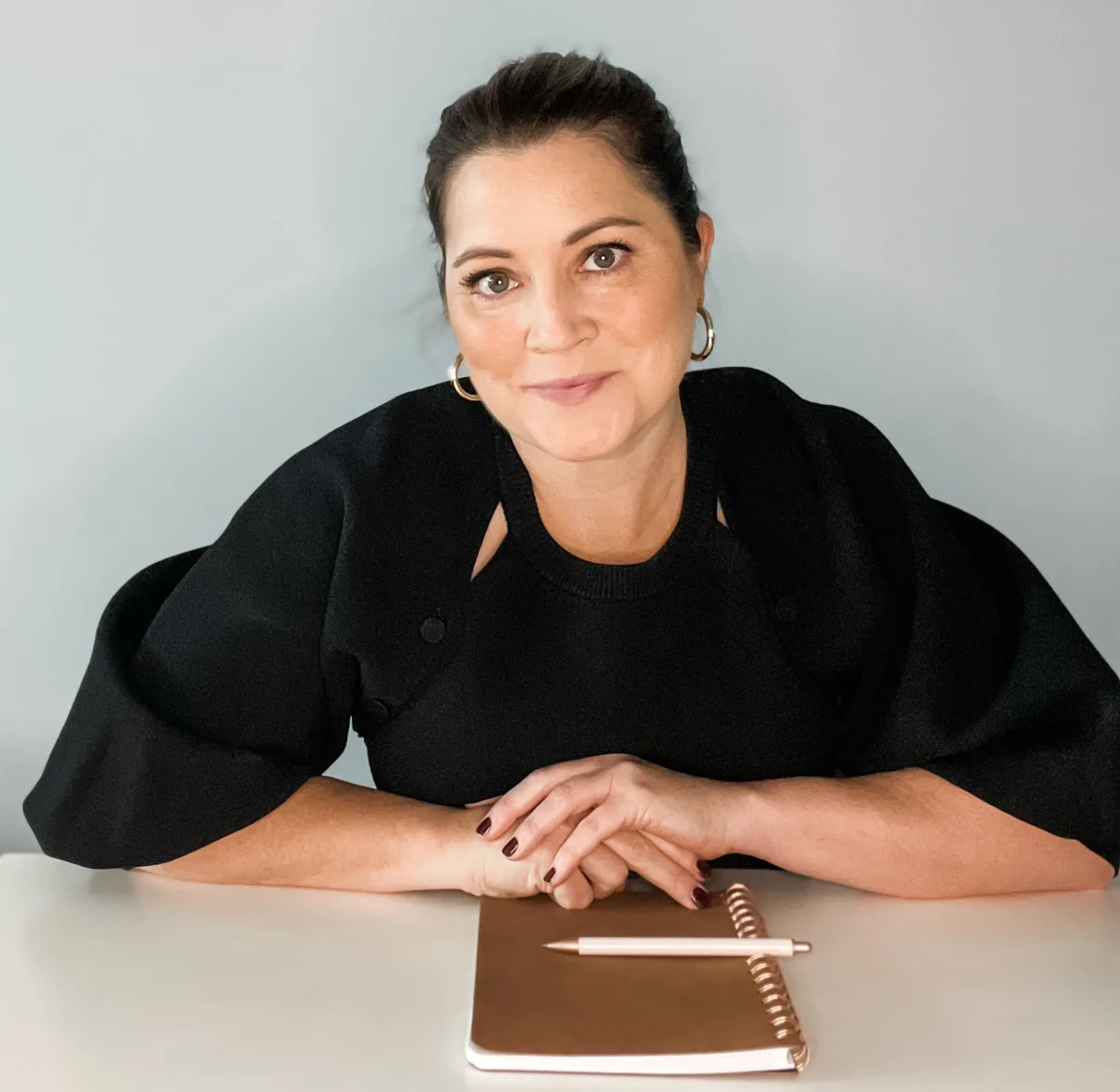
Rachael Bonetti has 27 years of experience as an executive assistant supporting a high profile billionaire, prominent business leaders, entrepreneurs, change makers, thought leaders, and high performing CEOs.
In this episode of The Leader Assistant Podcast, Rachael talks about the importance of prioritizing yourself, avoiding burnout, and the biggest blocks assistants face in their careers and life.
Leadership Quote
“One of the criticisms I’ve faced over the years is that I’m not aggressive enough or assertive enough or maybe somehow, because I’m empathetic, it means I’m weak. I totally rebel against that. I refuse to believe that you cannot be both compassionate and strong.”
Jacinda Ardern (Prime Minister of New Zealand)
About Rachael
Rachael is a former career EA with 27 years of experience supporting a high profile billionaire, prominent business leaders, entrepreneurs, change makers, thought leaders, and high performing CEOs. Today, Rachael creates and delivers the development programs she wished existed as she moved through her career, as well as workplace wellbeing programs to help busy humans avoid burnout. A certified meditation facilitator and Wayapa Wuurrk practitioner, she is based on the Mornington Peninsula in Australia, supports clients all over the world, and is the host of the What It Means To Be Well podcast.
Episode links
Transcript
Read the full transcript4,696 words
Rachael Bonetti · 0:00
Hello, I'm Rachael Bonetti. And today's leadership quote comes from Jacinda Arden. One of the criticisms I've faced over the years as that I'm not aggressive enough or assertive enough, or maybe somehow because I'm empathetic, it means I'm weak. I totally rebel against that. I refuse to believe that you cannot be both compassionate and strong
Podcast Intro · 0:27
The Leader Assistant Podcast exists to encourage and challenge assistants to become confident game changing leader assistants
Jeremy Burrows · 0:42
The Leader Assistant Podcast is brought to you by goody if you're starting to think about holiday gifts for your team like I am, goody is a game changer. They have amazing gifts that people will really love including brands that give back to charitable causes. As as longtime executive assistant, I've always been nervous about holiday gifting season. But thankfully, goody's platform lets you send one gift or hundreds at the same time without ever worrying about shipping details. Can I get an amen? With goodie your gift recipients provide all their shipping info, and they can even swap out your gift for another option if they prefer. It's free to start gifting and you can get a $20 credit when you sign up. Oh, and if you mentioned you heard about goody from The Leader Assistant Podcast Goody will add an extra $10 credit to your account. Go to leaderassistant.com/goody to start gifting today. Hey friends, thanks for tuning in to The Leader Assistant Podcast you're listening to Episode 186. You can check out the show notes at leaderassistant.com/186. This is your host Jeremy Burrows. And today I'm very excited to be speaking to someone in the future. This is Rachael Bonetti RachaelBonetti.com. She is a former assistant with 27 years of experience and we're gonna get into her story, Rachael, how's it going? And what part of the future world are you in right now?
Rachael Bonetti · 2:17
Hey, Jeremy, thank you so much for having me. I'm on the Mornington Peninsula in Australia. So yeah, a day ahead.
Jeremy Burrows · 2:25
Awesome. Well, hopefully, the see it's Tuesday for me and Wednesday for you. So hopefully you've set up Wednesday. Well for me tomorrow.
Rachael Bonetti · 2:34
The future is bright.
Jeremy Burrows · 2:37
Awesome. Well tell us tell us about yourself. Do you have any kids? Do you have any hobbies? Do you have any pets, little bit of personal inside scoop?
Rachael Bonetti · 2:47
Sure, I don't have any children. But I have a family of magpies that have adopted me a wild family of magpies that visit me every day. And as I said I live on the Mornington Peninsula which is on the coast. So it's quite a cooler part of Australia. But as much as possible we spend time on the water. So I walk on the beach every day stand up paddleboarding, spending time with my partner. And I'm also a meditation teacher and a way up or work practitioner. So those practices are a really big part of my life for keeping me really grounded and feeling cool. And collected. It's a little bit about me, I suppose in a nutshell.
Jeremy Burrows · 3:28
Nice. So way up work. It's a little bit of a tricky spelling. But what is that? Can you could you give us a brief summary of what that is?
Rachael Bonetti · 3:40
Yeah, why upper work is in the Guernica, and I admire languages, which is an indigenous language, First Nations language in Australia and it means connect to the earth. So why upper work is an earth mindfulness practice that he's rooted in ancient indigenous wisdom, which is the wisdom that kept our First Nations people well for 80,000 years, and some wisdom that we've started to lose with busy modern life. So it really is as simple as connecting to an appreciating nature for really incredible mind, body and spirit. Wellbeing benefits. It's actually a it's a, it's a meditative meditation narrative, and movement practice, but also a philosophy.
Jeremy Burrows · 4:28
Nice so did you kind of practice this during your career as an assistant? Or is this something that you kind of, you know, learned or leaned on, if you will, as you burned out and came out of that time in your career? Yeah,
Rachael Bonetti · 4:48
I had a little bit of a meditation practice my whole life or maybe say the last 20 years rather. But I discovered why upper work is actually part of my burnout recovery. And it was so I'm profoundly beautiful and life changing that I wanted to share it with as many people as possible, so trained to become a practitioner. So why upper work was only part of my life, maybe in the last year of my career, but it was pretty extraordinary. I was able to bring it in to my corporate world without people necessarily realizing I was sneaking it into their days, it was quite cool.
Jeremy Burrows · 5:24
Awesome. Well, tell us about your career. So how did you get into the role of an executive assistant? Administrative Professional? And yeah, what what kind of experiences did you have throughout your career?
Rachael Bonetti · 5:38
Yeah, I was an accidental admin professional, like a lot of people are, I think, I finished school and fell into visual art management. That's what I didn't fall into it. That's what I chose to study. And quickly, I realized I didn't want to be a visual art manager, and didn't know what else to do. And someone had a reception role going that I knew at their organization. So I applied for that and got it and I thought I was so cool, probably the lowest salary on Earth, but I thought I was hot. It was really interesting. It ignited a real curiosity in me to really understand why things work in the corporate world the way they do and how all corporate work contributes to something much bigger. But I was a bit naughty, I was a little bit of a troublemaker when I was bored and not challenged. So I think for everybody else's sanity, I was moved into another role was given a PA role with zero experience. I didn't even know how to type. But the responsibility and the visibility of work, I had really motivated me to get better at it. And once I outgrew that I actually had a complete change of tack and went to work in a university where I managed courses that were taught offshore. So I was traveling to Asia doing marketing sessions with prospective students, I was training the offshore partners in university policies and the ways that this how their students would have to operate to get Australian degrees. So it was really different. And I was living in Perth West, where I'm from Perth, Western Australia at the time, which back then was a really quiet place. It was such a ghost town. This was a long time ago. It's not like that now, and did what most Australians do flee Australia for where we have very easy access to live overseas, the UK, and I spent six years in London. But when I arrived there, nobody knew what to do with this quite unique experience I had it was a little bit weird. It didn't translate neatly to anything. And they said, Why don't you be an AE? So that okay, I'll give that a go. And long story short, that's where that career path began. But when I came back to Australia, a few years later, I lived in the UK twice. So it was split up my six years, I landed a job working with one of Australia's most high profile. businessman, he was a billionaire. And that was really the role that changed the trajectory of my career. And it was kind of like I would say it was a boot camp, it was a really no nonsense kind of environment where it was very, very, very serious. But it set me up with some really hard lessons and some good lessons that served me well through the rest of my career. So the rest is really kind of history. From there. I remember, he was also the chairman of the organization that I worked in. And from there, I worked only in C suite roles, but mostly supporting CEOs and other chairs until just last year, it was a year ago that I quit my corporate career to take the business that I have now, which was a side hustle full time. So yeah, it's been quite the journey over nearly 30 years.
Jeremy Burrows · 9:02
Wow, it's impressive. So lots of C suite experience. I'm even scrolling through your LinkedIn which I will share in the show notes at leader assistant.com/ 186. For those of you listening who would like to connect with Rachel, lots of great, interesting experience here, lots of C suite experience, what's one tip that you would share with those listening who aspire to, you know, work their way up, if you will, into the C suite of a company.
Rachael Bonetti · 9:32
Something that really bothers me about the way administration professionals are trained and developed and with handovers is that people are often taught the how to get things done, but not the why. And this is the missing link that makes all of the difference when you're in a cc C suite role because knowing what deadlines to hit and who your key stakeholders and what the organization's do actually looks like is one thing. But unless you are able to understand how everything ladders up where all of the workflow ladders up to how it all meets strategy and what you have to do to hit a business plan, then you can't ever really, in my opinion, get right in front of the work and make a significant difference and be a truly strategic business partner. So my advice would be really seek to understand the why behind everything and view it through the same lens that an executive would when they're in a new role.
Jeremy Burrows · 10:39
Yeah, that's great advice. I like to say, you know, if you really want to be a C suite assistant, then, you know, people ask, Well, what do I do? How do I level up? And I usually say, Well, the best way to get into that role, and to really excel in that role is to look at your role, or put yourself in the shoes of your executive. In other words, try to become them, and try to do what you can to essentially do their role do their job. And that helps you, as you mentioned, think about the why, and think about, okay, why are we doing this, like, my executive cares about this, but why? And as you kind of lean in and say, Alright, you know, what? Why can't I be the one to do this and take it off of their plate? You know, you kind of see yourself again, as as an extension, and instead of saying, Okay, well, I'm going to be an assistant that does this. Now, you can almost trick your mind, if you will, on, on hey, I'm, I'm actually the, the executive here in this moment. And I need to think like the executive and act like the executive would think.
Rachael Bonetti · 12:00
Yeah, I completely agree with that. And I think part of that as well is, don't be afraid to ask when you don't know. So in your catch ups with your executive, ask them why this is important. If you can't figure it out yourself. Or if you can't find the right person to tap on the shoulder to get a little bit more background and understanding, ask the questions because it shows curiosity, just sitting there and sweating it out and hoping that eventually it will clicks waste so much time and energy. I think admitting what you don't know and asking for help is a bit of a power move.
Jeremy Burrows · 12:35
Yeah, well said. So okay, so you had a great career and long career. Lots of interesting experience working with a billionaire and prominent business leaders. Tell us about burnout and your personal experience with burnout. And then, you know, the transition of okay. How did you recognize that? What did you do about it? What was the recovery? Like? How did you start prioritizing yourself? More than, you know, oftentimes, we burnout because we don't prioritize ourselves at all. So yeah, just tell us about your burnout story. Yeah, mine
Rachael Bonetti · 13:16
was, well, all burnout really creeps up on on us, it doesn't just suddenly happen. And there are always little red flags and little signals and signs that, that that layer on over time. And I had all of those certainly, but at because I was coping in like a personal resilience, I just kept pushing through it. So it happened to me twice. The first time was in that really high profile environment that I mentioned, they actually told me my interview that I would burn out within two years. And I actually did, and it was nearly to the day, because it was that intense. But one day, I was asleep in bed. And next to my partner and I woke up and I couldn't move. I was completely paralyzed. And it was terrifying. I couldn't speak, I couldn't do anything. And eventually it passed. And I woke up in the morning and thought maybe I imagined it. Then Then I was having my foundation, my base color matched in a department store. Because this woman was touching my face with makeup on it is busy department store. And suddenly it happened to me again, and it was terrifying. I thought, wow, something's really wrong with me. And I went to the doctor. And he said it's stress. It seems like a panic attack. And that's when I knew that I just didn't want to keep giving of myself with my health. So I left that environment and moved back to London, but still didn't really pay attention. I didn't. I didn't make any significant changes, to be honest. And I was at a point in my career where I felt like I still had to keep proving myself and that to be valued and respected meant that I had to be available at all times, you know, be the ultimate safety net always beyond putting other people before me So fast forward, probably like another 20 years, I just became exhausted, I can't even tell you the level of tiredness. And it got to the point where I couldn't, it didn't matter how much sleep I had, nothing would shake it. And I was really sick, I got to the point where I couldn't even sleep through the night, maybe not more than an hour or an hour and a half, finally found a doctor who ran some different blood tests, I was sort of fobbed off the first couple of times that I sought help. And this doctor said, Well, you've actually got a massive adrenal problem, it says, It's really bad. And it's really serious, and you need to take a few weeks off work. Unfortunately, though, that was at the beginning of COVID, which everybody knows was a really good time. And a great time to take three weeks off work when your organization's trying to mobilize workforces, and all kinds of things that on top of that, might the organization I was in was going through a very significant and serious reputation and customer crisis, it was very, very bad. We were on the front page of every newspaper. In Australia, we were holding in front of Parliament to explain ourselves. And under the radar, which only myself and the CEO and one other person knew about the organization was being sold. So I could not, there was nobody who could step in for me because of the seriousness of so much of what was going on. So I made the decision that even though I couldn't step back and take that solid black break for the three weeks that the doctor needed me to, amongst other things to recover, I just really put my foot down and I became unavailable. After a certain point in the evenings, I made sure I took a break every single day. And thankfully, then we also were able to start where we had to start working from home because it was the start of the longest lockdown in the world, in the state that I live in quite literally the longest lockdown in the world. So being at home gave me some of that really, like the breathing space that I desperately needed. So there, that's that's the long answer. That happened.
Jeremy Burrows · 17:20
So okay, so then, as you've looked back in hindsight, what have you noticed or during that time? or what have you done now? Or what do you do now ongoing to help you resist burnout? And kind of keep your psyche in check, if you will?
Rachael Bonetti · 17:43
Yeah, my boundaries are completely different. Now. If, if something is detrimental to my health, I just don't go there. I'm really clear with my boundaries with other people. I'm very dedicated and devoted to the practices that got me back on track, because they really do serve me well. Because even just very simple things like we're like plants and animals, you know, we need natural light. So being the first person in the office, and one of the last people to leave, so no natural sunlight and not taking breaks. I mean, it's, it's it's actually crazy to think that that doesn't impact our body in some way, because it does on a lot of levels. So just being really careful about my well being priorities. And I've sort of had to do a bit of deprogramming and, and conditioning, undoing as well, which, I don't know how this happens to us. But thinking I better get out. And the first thing I have to check is what came in last night. And that's before I've even taken a breath and thought about what do I how do I want to show up today? What's my intention for today, let me have a really beautiful drink and sit here and enjoy it before I kick my mind into work mode. So even just the habits that I have around how I set up my day, completely different now.
Jeremy Burrows · 19:06
Yeah, it's amazing how, when you're in the middle of it, and I experienced this in my career as well. But when you're in the middle of it, you just, you maybe get hints of it or moments where like is this is probably not right. But you just are so driven and so nonstop craziness going around that you're just like, alright, well, I'll just push through, I'll just push through. And then when you look back, you're like, Man, how did i Why did I do that? How did I survive so long?
Rachael Bonetti · 19:38
I know. It's so crazy. And one of the biggest lessons I learned in my career is even packed with people who really do appreciate you and value you. Once you move on from them. Then they're not like family, they're not in your life forever. They're not going to give you a kidney if something goes wrong. So why are we quite literally working ourselves to the bone When I don't know there's there's a line and it often gets crossed. And I'm not sure if that's the nature of executive assistants because we know that I don't keep saying we, by the way, I feel like I am, like once an assistant forever an assistant in my heart. You know, there's that guilt about not being always available when someone needs you, you know, worry that they don't think that you're a team player, if you don't reply straightaway, you know, so much pressure that we heap on ourselves as well, that's just really unreasonable. Yeah, it's really strange.
Jeremy Burrows · 20:32
Okay, so let's, let's shift gears a little bit. And tell us about your shift from full time VA to, you know, when did you start your side hustle? And then when did you decide to make the leap and make that your full, full hustle?
Rachael Bonetti · 20:46
Yeah, I started in 2019. And I had this idea that I wanted to do, I felt the pool to do something else for the longest time, but I couldn't put my finger on what it was. And I kept having this idea for about 10 years that I wanted to create the development and training opportunities that I really wanted as I was moving through my career. So the things that nobody tells you, the things that are truly truly, truly helpful that you don't get in a handover document all of the gaps to plug and I kept pushing it away and pushing it away. And one day, I sat down with a glass of wine in the backyard. And I sat down and wrote it out. In about half an hour, the whole program, my first program came out, and I looked at it and thought, right, okay, this is something that I would have needed. And something that I'll do, I'll put it out, and I'll see what happens. And it sold out in two days. And then from there more, more classes and workshops, were developed and delivered. And because my organization was being sold, I had a bit of I knew I had a runway with the role. So I thought, if I'm ever going to blow up my career, this is probably a really good book end to it. So I decided that once the sale went through, that would be my very last AAA role, and went full time with that. And that's been a year now it's been great. I've got two signature programs, a third on the way which is not really career related, but many, many workshops and programs, workshops and masterclasses in between and I'm having so much fun connecting with the community and helping them with all the bits that I had to figure out the hard way. Yeah, it's been, it's been quite the ride.
Jeremy Burrows · 22:28
So what would be maybe your top one or two programs or resources that you offer?
Rachael Bonetti · 22:38
The Alchemist program is my first program, the signature program. And that's a bit I've had so many. It's interesting, I have all different kinds of professionals come through I've had in the same intake season chairs EAS, alongside corporate receptionists, and everybody gets something different from it. I also do a leadership program and launching very shortly is a program called M flow, which is more about the inner work because I really believe that we can do all of the development and training in the world. But if we're not working on ourselves, then we're still not leaning into those moments where we have to back ourselves and have unshakable self belief. So those are the three right now. There's always a little more in development, but that's what's up now.
Jeremy Burrows · 23:23
Awesome. And that's all. Rachel binetti.com. Is that right? Yes, that's right. Great. Well, I'll put the link in your LinkedIn and your website. And then you also have a podcast, what's your podcast called?
Rachael Bonetti · 23:38
It's called what it means to be well, that's to challenge our view of what it means to be well, a bit beyond the usual pillars of well being like sleep and nutrition, but really thinking about boundaries and empowerment, and even into social justice and community issues.
Jeremy Burrows · 23:56
Love it. Well, I'll link all of those in the show notes at leader asst.com/ 186 so that everyone listening can reach out, subscribe to the podcast, check out your resources. I'm excited to share that with the world. So let's talk a little bit about as we wrap up the biggest blocks that you see with with clients and in the community. So what's kind of the biggest blocker for the people that you try to help?
Rachael Bonetti · 24:33
I think getting in their own way. So doubting themselves and not trusting their instincts, intuition and their own deep knowledge that they already have about the organization. So waiting for external validation that tap on the shoulder that says Now you're a great EA or now you're not just an admin, and just having that really fate that really strong faith in themselves that by putting in The effort and putting in the work, it is just enough and keep at it because we are always growing. So so many people arrive into programs, you know, this thing like, you know, I have to be perfect. And heaping this pressure on ourselves or themselves is just really counterproductive to what they're trying to achieve. So my advice always is just take the pressure off and give yourself permission to grow while people are watching and make mistakes, because that's how we learn. It's part of the journey.
Jeremy Burrows · 25:32
So what's been the shift from when you're when you're in the role as an assistant? And now you're kind of outside of it and got your your business going? You're an advocate for the community. How have you seen? And how has the response been to some of your social media posts and resources? As far as Okay, now that you're not in a corporate job, maybe you're more free to speak up and you know, say things a little bit more bluntly. Maybe you can say things that you've always wanted to say, Well, how is that dynamic, Ben, now that you're out out of the profession,
Rachael Bonetti · 26:18
I'm having so much fun. It's like 27 years of pent up thought bubbles have just come flooding out. But it's really funny, I always have. I thought, I did start out being quite open and honest. But the moment things changed was the the post that I put out about this is what a day in the life of an assistant looks like. And it really was an expression of that being pulled in 1000 directions. And it went off I get when it blew my mind, because I nearly didn't post it that day, I thought, this is such a no brainer, who's going to want to read this. And it was the one that's had the biggest response. And since then, I've been a little more brutal with my reflections and the impact of the career and the ways that assistants can be better valued. And I've had a lot of messages from people saying, Thank you so much. You're I don't feel alone, I feel seen. You're saying all the things I wish that I could always say. And that was the same for me. I wanted to always say this, but I knew there were roles that I would never get, again, especially the most senior, unlike working with high profile people, not a chance, I'd be unhireable. And that I know a lot of people feel like that too. And they'll even tell me, I really loved that post, but I cannot publicly respond to it. I just want you to know, thank you for saying all the things that we wish we could say. Yeah.
Jeremy Burrows · 27:44
Great. Well, we appreciate what you're doing to help assistants and leaders and executives and the like, really avoid burnout and prioritize themselves. And yeah, be well, as you say in your podcast. I know what it needs to be well. So thank you, Rachael, for everything you've done for the community. And we're excited to follow and encourage and support you along the way. And yeah, like I said, for those listening leaderassistant.com/186 to check out the show notes and connect with Rachael and stay in touch. And yeah, we appreciate you coming on the show and sharing your story.
Rachael Bonetti · 28:26
Thanks so much for having me Jeremy. I really appreciate it. It was great to chat