
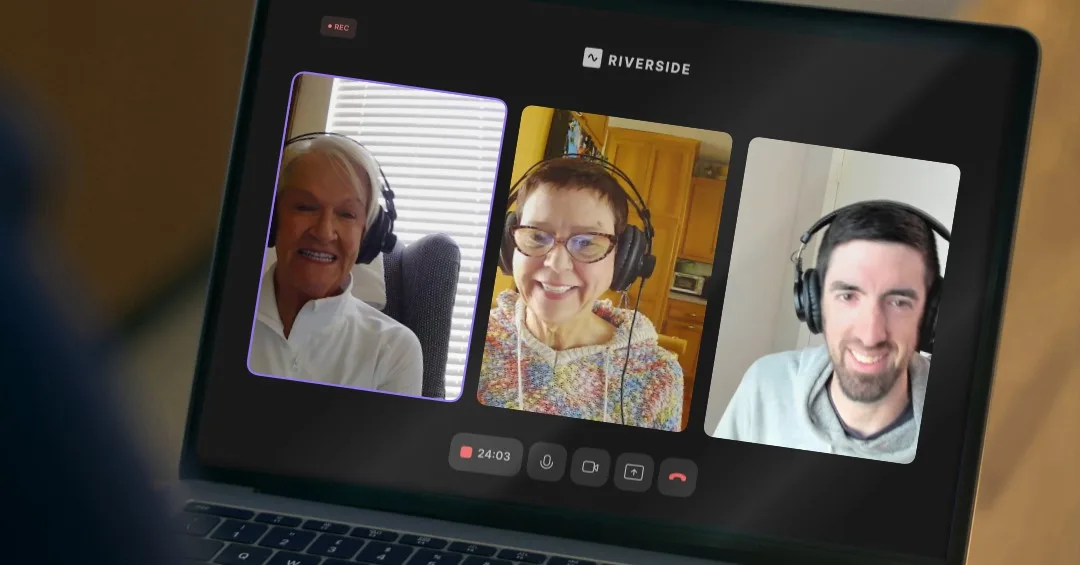
Today’s episode features a conversation from the Two Admins & a Mic podcast with hosts Melinda Vail-Goodnight and Diana Hansen. It's a fun conversation about where the admin profession is headed.
Topics include why the “assistant” half of the title is the part AI is taking over, and why that opens the door for EAs to do more of the executive work. We also talk about what to do when your leader hands you two more executives, and why the best way to learn AI is to ask the AI tool itself.
The conversation also gets personal. I talk about burnout, why I now focus on resisting it instead of avoiding it, and why a hobby is one of the best anti-burnout tools I’ve found. I weigh in on whether admins are too focused on titles, and I share the hard lesson that taught me to separate my worth from my work.
Diana and Melinda had some great questions for me and I hope you enjoy our conversation! Oh, and be sure to listen and subscribe to their show, Two Admins & a Mic on your favorite podcast platform.
About Diana
Diana Hansen is the Executive Administrator to Doug Conant at ConantLeadership and for the Conant Family Office. She has built her career supporting senior executives at the highest levels, including roles at General Electric and Campbell Soup Company, where she managed global leaders, complex projects, and high-stakes calendars.
About Melinda
Melinda Vail-Goodnight, CAP, is a former Senior Executive Assistant at Southwest Airlines with more than 25 years of experience supporting senior leaders and building strong executive administrative partnerships.
Throughout her career, Melinda has been a passionate advocate for the administrative profession, with a focus on elevating the role of Executive Assistants from support professionals to strategic business partners. She has led professional development and mentorship initiatives, spoken to administrative communities, and coached and mentored professionals at every stage of their careers.
Today, Melinda is the creator of The Right Hand Advantage™ and co-host of Two Admins and a Mic, where she brings candid conversations, humor, and real-world experience to topics affecting today's administrative professionals. She is also a member of the ConantLeadership STEPS Global Advisory Council and serves on the Advisory Board for The Admin Awards.
Her work centers on one simple belief: when leaders and their administrative partners build relationships grounded in trust, communication, and mutual respect, both people, and the business perform better.
Episode links
Transcript
Read the full transcript6,013 words
Jeremy Burrows · 0:13
Hey friends, welcome to episode 403 of the Leader Assistant Podcast. It's your host, Jeremy Burrows, and today I'm excited to share a Conversation that I had with Melinda Vail-Goodnight and Diana Hansen on the Two Admins and a Mic podcast. In this conversation, we talk about putting the executive back in executive assistant. We talk about AI, automation, burnout, and more. So I hope you enjoy this interview where I am the interviewee and Melinda and Diana ask me some great questions. So, and also of course, check out their show, Two Admins and a Mic, for other great conversations. And you can find information about that show as well as Melinda and Diana's bios at leaderassistant.com/403.
Diana Hansen · 1:10
Hey everybody, welcome to Two Admins and a Mic. My name's Diana Hansen.
Melinda Vail-Goodnight · 1:15
Hey guys, I'm Melinda Vail-Goodnight. And Two Admins and a Mic is made possible by Conant Leadership.
Diana Hansen · 1:22
And this is a podcast for admins by admins. We'd like you to check out our website and join us. twoadminsandamike.com, T-W-O. We're going to be updating it with blogs and resources.
Melinda Vail-Goodnight · 1:33
Subscribe and then come join us. Hey guys, it's Mel with Two Admins and a Mike and my infamous co-host. Diana. Diana Hansen. Two Admins and a Mike is made possible by Conant Leadership. And today we have the infamous Jeremy Burrows joining us. Jeremy, where are you at today?
Jeremy Burrows · 1:56
Thanks, Melinda and Diana. Super excited to be here. I'm in Kansas City, Missouri, right in the middle of the country.
Melinda Vail-Goodnight · 2:02
Okay. Didn't know if you were home or if you were traveling.
Jeremy Burrows · 2:06
Yep. Home sweet home.
Melinda Vail-Goodnight · 2:08
We want you to talk and tell us what you're seeing happening out there in the admin world, all the good stuff. So—
Jeremy Burrows · 2:15
That sounds good, but can I actually ask you guys a question first?
Melinda Vail-Goodnight · 2:19
Sure.
Jeremy Burrows · 2:20
So I got to know, I know you guys both have a seat at the table. You have a voice at the table. But I really want to know who has the voice, who sang the jingle for the show. That's what I want to know.
Melinda Vail-Goodnight · 2:29
Diana, tell him. Tell him.
Diana Hansen · 2:32
Tell him, Diana. AI.
Melinda Vail-Goodnight · 2:33
AI sang it.
Diana Hansen · 2:34
Totally AI. And all I did was go in and say, we're doing this podcast. Make it snappy. And they all made fun of me. They're like, oh, we can't keep this. And then people are walking around humming it. And I'm like, we're keeping it. Total AI, not me.
Jeremy Burrows · 2:48
No, I figured it was AI, but I just had to double-check.
Diana Hansen · 2:52
I thought it was going to be a hard question. I was getting nervous.
Melinda Vail-Goodnight · 2:55
Tell us— tell the ones out there that don't know you, and I can't imagine that, tell us who you are.
Jeremy Burrows · 3:00
Yeah, so I am a longtime executive assistant of about 20 years from Kansas City, Missouri. Lived in St. Louis, Missouri for about 16 years and moved back in 2020 during COVID to be closer to family. I've got 2 boys, uh, currently aged 12, almost 13 here in a couple of weeks, and then 14 and will be 15 in January. So freshmen in high school.
Diana Hansen · 3:25
Those teenage years are getting in there now.
Jeremy Burrows · 3:28
Exactly. Yeah. It's a whole nother, whole nother level of parenting.
Diana Hansen · 3:33
Yeah, exactly.
Jeremy Burrows · 3:34
But we have fun. My wife Megan is awesome and we have a good time. And I'm currently senior executive assistant to the CEO of a company called Capacity. We're an AI support automation platform, head headquartered out of St. Louis. We just announced we crossed $100 million in annual recurring revenue here a few months ago, and we have about 400-something employees. I was hire number 1 back in 2017, so it's been about almost 10 years now.
Melinda Vail-Goodnight · 4:02
Almost 10 years.
Jeremy Burrows · 4:03
Supporting the CEO. So it's been fun to be in the AI, you know, space for so long before ChatGPT and before Claude and all those things. We were building natural language processing bots and trying to build our own language models back then. We were, we were frankly a little bit too early. Uh, if we would've come out during the large language model process, we probably would've saved ourselves a lot of time trying to build our own models. Then I, I hosted the Leader Assistant Podcast, do some training for assistants, speaking. I wrote a book called The Leader Assistant. I had, uh, some awesome guests on the show, including Melinda here, and that was one of my favorite conversations. And I'm not just saying that, um, 'cause you're right here, but. But yeah, excited to be here.
Melinda Vail-Goodnight · 4:45
Good. OK, my first question— Diana, do you care if I go first?
Diana Hansen · 4:49
No, go ahead. OK.
Melinda Vail-Goodnight · 4:51
I'm hearing that EAs and admins are going back to a pool or a pod, that they're not being strategic partners per se. Are you hearing that in your world, in your network?
Jeremy Burrows · 5:05
Yeah, it's tough. I think there is definitely a lot of— sometimes it's because of downsizing. Sometimes it's because of restructuring. Sometimes the excuse is cost cutting or whatever, but there is definitely a lot of, hey, guess what? You no longer support one executive, you support 3, right? And it's kind of, you don't really have a lot of choices as to whether or not that's what you want to do or not, right? Unless you want to leave and go somewhere else, which isn't always an option or a good option for you. So, I will say I saw that trend before AI even blew up and is all the rage now. But now that AI is like, I talked to some large companies in the last month or so and they're like, oh, we've had AI for a little bit, but the EA team just now got access, right? We just now got our license. And so now that EAs are starting to get the licenses and they're having the access to Claude or Copilot or whatever, there's a little bit more of a, I guess my my thought would be if somebody, if you're executive, your team comes to you and says, hey, you know what, you get it, you get 2 more executives, you get, you get a, you get a couple bonus executives, right? Instead of having that gut initial reaction of no, no, no, no, that's not how it works, whatever, be open to it and ask the question, okay, well, how am I going to support? To your point, Melinda, you're not going to necessarily be able to be a true strategic partner to 3 different executives, but maybe you support the CEO, the CFO, and the COO. Well, okay, maybe you're a strategic partner to CEO, but you simply are a project manager for the COO, right? Or maybe you manage some of the nuanced scheduling for the CFO, but you're not sitting in, in the meetings and trying to be that strategic partner. So I would always ask like, hey, how are you needing me to support these new executives? What's the role look like? How involved is it gonna be? And then because of AI, and we can get into more of that later, but Because of AI, I think it's actually more doable for an executive assistant to support multiple executives without burning out, without having that, you know, 4 full-time job scenario, which I think was very real for some assistants that I've talked to.
Diana Hansen · 7:27
Yeah.
Jeremy Burrows · 7:28
Uh, oh, anyway, I think that's a little bit of, hey, what's the role like? But also, okay, you need me to manage this and this and this. Well, I've got my, my buddy Claude to to do that for these executives in a way that I can scale myself for the organization.
Melinda Vail-Goodnight · 7:44
Do you think that this has happened because of AI and the perception that— the work changed. The work changed and has changed and is still changing. But I don't think it takes— it's still not going to take away the role of the executive assistant.
Jeremy Burrows · 8:07
Right.
Melinda Vail-Goodnight · 8:07
Do you have thoughts on that statement?
Jeremy Burrows · 8:09
Yeah, I agree. I think the executive assistant role is never going away. Um, they say never say never, but I, I strongly believe that. Like, I don't think the executive assistant role is ever gonna go completely away. What I think is happening though is for years executive assistant was more, more leaned toward the assistant part of the title. And now that AI's coming in and truly able to do a lot of the assistant part of the title, the the opportunity for us as assistants, as executive assistants, is to put the executive back in executive assistant. And so, I used to say, oh, you know, this is how I'm trying to be a better assistant, right? This is how, this is, these are the books I'm reading. These are the tools I'm trying to, to learn to be a better assistant. But now the last few years, I don't even say that anymore. I don't think that's my goal in professional development. My goal is actually to be a better executive. And so when it, when people say, what are you doing to be a better assistant? I'm like, well, my mindset is, has shifted from, Becoming a better assistant to doing more of my CEO's job, doing more executive tasks. And AI has allowed me to do that, right? And so when I'm tasked with a project of, hey, we've gotta raise this many millions of dollars in this many months, I need to meet with this many investors, I don't have to manually book back and forth, coordinate with 400 potential investors to book all these meetings. Now I can automatically do that with, with an automation tool that will go ahead and book, allow people to book with my executive. Now controlled and under the guardrails that we have for managing his, his energy and his time. But because, for example, I booked 250+ investor meetings for my CEO in 2 months, and that's a lot of meetings, but 90 to 95% of those were automatically booked with a booking page link instead of me manually looking at the calendar, manually typing out times, you know, going back and forth in an email. Sorry, that doesn't work. Sorry, that doesn't work. Going back and forth. So because I was able to do that mostly with automation and including reminder emails too, like the day before, hey, just confirming your call with David tomorrow at 1:00 PM Central. He's looking forward to it. Those are all automated now too. So instead of me really, to be blunt, wasting my time doing that. Yeah. Now I'm able to say, okay, well how do I get him in front of more investors instead of how do I You know, find a time for this person.
Melinda Vail-Goodnight · 10:38
Do you vet? And I'm just asking, I'm assuming that those investors have to meet a certain criteria, and is all of that a part of the tool?
Jeremy Burrows · 10:47
Yeah, it, I would say the criteria part and the list building, if you will, for these potential investors, that's partly done with automation, but it's also very heavily influenced by myself and our team as far as here are the types of people that we're looking at speaking with, and here's the criteria of, hey, you know, they're in this network or they've recently sold a business, so they might have liquidity, those kinds of things that the humans on the team really have to build that framework and criteria so that then we can go and and reach out to hopefully the right people.
Melinda Vail-Goodnight · 11:28
You came to Southwest, I don't know, 3 or 4 years ago and did a little gig. And I will never forget one of your phrases was, either automate or get automated. Do you still believe that? Or do you think that we're just going into a time that AI is just like a laptop was 25, 30 years ago? I mean, isn't it just a part of the world now?
Jeremy Burrows · 11:57
Yeah, I think, good question. I do still believe one of my AI keynote slides is automate before you're automated.
Diana Hansen · 12:07
Yep.
Jeremy Burrows · 12:09
I think I agree with both sides of that. I think that it would be similar to getting a laptop or getting a computer on your first day at a new job. You're not gonna tell the HR manager, sorry, I don't, I don't work with computers, right? Like, you're not, you're not gonna get far if you do that.
Melinda Vail-Goodnight · 12:25
Right.
Jeremy Burrows · 12:26
So similarly, it's, it's becoming more and more true where you're not gonna be able to, on day one, say, sorry, I don't work with AI, right? So yes, it's, it's, it's just another tool that's in the, in the tool belt. However, I do think it's still true that if you don't use that tool, Then you're gonna have a harder time presenting a business case that you, that you provide this value, that your job is, is valuable and worth the higher salary and so on. And so just because you now have the tool in your tool belt, that's not enough, right? You have to actually embrace it. You have to actually get it out and try it out and use it. Otherwise, I do think that the assistants who refuse to automate, or essentially, let's put it this way, the assistants who use AI to rewrite emails or summarize blog posts.
Melinda Vail-Goodnight · 13:24
Yeah.
Jeremy Burrows · 13:25
That's great, but that's, that's become table stakes. In other words, if you don't do that, then you're behind. But if you don't take it to the next level and build your own apps, build your own workflows, build your own websites, build your own slide decks or whatever it is using those tools, That's, those are the assistants I think that are gonna have a hard time when the layoffs come and when the industry's struggling or there's a recession and et cetera.
Diana Hansen · 13:53
But yeah, 'cause I know actually an EA to a CEO that she was told this year, learn Claude. Basically nothing else to say, just learn Claude. You're gonna be a Claude expert.
Jeremy Burrows · 14:03
I've literally built prototypes for our product team because It's one of those things where in that season, it was something valuable that, that I needed to contribute to help our team. And so I got my hands dirty and got into Claude and started coding and started building these prototypes based on our engineering team's processes, even though I'm not a developer. And I just had to, had to figure it out.
Diana Hansen · 14:28
Yeah, I use it to test my HTML code when I do it. I put it in and say, and it finds all the mistakes for me.
Jeremy Burrows · 14:34
There you go.
Melinda Vail-Goodnight · 14:35
Do I need to learn how to write code?
Diana Hansen · 14:37
Probably. I'm only kidding.
Melinda Vail-Goodnight · 14:40
That's the only thing I really haven't—
Jeremy Burrows · 14:44
So actually, it's funny you asked that. 2 or 3 years ago, there was this whole wave of, as a parent, trying to figure out what education is important to our kids. It's no longer important. Maybe that, maybe it never really was that important, but it's no longer important to memorize a bunch of text, right? Like that's that's not a skill that's necessarily valuable in the grand scheme of things. But there's this whole wave of, hey, you need to teach your kids how to code, right? You need to teach your kids software development. In the state of Missouri, there's more education on stalactites and stalagmites than there was computer science, like computer development. So we, you know, we're very passionate about that. Like, hey, we need to teach our kids how to code. We got them in some, some learning sequencing coding education courses. But I will say the interesting thing is now because of AI coding being so advanced and getting even better and better, I actually don't know that you necessarily need to learn how to code. I think that those that are freaked out and scared of like, am I, you know, like I'm 42 and I have no desire to become a software developer. Right.
Melinda Vail-Goodnight · 15:51
Right.
Jeremy Burrows · 15:52
And I'm hoping that I don't ever necessarily have to go full in and become a software developer. Well, what I am though is I'm a builder and I'm a problem solver. And now that AI can do all the coding, I was able to rebuild my entire website using Claude. I was able to build an app. I was able to just, just all these different projects I built. I built a travel itinerary app for my family, for our vacation. All these things where I'm like, hey, there's a problem I'm trying to solve. Now I actually have the tools available for $20 a month to execute on these ideas.
Melinda Vail-Goodnight · 16:26
Yeah. Claude. Actually has helped me write code. I don't know enough about it to say I did it myself, but Claude, it's amazing what I use Claude for. And it's amazing what I use ChatGPT. ChatGPT is Dr. Grace. So it's, I use Claude for one thing and ChatGPT for another. And I started using Perplexity. That's really interesting too. So it can, it can do a— What was—
Jeremy Burrows · 16:54
What's interesting, I love all the different advancements in the tools, but it's also really challenging at times because you could go deep into one tool and it's really great, but then another option or another model will come out on a different tool that's far superior to what you've been working with. And so then you kind of have to adapt and say, you know what, this is costing me this, this many tokens. This is, this is costing me this much per month to do this much work. But now I've got this other option. that is able to use a different model that is more efficient and I can do more with less spend. And, you know, so it's, you've gotta kind of adapt through the whole thing. But the good news is these tools that are coming out, people say, well, what course should I take? What training should I take? There's lots of great options out there. However, I still think the best tool to learn the AI tool that you're trying to work with is the AI tool itself.
Melinda Vail-Goodnight · 17:45
Try to break it.
Jeremy Burrows · 17:47
Just get on there and say, hey, how do I use you? Here's the problem I have. Tell me how to— I literally will say this every other day. Hold my hand step by step and walk me through how to do this.
Melinda Vail-Goodnight · 18:00
Yes.
Diana Hansen · 18:01
I think people don't understand you actually do talk to it like that. You don't say a question, what is 8 times 8? You actually talk to it. It learns your, you know, learns your cadence.
Jeremy Burrows · 18:09
Yeah. And what's cool too is you can explain to it your role. You can, you can give it context to, hey, I've never taken any computer science classes, or hey, I'm a little bit familiar with HTML, or explain this to me as if I've never looked at HTML ever before. I even had one once, I can't remember what it was, but there was something with my website that I was updating and it was trying to explain all the backend and how the process works. And I said, explain it to me in baseball analogy terms because I'm a big baseball fan. And so it just broke it down. Oh, it's like it's the bottom of the 9th inning and the coach, Puts this picture, you know, and it does all these scenarios. And then I'm like, oh, okay, I get it now.
Melinda Vail-Goodnight · 18:53
I love that. But what you have to do and what I just heard you say and what I found helped me, you just have to go use them all. You don't have to keep the subscriptions if you don't need them. You can discontinue at any time. But I learned Claude and ChatGPT and I'm still learning, but you've got to be willing to go and not be afraid of it. And I think a lot of assistants and admins don't understand that. And there's a lot of good training, but you're right, the best training is to just go use it.
Diana Hansen · 19:25
And there's so many options that you want to, you know, they use it for just drawing, for illustrations and stuff.
Melinda Vail-Goodnight · 19:32
Yeah. Are there graphic artists still?
Diana Hansen · 19:36
I
Melinda Vail-Goodnight · 19:36
would think that—
Jeremy Burrows · 19:37
No, there are. Well, so I actually have a pretty strong opinion on this. So I've been using Claude Design, which the funny thing is I was using Claude Design for months and now they're like, oh, by the way, Claude Design's going away and it's going to be part of chat. It's going to be part of Claude Chat under artifacts or whatever. So they're rebranding their own tool that I've already learned. So now I'm going to have to relearn and retrain people on it. But the thing that I see that is helpful, I am very, very For hiring quality graphic designers to build out your brand, to build out your logo, to build out your style guide, all those things. I love, I love that. What I do though is in order to get closer to being able to communicate what I want in my brand and what kind of, even making a mood board, for example, I use AI to brainstorm, say, hey, try this, try this. That way I can, 'cause I'm a visual person, so I visually see, you know what, I don't really like this style, so let's try this style. And I, that gets me closer to where I can then go to a professional designer and say, hey, here's the style that I'm looking for. I wanna pay you for your artistic abilities to do this. Then once they build it out and build your brand guide and, and you pay them for some amazing artwork that's truly like human influenced and, and artistic and creative, well then you can take that style guide and then you can take it back to Claude And if you just need to make a quick slide or a quick landing page or a quick one-page printable PDF, you don't necessarily, you don't have to go necessarily pay a graphic designer to make a simple slide or a simple PDF. You already have your brand and your style guide and the rules of don't use this font, don't use this color against this color. You have all that from your designer. And then the AI is able to take that and say, all right, I'm gonna apply these rules and the style and these logos that you created, um, to this project. That's how I like to use it.
Melinda Vail-Goodnight · 21:40
Any feelings on putting guardrails on AI?
Jeremy Burrows · 21:44
Yeah, I think it's similar to the internet. Like, you gotta have guardrails on the internet. You gotta have guardrails on technology. I think that similar to how I give, you know, my, my kids have a phone, but they have time limits. They have limits on what apps they can use, what apps they can't use. I think you have to be responsible. for, for that and, and, and have security in place and have different things. But I also think that you, it's, it's tough. It's, it's a tough balance because you also have to, in order for innovation to happen, right? And growth, growth to happen, you've got to have some freedom to explore and break things and try things. So.
Melinda Vail-Goodnight · 22:25
It's a hard question and I didn't mean to make it sound flippant. But it's hard. So what else is going on in the world of Jeremy Burrows?
Jeremy Burrows · 22:34
Good question. So, you know, I'm doing a lot. I'm doing a lot of AI, obviously, as we've already touched on some of that. I'm doing a lot of training and speaking and really getting in the room with assistants and workshops. And I really love doing that. I love traveling. And I was in Charlotte a couple of weeks ago. I was in D.C. last month. I'm doing a training tomorrow for, for some assistants. And so it's like, that's, that, that really gives me energy, which is kind of funny because I'm an introvert and I like to be in my home office and I like to just sit in my dark office and get stuff done. Nobody bugging me. But when it comes to—
Diana Hansen · 23:11
Oh, I saw it.
Jeremy Burrows · 23:11
When it comes to helping assistants— I think that's the same way. Yeah. When it comes to helping assistants, I'm just so passionate about helping them with 3 things: leadership, AI and automation, and resisting burnout. And if you Ask me to come and train your assistants and work with your assistants on those topics. I'll be there in a heartbeat. And, and I just love doing that. So that's kind of what's going on right now is other than my day job and my taking my kids to baseball and soccer practice and all that.
Melinda Vail-Goodnight · 23:35
You, you've got a busy life right now.
Jeremy Burrows · 23:39
Yeah.
Melinda Vail-Goodnight · 23:39
For the next 6 years until the youngest goes to college. Oh my gosh. Let's touch on burnout. What's the best way? Of, I don't want to say not burning out, but being aware. Want to share a secret, a tip?
Jeremy Burrows · 23:57
Yeah, so I used to say avoid burnout, and then as I burned out more in my career and experienced burnout in others, I realized you can't really avoid it. It's more of how much are you going to resist it and how much burnout are you going to have. Are you going to have burnout that puts you in the ER for stress-related health issues or worse? You know, are you going to lose relationships and jobs because of it? You know, there's all, all the different levels. So all All that to say, resisting burnout is kind of what I try to focus on now instead of just avoiding it completely, because it's pretty much near impossible to avoid it. So resisting it, I think the 2 things that have helped me the most are, and even just recognizing it, is one, on the recognizing side, just being honest with yourself. And when you are tired or sick or both, and just really not just thinking, oh, I'm just sick. Oh, I got this cold or I got this flu or everybody's getting sick right now. The season's changing.
Melinda Vail-Goodnight · 24:50
Yeah.
Jeremy Burrows · 24:51
No, actually think, okay, did I get any sleep the last week? Right. Did I, how many hours of sleep did I get the last few nights? I saw some research where they're saying that if you only get 4 or 5 hours of sleep on one night of the week, it takes a long time to recover. It's not like, oh, I'll catch up the next night. Right. It really impacts you for several days. So how much sleep did I get? Am I working too much? Just asking yourself those questions when your body is telling you, I'm tired or I'm sick, or maybe you're irritated, right? You're getting angry more easily. You know, people are pissing you off. Like, is that, is that related? Could that be because you're, you're working too much and you're not hitting reset? And then as far as resisting, I think the best tip is to have a hobby. And the reason I think that having a hobby is one of the best ways to resist is because it does 2 things. One, It gives you something that you're excited to do that's not work. When I didn't have a hobby, I, 'cause I love working, right? Like most assistants, we love helping people, right? We love helping executives accomplish their vision. So if we don't have a hobby, and when I didn't have a hobby, guess what I'd do on Saturday? I'd be like, I can't just sit around and do nothing. I want to be helpful. So I'd open my computer and crank out some emails, right? And so once I realized that, okay, I need to resist this urge, but how? I can't just sit around and watch Netflix all day. Like, that's not going to work. So I had to come up with a hobby, something. But the other thing about the hobby is not only does it give you something to do when you're not working that excites you, but it also gives you something that's challenging, but not too challenging. So a good hobby is something that you have to move your body, you have to use your hands, preferably you're not looking at a screen because most of us have to look at screens for work.
Melinda Vail-Goodnight · 26:46
Are you playing pickleball?
Jeremy Burrows · 26:48
I'm not playing pickleball. No, no. But that's a good hobby. That's a great example. Me too.
Melinda Vail-Goodnight · 26:53
I wanna go play pickleball.
Jeremy Burrows · 26:54
My hobby right now is going and playing catch with the boys and playing basketball in the driveway and just getting outside off the screens, doing something physical. For a while it was, I had this old pickup truck and it was, hey, the handle broke on the old '95 Ford F-150, and I'm gonna try to watch YouTube and try to fix it. Now, it was challenging, but it wasn't like I'm gonna rebuild the whole engine, right? Right. So it was enough to use my brain, stimulate my creativity, use my hands, but not enough to ruin my whole weekend. And so that's the balance I think with hobbies is, uh, that's, that's the biggest, biggest way that it's helped me resist because then guess what? When your mind is engaged in other things, You're not stressed and anxious about work because it reminds you that there's more to life than work.
Melinda Vail-Goodnight · 27:42
Well, that, and you have the opportunity to not pick up your phone.
Jeremy Burrows · 27:46
Exactly.
Melinda Vail-Goodnight · 27:47
So that helps me greatly to do that. Diana, you've got a question. I know you do.
Diana Hansen · 27:53
One last question. What's something our profession is getting wrong, but no one wants to talk about?
Jeremy Burrows · 27:59
Getting wrong, but no one wants to talk about. This is a stop. Everybody. Yeah.
Diana Hansen · 28:06
This is one I have to think about. And I don't know the answer.
Jeremy Burrows · 28:09
Okay. I'll share this just because I didn't have time to think about this. So.
Diana Hansen · 28:15
Sorry.
Jeremy Burrows · 28:17
As my old coworker used to say, umbrella of mercy, please.
Melinda Vail-Goodnight · 28:23
Yes.
Jeremy Burrows · 28:23
Before I share this idea. I think that it's gonna be a little bit controversial maybe. So maybe that'll be fun.
Diana Hansen · 28:28
We like that.
Melinda Vail-Goodnight · 28:29
I love that.
Jeremy Burrows · 28:30
I think that one thing we're getting wrong is focusing too much on title. I think, I think there's a little bit too much focus on our title needs to change, my title needs to change. And I think while in and of itself it's not a bad movement, if you will, or it's not a bad initiative if, if you do want to get your title changed, I think the real thing to focus on is getting your job description and your salary changed. And so if you need to change your title to do that, then okay, that's that. But that's not the starting point, right? Like that shouldn't be the root of what you're doing. And so I think that a lot of us in the, in profession are getting that wrong when we, when we focus a little too much on the titles. And the people that are passionate about that, I think most of them that I've talked to or had on, on the podcast, that's not the main driving factor. It's just kind of, you know, it can come across as that sometimes. But I think that it's super critical as even to Melinda's point earlier about, you know, you got an extra few executives all of a sudden. Well, your job description needs to change.
Melinda Vail-Goodnight · 29:33
Yeah.
Jeremy Burrows · 29:33
Right? You know, you can call me, you can call me office manager. I don't really care what you call me, but my job description needs to be updated to show that now I'm supporting, I'm an office manager that supports 4 executives.
Melinda Vail-Goodnight · 29:45
Exactly.
Jeremy Burrows · 29:46
And my salary needs to be adjusted to match this updated job description. So anyway, that'd be my—
Melinda Vail-Goodnight · 29:52
Always say that.
Diana Hansen · 29:53
I'm not a fan of titles, so.
Melinda Vail-Goodnight · 29:54
Yeah, I've always said you can call me anything you want to call me, but you need to pay me.
Jeremy Burrows · 29:59
Right, exactly.
Diana Hansen · 30:00
I just don't like when people use them to put— not put you down, but, you know, well, I'm the whatever, vice president of this. All right, well, whatever. You know, I don't like when people use them to make them self-important in a meeting.
Melinda Vail-Goodnight · 30:13
Yeah.
Diana Hansen · 30:14
You know what I mean? Like, I've had that a few times and it really ticks me off.
Jeremy Burrows · 30:18
Yeah.
Melinda Vail-Goodnight · 30:19
Okay, I have one final question. What is one thing that when you began your career that you had this idea, and maybe it's the title thing, I don't know, but you had this idea about your job that you no longer think that way?
Jeremy Burrows · 30:32
That's a really good question. And I used to think that— let's put it this way. I used to get my value as a person from my job.
Melinda Vail-Goodnight · 30:41
Attaboy. Okay. And that's changed?
Jeremy Burrows · 30:44
Yes. I used to attach all my worth as a human being to my work. And I saw— thankfully, I saw that mindset go very poorly for other people. My father, some of the other colleagues that I'd worked with, where when they lost their job, it really, really, really, put them into dark, deep depression. It ruined their relationships, their lives, some of them their marriages. And it just, so thankfully, I'm not thankful that those things happened, but thankfully I saw that and had a little bit of a hint of, hey, don't do that. It took a long time for me to actually like set in like, hey, you need to detach your worth from your work. But—
Melinda Vail-Goodnight · 31:25
We just had a conversation with Libby Moore. And Libby is under the guise of everything is breadcrumbs and leading us to what is happening next. So maybe that's exactly— those breadcrumbs were leading you to a change, a change of heart, change of mind.
Jeremy Burrows · 31:46
Exactly. And my— just a real quick version, but my last executive had gotten fired and I had left I, I, I kind of, it was kind of that shock hit the system moment where I thought I was gonna be there forever supporting this executive forever. I'd supported him for 6 years, been at the organization for 12 years, and then all of a sudden he's gone and I'm like, wait, what happened? And so that was it. That circumstance allowed me to really step away from the situation and see how burned out I was, see how much I was putting my worth in my work and really hit reset. And so yeah, to your point, And to, to Libby's point, like, that's, I definitely see that there's a reason all that happened so that now going into my job, going into my relationship with my colleagues, I can actually have that mindset of, you know what, I'm not going to, I'm going to be, I'm actually going to lead better because I'm not worried about the approval of others. It's healthier. As much as I'm worried about doing good work, right? Because my worth is not tied to my work.
Melinda Vail-Goodnight · 32:46
Thank you for being here.
Diana Hansen · 32:47
Thank you.
Jeremy Burrows · 32:48
Thank you for having me. It's been fun.