
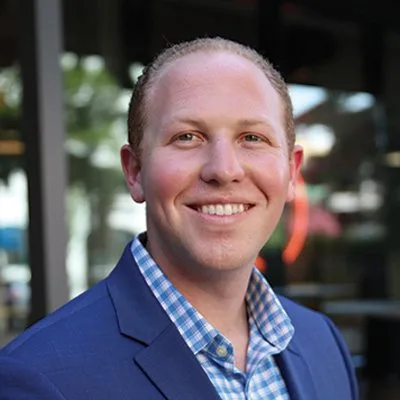
Jared Kleinert is the Founder/CEO of Offsite. Jared is also a TED speaker, 3x award-winning author, and USA Today's "Most Connected Millennial" who has helped organize hundreds of events for over 30,000 attendees.
In this episode of The Leader Assistant Podcast, Jared Kleinert talks about the pros and cons of remote, hybrid, and office-first work, the impact of AI on offsite planning, LinkedIn marketing tips, and how to help your executive focus on key projects.
About Jared
Jared Kleinert is the Founder/CEO of Offsite. If you're planning a team retreat, Offsite can save you time, money, and stress. Jared is also a TED speaker, 3x award-winning author (his most recent book is NETWORKING: How To Meet Influential People, Deepen Relationships, and Become A Super-Connector), and USA Today's "Most Connected Millennial" who has helped organize hundreds of events for over 30,000 attendees. As a teenager, Jared was one of the first ten employees at an enterprise SaaS company called 15Five, the market leader for software powering continuous employee feedback, high-performing cultures, objectives (OKR) tracking, etc. Later, Jared would become a delegate to President Obama's 2013 Global Entrepreneurship Summit in Malaysia, write multiple books including the "#1 Entrepreneurship Book of 2015", 2 Billion Under 20: How Millennials are Breaking Down Age Barriers and Changing The World (2015), and "Networking: How To Meet Influential People, Deepen Relationships, and Become A Super-Connector" (2022), and speak at TED@IBM the day before he turned 20. His insights on entrepreneurship, networking, remote work, and offsites have been featured in major media such as Forbes, TIME, Harvard Business Review, Fortune, NPR, Entrepreneur, Mashable, Fox Business, The Hustle, Bloomberg, and more.
Episode links
- Jared on LinkedIn
- Offsite
- @offsite on X
- Mashable article about time management (featuring a quote from Jared)
- NETWORKING: How to Meet Influential People, Deepen Relationships, and Become a Super-Connector
Transcript
Read the full transcript4,185 words
Jeremy · 0:00
In-person meeting planning can be a lot to manage. That's where Troop Planner comes in. Troop Planner is built to make life easier for busy assistants like you. Whether you're organizing an executive offsite, department meeting, or team retreat, Troop keeps it simple, fast, and organized. From choosing the perfect location to managing budgets, coordinating travel, and tracking attendee details, Troop brings everything together in one easy-to-use platform so you can save time and focus on what matters most. Troop has an exclusive offer for Leader Assistant listeners through Administrative Professionals Day, so don't miss out. Visit leaderassistant.com/troop to learn more.
Speaker 3 · 0:52
The Leader Assistant Podcast exists to encourage and challenge assistants to become confident, game-changing leader assistants.
Jeremy · 1:08
Hey, friends, it's Jeremy again. Thanks again for listening. Just want to let you know, in case you didn't, that my best-selling book, The Leader Assistant, has a companion study and discussion guide to go along with it. It's called The Leader Assistant Workbook. Now, you can buy the Kindle ebook version of The Leader Assistant Workbook on Amazon, or you can go to leaderassistantbook.com and get a printable PDF version of the workbook. This version has all the space and margin in between the questions that you can write your own answers and take notes with, so it's a great way to print it out and keep track of your discussion and study guide notes. Again, go to leaderassistantbook.com and click on Workbook to check out The Leader Assistant Workbook. Hey, everyone. Welcome to The Leader Assistant Podcast. It's your host, Jeremy Burrows, and you're listening to Episode 311. Episode 311, you can check out the show notes at leaderassistant.com/311, leaderassistant.com/311. And today, we're going to talk a little bit about the impact of AI on offsite planning. And we, yeah, I'm excited to bring my friend, Jared Kleinert. Is that right? Am I saying it right still? You got it. Good, good. So, Jared, welcome back to the show. You're on episode 246. So if people want more of a background on Jared and hear us talking about his role as CEO of Offsite and TEDx Speaker or TED Speaker and all those things, you can check out that episode at Leader assistant.com/twofoursix. We talked about networking, remote work, offsite planning, which we'll talk a little about some of that today as well. But just so you can check that out to episode two forty six. But we are now on three eleven and Jared, anything. First thing I want to ask is anything has anything happened since then or how have things changed since then? I think that was a man to forty six. That would have been time flies, time flies. But that would have been in November of twenty twenty three. And I know this episode is publishing in twenty twenty five, but we're recording it in November of twenty twenty four. So it's been a year. What's what's happened the last year in the world of in your world personally, professionally?
Jared · 3:52
Yeah, personally, I moved from New York to Stanford, Connecticut, moved in with my girlfriend, which is amazing. Get to live with not only my girlfriend, but a very cute small white dog named Bodie. And so get to be a dog dad, which is very exciting. And I guess somewhere in that I got my blue belt in jiu-jitsu. It's been a hobby. And then with Offsite, we've basically doubled the business, or we're expecting to, but we're recording this, as you said, in November. But we're on track to double the business from 2023 to 2024. And that means we've planned hundreds of off sites all around the world. For a wide range of VC-backed startups, we added some really cool clients this year, including remote. We're planning two sales kickoffs for them in January. And then we also signed what became our largest client this year called Guild, which some of your audience members may know about. It's sort of like an upscaling platform. But we've planned six offsites for them already at time of recording. And then we signed a contract with them in October to do a thousand person all hands meeting next year. And so that is almost four times the size of our previous largest offsite, which is very exciting. So excited to see how the business has grown. Product, we've gone from having a marketplace where you can book your venue for an offsite to going multi-vendor. So now you can use our marketplace to book not only your room block, meeting space, things like that, but also book your speakers, facilitators, swag providers, photographers, videographers, kind of any vendor you might need for a team retreat or offsite. So that's also very exciting as we sort of try and become the Airbnb for team retreats or thumbtack for team retreats. Yeah, it's been fun.
Jeremy · 5:59
Nice. Nice. And so is it still, are you still working with a lot of assistants? Like are those your primary people that you're working with or is it a 50-50 combo between assistants and maybe event planners or office managers? Yeah, who are primarily setting these offsites up?
Jared · 6:23
Yeah, we're still working with mostly like small and medium businesses. Sweet Spot right now is 100 to 2,500 employee companies, but we are working with smaller companies and then occasionally working with enterprise. But with SMBs, you're still looking at an executive assistant, a chief of staff, a head of people that despite having 17 other jobs gets asked to plan these offsites. We're still very much building for the leader assistant in mind and the chief of staff in mind. In the future, it might be more event planners, but I think an offsite is something beyond just an event. It's not really like the same as a marketing event or conference. It's really a strategic gathering of your team for quarterly or annual planning, for learning and development, for kicking off your go-to-market motion, all that sort of stuff. So then it requires bringing in executives, it requires bringing in their right-hand man or woman or person to assist them in making sure it's high value. That's where an assistant, a chief of staff, other people leaders would come in to play.
Jeremy · 7:40
Gotcha. Cool. Tell us a little bit about the remote, hybrid, you know, office-first work environments. I know since we last spoke, there's, it seems like it's kind of a roller coaster of the corporate world of like, oh, there was COVID, so we were like, global pandemic, everybody's remote, but then kind of slowly coming back into the office. But like, well, hybrid or, oh, you got to come in one day a week, or you got to come in three days a week now. And now there's some companies lately that have been like, oh no, we're going full on, five days a week in office, you know, deal with it. So, yeah, so what's been your experience and what are you seeing in the market? And then what kind of pros and cons are you seeing of those different arrangements?
Jared · 8:35
Sure. One thing I forgot to mention is since the last episode that we were on, I started posting regularly on LinkedIn and then have had over 11 million impressions on posts this year. And so by the end of the year, by the time you hear this, that might be 12, 13 million for the year. And it's like, could be hundreds of thousands of dollars of earned media value for the company. But that's also just meant that I've been talking about remote work a lot. That's generally what I've posted about and paying more attention than maybe I was before. And so I think what's happening is sort of like the economy, or the economy does not match the stock market, if you will. And so most people would feel like the economy is pretty tight and that consumer spending, is challenged and like your money is not going as far as it used to. And there's a lot of people that aren't getting by. And yet the stock markets, at least in November, were at an all time high and probably will be again by February, if I had to guess, even not if it'll be pretty close and probably pretty healthy. And so it's this K shaped economy, if you will. And I think that's also happening with remote work versus office first work. You know, you generally have this macro trend where a majority of companies are going remote, are going hybrid. But you do have a very small percentage of very important companies like Amazon, like Apple, like Starbucks, that made a bunch of headlines about trying to go more in office, whether it was five days a week or start to get to like three days a week and putting these return to office plans in motion. And so I personally think it'll still be remote and hybrid in the future as a majority of what the workforce wants. I read a stat the other day that like 80% of companies are hybrid or remote, and yet 98% of the workforce wants to be. And so I just don't see us closing Pandora's box again. I do think the pandemic really just opened up the floodgates in terms of the push to remote-first work. And if you look out 10 years from now, I just don't see a world where we're all going to be in an office with all the advances of technology that we're going to have with how the workforce may change and go to a more fractional state or more towards like solo-preneurship and more people leveraging AI for their work. I just don't know how that matches up with an office-first future personally.
Jeremy · 11:27
Yeah, yeah. I agree. I agree. What about, speaking of AI? How has AI, I mean, in its advancing so fast every week or two, there's new updates to the algorithms on ChatGPT or Google Gemini or OpenAR or whatever. And it's like, it's just amazing how quickly it's evolving. Even things like the Tesla did their AI event or their showcase on autonomous, you know, cyber cab or whatever they're calling it. And where it's like driving people around without any steering wheel and, you know, without any pedals or whatever. And then they've got the Optimus robot and it's got it's gotten way more advanced since the last time they showed it off. So, but not obviously not just in the hardware, cars and robots world, but also obviously in software. So how have how has the offsite world and these assistants trying to plan and execute an offsite for 50 people, 100 people, 1000 people? How has AI directly impacted that whole process?
Jared · 12:45
Not too much yet, and I'm grateful for that. I do think AI can be helpful for travel planning, and it's easiest at the individual level, and then it gets harder and harder if you're doing group travel planning. But right now, the Chat2BT and Expedia, I believe, or Kayak, or maybe both have partnerships and have developed GPTs for you to plan your own personal itinerary. So you might want to know that for planning executive travel or your own personal travel. We are testing various uses of AI for group travel, for our clients, and at some point, if we have that become good enough, then we would probably give that away as a free tool. So hopefully, that's out by the time this comes out. I don't want to promise that, depending on our product, probably later next year. Then we do have an AI feature for reviews, where in our marketplace, it looks like Airbnb, so the more people plan off-sites, the more that they're putting reviews on the marketplace. But we do have some vendors and some properties where we haven't had anyone go yet, despite them being in our marketplace. We've used AI to pull Google reviews, but specifically ones from groups that have traveled there, because that's a different experience than a personal traveler might have, and then have summarized those, so it is one cohesive review, as if a chief of staff or an EA wrote it, as opposed to a whole scroll of various group reviews. We've started playing around with AI ourselves. I do think it'll help with various parts of planning and offsite, whether it's travel seems very obvious. You could use it for agenda creation, potentially. You can use it for budgeting, perhaps, and try and teach AI to pull information from various hotel proposals and various vendor proposals, and then push that into a spreadsheet that you've created to plan your offsite. You could probably use it for agenda creation and scanning all the best practices online and prompting it to add your companies OKRs, and then add feedback from a pre-offsite feedback form on what attendees of the offsite want to learn and have that keep developing the agenda. But I don't think it's going to be perfect right away. Hopefully, it's not. Otherwise, maybe we won't be in business for that much longer.
Jeremy · 15:35
Right, right. Awesome. So how... I want to ask you actually a couple of quick questions. One was, you know, how can assistants help their executive or executives if they support more than one, you know, focus on key projects and be more effective? In other words, like, you know, there's all these little emergencies that come up, these little fires that kind of pop up week in and week out, and, you know, we don't want our executive to get distracted by every little thing that kind of pops up and want them to stay focused. So how have you seen, and whether it's related to, you know, just handling offsite logistics so your executive can just show up and do that, or what or other topics, it doesn't just have to be in the offsite world. But, yeah, how have you seen assistants do this well?
Jared · 16:41
Yeah, I was just interviewed or included in a Mashable article about time management. I gave it to you if you want to put in the show notes.
Jeremy · 16:50
Yeah, yeah, definitely.
Jared · 16:52
But I do think, at least for me, what I've tried to get better and better at is prioritizing the most important thing for a week, for a month, a quarter, a year, could even be the day, and then de-prioritizing everything else. So as a founder, as a CEO, I'm personally willing to let small fires burn. Probably not the best thing from an organizational standpoint. So currently, I don't have an EA. But if I did, my hope of that EA would be to extinguish those small fires or prevent those small fires from happening while I'm focusing on the big thing, and then to not distract me while I'm focusing on the big thing. I do have team members here and there that are very ambitious and very entrepreneurial, but then sometimes are attempting to distract me from that important thing. Right now, it's a fine, great thing. Hopefully, we've finished fundraising by the time you listen to this, and we're focused on Series A in the future and building a category-defining company. But at time of recording, I'm fundraising, and I'm spending basically half my working hours doing that. That's the only thing that matters because if I can get that done, then we have all the capital we want to achieve our goals throughout next year. And we're already break even. So theoretically, this may be the last round we ever need to raise if we want to go the profitable and growing route. So that's pretty important. The upside is very high on that. And so I'm willing to let some of my marketing priorities go to the wayside. I'm willing to let some side projects falter, like even some hobbies like Jiu-Jitsu, I'm just not going to get too much of. And so I think it's important for any assistant to either be aware of that sort of thing, if your principal also believes in what I'm sharing, and then be there to prevent those small fires from happening, to extinguish them if they happen, and then to sort of have addition by subtracting. You can also be the one to help your principal like figure out what that priority is, and sort of guide them and your executive or multiple executives on what is the most important thing for you to work on, and like what could you do now that if you were to accomplish, would render everything else useless or less important. And so that's going to be different for every executive, and it's going to be different by the day, month, week, quarter, year, perhaps. But it's a skill that I've developed in the last few years, and getting better and better at. And I think it's really important in a world where it's just increasingly noisy, the opportunities are endless. You can always tinker with a new AI tool or go find some entertainment online. You just got to set a strategy and then execute it and do nothing else. That you do have to have good strategy. You also have to have really good execution, and that's going to come from just ruthless prioritization.
Jeremy · 20:24
Nice. Yeah. Thanks for sharing good tips.
Jared · 20:28
Do you agree with me or you?
Jeremy · 20:31
Yeah. I think so. 100 percent agree. And I think that there's a lot of times where you just have to let things go or convince your executive to let things go because they're minor at the time. And the things that are major in that moment, you just got to put all your energy into it. And so, we're in a similar boat, we're raising capital. And so, the majority of my time even is managing that process right now. And so, there are a lot of things that I could be doing that are not related to that, but right now, they're not important. So, totally agree.
Jared · 21:15
Okay.
Jeremy · 21:16
Last thing I want to ask you about, you mentioned your LinkedIn marketing or LinkedIn influence, LinkedIn traction that you've gotten. What are maybe the top two things that you've done that you've seen make a direct impact on, whether it's the number of engagements you're getting, the number of impressions, the number of followers, all the above. What has been those things? So, if assistants listening are like, you know what, I'm trying to grow my LinkedIn network, I'm trying to grow my reach, maybe I'm trying to grow my personal brand on LinkedIn, what are the top two tips that you would say, maybe even action items for us to take away and try out on LinkedIn?
Jared · 22:02
Yeah, I would be really clear on what your goals are for LinkedIn. So, my goal is not really to build a personal brand even. My goal is to ultimately generate pipeline and revenue for Offsite. So, I've approached it differently than if I was trying to build a personal brand and an e-mail newsletter and stuff around that. That's probably different than an assistant listening to this who maybe would run things differently to get a better job or to increase their value to their employer and get a promotion. So, I'd be clear on what your goals are first. If you're listening to this and you have a similar goal for me, as me, where you're using LinkedIn to generate business, maybe for your employer, or you're working with your executives to build their followings online, then what's worked for me is, I guess, one is I've treated LinkedIn like a big science experiment and I've been very unromantic about what posts would work and what messaging would work, or even how I've written certain posts would work. I've tested out a bunch of stuff, continue to do so, and if something is resonating, then I just keep posting about it and remixing that topic and say it in 10 different ways over the next few weeks. I almost think it's a little bit cringe at this point in my posts, but every time I post, I'm getting 10,000 to 20,000 impressions on a bad post, and then my good posts can be upwards of 100,000 impressions. Who am I to say that something's not working? The platform is telling me what is resonating with people, and the comments, and so forth. That's one thing is just being scientific about it, and forgoing your ego around what you think will work, and not being so romantic about it, if you have the same goals as I do. The second is looking for viral templates. Kind of like the great artist steel concept. I don't plagiarize anyone, but I do look online a lot for other posts that are going viral, and then I try and remix them with my own wording, or with my own topics, and that works pretty well. Because you don't have to reinvent the wheel, you can just find what's working and going viral already, and then try and make it your own. And the same artists do this, musicians do this, people do this in business. You can do it in content creation as well. I'm sure you see dozens of the same types of TikTok or Instagram posts, and so it works on LinkedIn too. And maybe like a bonus tip, if you ask for two, I'll give you three, is to write content that makes someone else look smart when they share it. And so one of the best ways to go viral is to get reposts on your content, kind of like a retweet on Twitter slash X. And so for someone to repost your content, it has to be so good that they kind of stop scrolling, they read, they click see more. And then they're like, you know what? I think other people in my network would benefit from this. And then they repost and either just repost as is, or they might add their own copy to it. And so most of my posts have been without any photos of me or anything that's like promoting me necessarily. And like maybe I promote Offsite at the end. But I write most of my content around remote work ideas or like kind of news jack, any sort of like return to office things, and just put something out there that someone else may want to share. And I think if you keep that in mind, and you're looking for viral templates, you will have a better shot of writing more viral posts than if you weren't doing those things.
Jeremy · 26:44
Yeah. Is there any sort of last question on this is, is there any sort of like cadence or rhythm that you found is successful? Like, oh, I got to I'm going to post once a day or I'm going to post three times a week, anything like that?
Jared · 27:00
I personally post every day, even on the weekends, typically. And then I try and post between like 8.45 and 9:45 AM Eastern. I don't know if that's the best time to do it, but that's just what's worked for me. Maybe I should try 11 to 12 AM Eastern because then I'll catch people waking up in California and also people in the East Coast. So I probably could be better about experimenting with it more. But that's just been the cadence that I've picked up. Sometimes I'll get even crazier. And if something isn't working in the morning, like typically if it's not getting to a certain impression count within 30 minutes, I know it's not going to work. And then, or even like an hour, I might delete that post and then write another one later. And so I'll do that. And then I also just like memes. And so I've been playing around with memes. There's a Jason Levine, L-E-V-I-N, that has like a meme alert template thing, where it's like seven bucks a month and I get like five or six memes a day that I could repurpose for remote work or Offsite planning or whatever. And so he sends that out largely for posting memes on Twitter, but occasionally I test one on LinkedIn just for fun. And then sometimes it resonates as well. Nice. Who's not going to want to repost a good Taylor Swift meme when you see one?
Jeremy · 28:38
Right. Totally.
Speaker 3 · 28:39
Cool.
Jeremy · 28:40
Well, thanks, Jared. Appreciate your time again. Everyone listening, definitely go connect with Jared and learn about offsiteleaderassistant.com/311. I'll put all those links in there, including the time management article that he mentioned. And yeah, we'll we'll definitely keep in touch. And thanks for thanks again for being on the show.
Jared · 29:04
Yeah. Thanks for having me. Please review on Apple Podcasts.
Speaker 3 · 29:25
goburrows.com.