
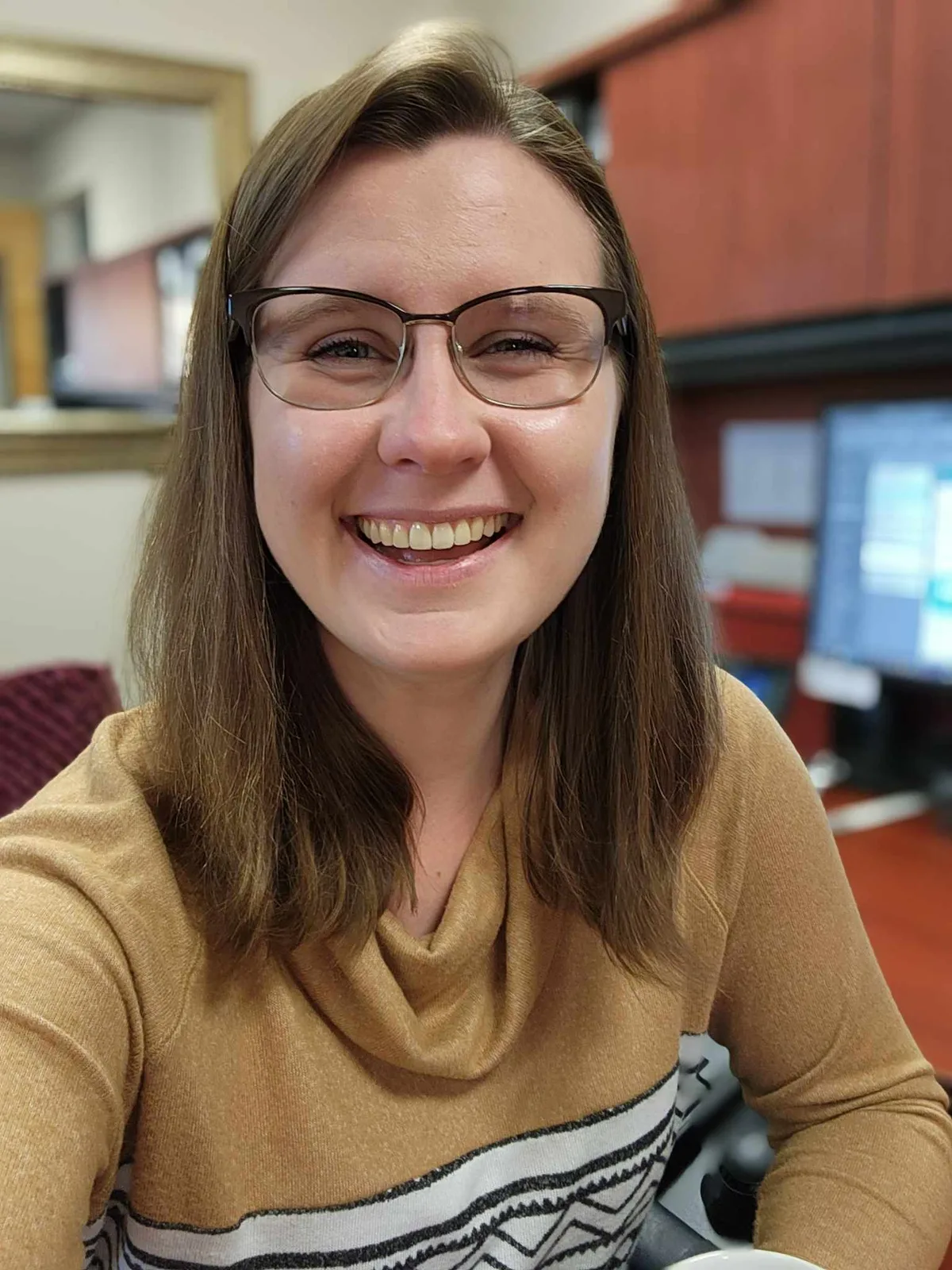
Rachel Bennett is a curious, self-motivator who loves to learn new ways to make life more efficient and effective for her executive.
In this episode of The Leader Assistant Podcast, Rachel talks about learning your role while onboarding an executive, communicating with an executive who travels extensively, and serving the work.
Leadership Quote
“A day wasted on others is not wasted on oneself.”
Charles Dickens
About Rachel
Rachel Bennett serves as executive assistant to the president of a nonprofit missions agency that serves missionaries all over the world. She is a curious, self-motivator who loves to learn new ways to make life more efficient and effective for her boss. She is also addicted to Todoist and all things project management software related.
Episode links
Transcript
Read the full transcript5,019 words
Rachel · 0:00
Hi, I'm Rachel Bennett. Today's leadership quote comes from Charles Dickens. A day wasted on others is not wasted on one's self.
Speaker 3 · 0:14
The Leader Assistant Podcast exists to encourage and challenge assistants to become confident, game-changing leader assistants.
Jeremy · 0:29
Calling all Executive Assistants, are you looking for a way to elevate your skills or earn that promotion you've been eyeing? Nova Chief of Staff's Online Certification Course provides you with the knowledge and confidence you need to stand out on the job. Whether you want to land your dream position or level up in your current role, Nova's Self-Paced Course gives you hands-on practice doing what Chiefs of Staff do every day. Visit leaderassistant.com/nova to learn more and secure your spot. That's leaderassistant.com/n-o-v-a. Hey friends, welcome to The Leader Assistant Podcast. It's episode 264, and this is your host Jeremy Burrows. I'm excited to be speaking with Rachel Bennett today. Rachel is an executive assistant to the president of a nonprofit missions agency that serves missionaries all over the world. And Rachel, first of all, welcome to the show and tell us what city you're in.
Rachel · 1:39
Thank you for having me. I'm coming from Cleveland, Ohio right now.
Jeremy · 1:42
Cleveland, nice. So are you from that area originally?
Rachel · 1:47
No, actually I grew up in Southeast Virginia, bounced around a little bit. I moved to Pennsylvania when I was in high school and then went to school in South Carolina and moved up here after graduating college.
Jeremy · 2:00
Okay, so a little all over.
Rachel · 2:03
Yeah.
Jeremy · 2:04
For sure. Cool, well, tell us a little bit about yourself personally. Do you have cats, dogs, kids, goldfish, all of the above?
Rachel · 2:16
I have two dogs. We took on two puppies. So I have a two-year-old springer doodle, springer-spraniel mix with a poodle, and a six-month-old cockapoo, so cocker-spraniel and a poodle. So they keep us running. I've been married for almost two years. But yeah, we're busy with two toddler fur babies right now and they keep us on our toes.
Jeremy · 2:44
Love it, love it. So what got you in to the world of executive assistants?
Rachel · 2:54
I would say I probably stumbled into it. And the short answer is I really needed a job after college. I was looking for admin-type work in South Carolina, which is where I went to school. All the jobs kept flying through, and I ended up taking a position as an administrative assistant here. And that was about, goodness, that's about six years ago. And I worked for two different administrators. So one was in the office and the other one was based in Taiwan. So I kind of had my role split between working with someone that was right there, working with someone who was overseas, different time zone and everything that goes along with that. But I first got interested in admin work probably when I was in college in my senior year. I did an internship with a pregnancy medical clinic in South Carolina. I went to school for counseling, but I also really enjoyed the admin work. So I did like reception work, scheduling, call center work, that sort of thing. But I just like to be available to help people with organization and communications, that sort of thing. So that's probably what got me interested in it in the first place.
Jeremy · 4:05
Did you see it? You said you wanted a, you needed a job. But how long have you been an assistant now?
Rachel · 4:14
It'll be six years this coming May.
Jeremy · 4:18
And when did you kind of transition from, oh, I need a job to, oh, okay, I think I like this and I could do this for a career?
Rachel · 4:29
Probably in the first couple of years. So I worked for two years as an Administrative Assistant for the two administrators I mentioned previously. And it was probably at the end of those two years that I started really getting into a flow with working with my one administrator. We kind of think what the other person was going to say. And it just got really a smooth working relationship that it was effective and it felt very successful. And it was at that point that our organization went through a leadership change where we had a new president coming on the summer of 2020. And I was asked to consider coming on as the Executive Assistant for him and felt very underqualified and not quite ready for it. But I jumped in and been doing that for four years now and had some bumps along the way. But I think we're probably the best working relationship we've had so far. So it's been really cool to see that progress.
Jeremy · 5:31
And what was maybe, you said, some bumps along the way? Are there any challenges or struggles or bumps, speed bumps that you want to share a little bit about?
Rachel · 5:41
Probably the biggest bump was my own insecurity coming into the role. I didn't think I had what it takes. And I think I was probably more concerned about other people not thinking that I had what it takes to do the position and to do it well. So that was one hurdle on my own part. And just working with the administrator and executive who is very different personality-wise from myself, who is, I think he was filling out the role himself while I was learning my role. And so we were both learning two different roles together at the same time and learning to communicate well. And communication has been a big thing. But it's really improved and yeah, it's gone really well.
Jeremy · 6:28
So one of the topics you suggested when I asked you what topics you wanted to cover was learning your role while onboarding your executive. Is that kind of what you're referring to, that idea of like, so was it because the executive was new to the organization or was it because they had never had an assistant before or both?
Rachel · 6:52
I would say just because he was new to the organization. He had worked with assistants in the past, but not quite in this type of role where it requires a very, how we call it, synchronous relationship where you're both in tune and helping each other out on the same team, communicating a lot. And when he came onto this role, there's a lot of travel involved. So most of the time of the year, he's not actually in the office and I have to keep ball rolling on things. We have to communicate well and not let things fall through the cracks while there's so much travel going on. So that was a different dynamic that took some getting used to for both of us.
Jeremy · 7:28
What's maybe one thing during that time that if you're going to do that again, you would maybe do differently or even just a practical tip for figuring it out on the fly as you're onboarding an executive?
Rachel · 7:48
Probably more patience with myself, to be honest. I can be a little hard on myself when I make mistakes. And there was a process where I was really focused on building trust with my executive and knowing that there had been maybe some bumps in previous relationships, working relationships in the past. I was really focused on getting everything right the first time. You're human, you make mistakes, that doesn't happen all the time. And you have to be a little bit gracious with yourself when you do make those mistakes. But I would beat myself up and worry that I had just pushed myself further back in the process of building that trust. And that probably didn't do either of us any favors. So that was probably one thing I would do differently.
Jeremy · 8:33
And you mentioned that before the insecurity and just kind of like not having that confidence that you had what it takes. What has helped you, now that you've been in the role for a while, what has helped you overcome those feelings of, you know, I don't know if I have what it takes.
Rachel · 8:56
Probably experience and maturity plays into it. I felt like I was pretty young when I came onto the position. So, you know, being in the seat for a while helps you feel like, okay, I probably deserve to be in the seat because I've been doing the job for now as long as I have. But I think kind of one of the things that comes out in the book about serving the work and about having a mindset that I'm here to serve other people. I'm not just here to get my way and do what I want to do, but I'm here to provide a service, especially to my executive and to the people that we minister to. So having that mindset, I think, helps overcome that challenge where you see yourself as there to serve other people and not just to do what you want to do necessarily.
Jeremy · 9:44
Yeah. And for those listening, you know, I talk about this idea. There's this quote from Dorothy Sayers in my book, The Leader Assistant, where she talks about the difference between angling for applause and serving the work. In other words, are you working to get affirmation and approval from others, or are you working because you want to do well, you want to do good work? And how Dorothy Sayers, she says that the community as a whole thrives when people care more about serving the work than angling for applause from others. And so anyway, that's just kind of a side note as your to your reference of serving the work. And I think that, you know, experience is a big thing. I think that really grounding yourself on a regular basis with the, you know, OK, I'm not going to take this personally, you know, if somebody says something or disapproves of something I did, or like you said, your heart on yourself when you make mistakes. Just realizing that, hey, listen, you know, doesn't really matter what other people think and doesn't really matter if so and so approves of me. What matters is am I doing the best that I can with the tools that I have? And am I actually doing good work? And then the rest kind of falls into place typically. So anyway, thanks for.
Rachel · 11:18
Yeah, I had that lesson taught to me pretty early on when I was being considered for the role. The former president of the mission had recommended me and he was available to, you know, talk to the process with me and that sort of thing. And I kept coming back to that question of do you actually think I can do this? Because I don't think I can do this. And eventually, I think he got tired of me asking that and said, Rachel, you know, if God wants you to do this, you're going to be okay. And you're going to do your best. And it doesn't matter what other people think. And I was like, you know what? I just need to get over it.
Jeremy · 11:53
Right, right. Awesome. So what about you said you're an executive, or you've worked with executives, you know, in the past as well, but who travel a lot. What's some good tips on keeping track of all the different time zones and the travel itineraries and the flight changes and all the things. But then on top of that, not just logistically organizing all that, but trying to stay in communication and constant sync with an executive who's gone all the time.
Rachel · 12:28
Yeah, I'd say tools like monday.com have been a lifesaver. Those type of dashboards where we can both see the same thing at the same time. We even have it set up so that his priorities are on a dashboard. I can go in and see what he's focusing on every week and what the priority level of each item is. I can upload files. I can add updates, that sort of thing. So having that collaboration where we're both seeing the same things at the same time has been awesome. We have a regular one-on-one that happens every week. It's on the same day, at the same time, and it can get moved wherever it wants to get moved, but the rule is that I think I'm the only one that's allowed to delete it. So you can ignore the one-on-one meeting, but you're not allowed to delete it. So we have a shared Google Doc where we'll just make a really simple grid of items that I need answers on or I need to move forward with, and then he can go in to that shared document anytime and put in answers or updates so that I can move forward. And he can do that whenever he wants, but when it comes to the one-on-one meeting, that's the document that we're going to go through. So if he has free time, he can chime in and give some answers on things so we don't have to spend that time on the one-on-one. That's kind of how we handle the day-to-day stuff.
Jeremy · 13:49
And then what about like, you know, I've had this happen a few times in my career, and it's like the worst feeling ever and the worst day ever. But, you know, your executive is traveling, and you get that dreaded call, my flight got canceled or my there's a delay and I'm going to miss my connecting flight. Like what do you work with travel agents? Do you kind of try to manage it yourself? How is there certain software or sites that you like to use to help re-book and change the itineraries?
Rachel · 14:25
Yeah, I think I'm probably blessed in that area in that I do most of his travel planning myself unless it's a very complicated international itinerary, in which case I work through a travel agent so that they can be the on-call person, especially if a flight gets canceled, and it's a complicated situation where he's overseas and he needs help in that way. But for domestic transportation, I handle that pretty much myself, but like I said, I think I'm blessed in that if something goes wrong, he's usually the one that handles it himself. That's not the same situation for everybody, but I'm a little bit lucky in that regard, I think.
Jeremy · 15:02
I was going to say there's a lot of assistants listening right now. They're like, oh man, that would be nice.
Rachel · 15:08
We're pretty good on boundaries, and I'm thankful for that in the sense of, you know, if something happens on the weekend or on the evening, it's pretty much an emergency level for him to contact me about it. And this is the same thing that goes for me. So we both try to respect that boundary and makes for a really good working relationship.
Jeremy · 15:27
Yeah, that's huge. So, you know, in your little bio that you shared with me that I'll put in the show notes at leaderassistant.com/264, you say that you're addicted to Todoist and all things project management software. So what do you like about Todoist, for example, and then just in general, project management? Because I personally was a project manager for about a year in the middle of my EA career, and I could not stand it. I felt like I was a babysitter for all these other people, and I was just like, no, I just want to do my work. I don't want to have to tell other people and remind other people to do their work. So anyway, what's your... Yeah, why do you like Todoist and what do you like about project management?
Rachel · 16:12
When I first started as an executive assistant, I was still using paper and pen, which there's nothing wrong with that if that works for you. Kudos to you, it did not work for me after about 24 hours. So I quickly switched over to looking at a digital task management system, and I tried out a couple of different ones, but I really stuck on Todoist because it was so simple to use. I can just type in meet with my boss, T-O-M-P-1, hashtag, whatever project, and then it would schedule that task automatically for the next day, priority one, and then put it in the right project that I needed to go into that project listing and see everything that was underneath there. So it was just simple. It didn't take me a ton of time to learn. It was easy to set up, and it was really customizable for what I wanted. I used money.com for more process workflows and that sort of thing myself. I don't have a ton of collaboration with other teams on it, but it's helpful for me to keep everything in one place.
Jeremy · 17:15
Nice. And do you enjoy... And is it more project management for you and your executive, or do you also manage, like, projects across the team?
Rachel · 17:28
It's mostly for myself and my executive. There's some committee and event management that we use that software for and it helps keep, mostly like my timelines, for everything that needs to happen, keeping that going in the right direction. It was a bit of a change coming from my previous role into this one that I have more event management and longer projects where, in my role before, it was more day-to-day tasks that would conclude at the end of the day and I usually could wrap everything up pretty quickly. But this was more like, okay, you've got an event coming six months in advance, you better be doing your work now or you're going to be in trouble in six months. So I quickly learned that I needed a tool outside of just pen and paper to keep track of where everything needs to be.
Jeremy · 18:18
And then another thing I wanted to highlight is, as an assistant, and really you can see this in the job descriptions when people are hiring an assistant, but this idea of being self-motivated or a self-starter, were you like that? You mentioned you're a curious self-motivator. Were you like that when you started your career or did you just kind of evolve into, hey, I really need to be self-managed or initiate things on my own? I can't just wait for my executive to guide me.
Rachel · 18:57
I'd say I was pretty self-motivated from the start. I love to learn new things and figure out things I didn't know before. So, I have an example in college. I rarely used Excel in college, which was a nice experience not to have to use Excel. So, I started working with a recruiting agency to find a job. One of the things they wanted me to do was a Microsoft assessment to see how good your skills are with Excel. I was panicking because I'd never used it before. So, I started watching as many YouTube videos as I possibly could about how to do formulas and learn Excel. I just found it fun. Even when it came to finding the right software to use when I needed to switch over to a digital system, I looked at ClickUp and Office Otter and asanamoney.com and pretty much whatever I could get my hands on in just a way which one I liked the best. That's the kind of thing. It's fun to learn new things.
Jeremy · 19:56
Nice. Yeah, I think being curious is one of the best traits to have as an assistant. It really helps you learn more about the context of your organization, your executives, work that they're involved in, your team, and so on and so forth. Well, Rachel, what would you like to say to new assistants? So if you've got assistants listening who maybe they're just about to start their first assistant job or they're a couple months in, any tips for the newbies listening?
Rachel · 20:40
I still feel like a newbie, so I feel I've earned the right to say that. But I would say just have patience with yourself, patience with the process and the fact that it takes time to build trust and to develop a solid working relationship with your executive. Don't hold your work too personally. It's work for other people. It's not always just work for you. I made that mistake before. I remember spending hours on a PowerPoint to have it get shredded the next day because I was focused on what I wanted it to be and not what it needed to be for my executive, that sort of thing. But yeah, just realize that it takes time to develop that relationship. It doesn't come overnight, but have patience and keep working hard.
Speaker 4 · 21:35
Are you ready to elevate your career in 2024? I'm Maggie Olson, founder of Nova Chief of Staff Certification, the first of its kind online course for aspiring and existing Chiefs of Staff. With curriculum taken directly from on-the-job responsibilities, Nova's self-paced learning modules provides you with hands-on experience so you can feel competent and confident moving into a Chief of Staff style role. It's the perfect next step for executive assistants. Head to leaderassistant.com/nova to learn more, grab the syllabus and enroll today.
Jeremy · 22:12
Well said. Okay, so let's fast forward then. We kind of rewound to newbies, but let's fast forward. Where do you see your career going in the next five years? Are you excited about the role and do you see yourself as an assistant, I guess I should say, in the long run? Have you thought about the trajectory of your role as an assistant?
Rachel · 22:38
That's a good question. I don't know if I see it in the long run, in the sense that I recently got married, I'm excited to build a family with my husband in the future. But where I am right now, I'm excited to be. The fact that I have the opportunity to build relationships with stakeholders, with donors, with many of the different ministries that we come into contact with, and I really enjoy the opportunity to serve them and to do my job well, and to learn how to do it better. So it's kind of an ambiguous answer, but it's what I got.
Jeremy · 23:15
Fair enough. How many are on your team, it's your organization? How many employees?
Rachel · 23:21
I would say under 50 staff members that are here on-site in Cleveland. The missionaries that we serve around the world is, I would say, around 450.
Jeremy · 23:31
And are you the only assistant in the organization?
Rachel · 23:34
No, no. No, I'm the only assistant to my executive, but we have some other really key players in the office here that do a great job.
Jeremy · 23:44
Any tips or anything you've learned working with other assistants?
Rachel · 23:51
Don't compare yourself. That's another thing that every working relationship with an executive is different, and that's okay. It doesn't all have to look the same way that your relationship works. And there's always something that you can learn from something that someone else is doing maybe better, something that they can learn from how you're working with your executive. So, yeah, stay humble.
Jeremy · 24:17
Yeah. So when you say compare, you know, are you, for you personally, are you talking like you would struggle to compare saying, oh, this person's got more experience than me? Or, you know, how are you comparing yourself to the other assistants?
Rachel · 24:34
Mostly experience. And I would say too, and I've noticed this more in the last couple of months, that when you see an assistant and their executive doing really well together and operating really well together, it's easy to make the assumption that it's like that all the time for them. It's not like that all the time. I know that even with my own executive, there are times where I even thought like, you know, if somebody, you know, watches interaction, they'd be really impressed with it. And then five minutes later, I'm like, oh, I guess I can't believe that he did that and that type of thing. So don't make those type of judgment calls. Every working relationship, it has the highs and the lows and that's okay.
Jeremy · 25:11
Yeah. What do you, what do you tell people, whether it's friends, family, you know, people you run into at a coffee shop, what do you tell people when they ask you, what do you do?
Rachel · 25:24
It doesn't sound really good, but I tell them I send a lot of emails, which is true. But yeah, mostly the majority of what I do is a lot of travel management, board relations, donor relations, a lot of communication with our missionaries and then with outside parties. So a lot of email.
Jeremy · 25:52
Yeah. What is your number one email management tip? And do you manage your executive's email or?
Rachel · 26:00
Yeah. I went through a certification earlier this year that kind of had me just reorganize how I do my own email. But it's not original with me by any means, but I have a Action Reply folder, a Pending folder and an Archive folder. And everything that comes in my inbox goes into one of those folders within the day. So I have a zero inbox, but I have a larger Reply folder. So it's not a big deal. But yeah, so that's actually been probably one of the most helpful things. But it's one of those results of being curious and seeing how other people do things. And like, I want to give that a shot. And I did and never looked back. It's been very nice.
Jeremy · 26:48
So you do that for your inbox and your executive's inbox?
Rachel · 26:51
I do it for my inbox. We're working on my executive. So we're getting there. I was going to say. So that's a start.
Jeremy · 27:00
You said action folder? Nice.
Rachel · 27:03
Nice.
Jeremy · 27:04
Yeah, it's always such a give and take, really, with your executive's inbox, because it's like, well, they want to do it this way. But you know that that's not the most efficient. But you want to change the system in a way that they see the value in it, you know, and that they can get on board with it. Otherwise, they won't actually, they won't change anything. They won't do anything different. Yeah. So what's your what's your favorite part, though, about your current role? Like, is it the travel? Is it the is it the email? Is it the just being involved in the executive level conversations? Like what's your what's your favorite part of your role?
Rachel · 27:50
Probably really enjoy the travel arrangement. So my boss is most of the time not in the office. But every time he goes somewhere, whether it is speak at a church or school or a conference, there's tons of different pieces of the puzzle that I have to put together and make sure it's a fluid experience for him that I haven't missed anything. But getting to know him better has been it's been helpful in the sense that I can see things coming now that I couldn't see before. And I know the questions to ask to get the ball rolling on questions that will come up later if they're not answered right now. So I enjoy that part of the puzzle, the unknown that something can always come up.
Jeremy · 28:30
Yeah. And then is there do you can you think of any of those questions off the top of your head? Like, if if someone listening has an executive that travels a lot and speaks at conferences and whatever, is there like a go to like, you know, two or three questions that you're like, I've got to get the answers to these and then I can I can run from there.
Rachel · 28:56
Um, it's usually related to speaking. For example, my executive wants to know the theme that he's supposed to be speaking on. He wants to know what time he starts, what time he stops, how long he's supposed to be speaking. He wants to know who's been speaking there before what their topics have been that sort of thing. That will be an example.
Jeremy · 29:17
But, yeah. Yeah. I've done a lot of coordinating for my executives for speaking engagements as well. And then obviously now I do my own speaking engagements. So I kind of have fun to be on the other side of the planning too. But yeah, those are good tips. So Rachel, thank you so much for being on the show. It's been fun to chat. Sounds like you've got a fun environment and a fun executive partnership going and you're learning and you're curious. And so keep leading well and keep being curious. And is there any kind of final word that you want to say? Or one way I like to ask at the end of the conversations are, you know, if you were to put a billboard on the busiest highway in the world that all the assistants drove by on their way to work, what would you what would you put on that billboard?
Rachel · 30:18
I probably put something along the lines of that life is for service. And that's where I get my fulfillment from knowing that I can help other people be a benefit to other people. And I enjoy that part of my job very much. But thank you so much for the privilege of coming on. I really enjoy the conversation.
Jeremy · 30:40
Yeah, yeah, my pleasure. And we'll put your is it okay to put your LinkedIn in the show notes and people reach out and say hi? Okay, cool. Well, I'll do that. Rachel, the show notes will be leaderassistant.com/264leaderassistant.com/ 264. Thank you, everyone for listening. And thank you, Rachel, for being on the show. And have a have a great week.
Rachel · 31:16
Please review on Apple Podcasts. goburrows.com.