
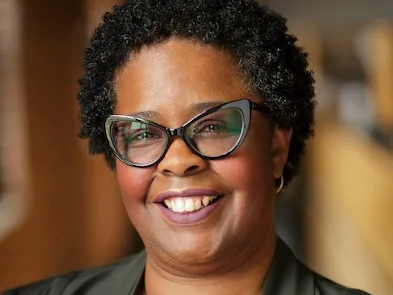
Ellen Richards brings a wealth of knowledge and skills honed over a long and successful career. As a trusted partner to C-level executives, senior leaders, and global teams, she has played a key role in decision-making, strategic planning, organizational operations, change management, and talent development processes. In this episode of The Leader Assistant Podcast, Ellen talks about the evolution of the EA role, career pivots, and resilience in job seeking.
Leadership Quote
“If your actions create a legacy that inspires others to dream more, learn more, do more and become more, then, you are an excellent leader.”
Dolly Parton
About Ellen
Ellen Richards, Founder of The Lightbrary, is on a mission to empower Executive Assistants to dream bigger, explore possibilities with curiosity, and confidently create action plans to achieve their goals. With a deep respect for the role of Executive Assistants, Ellen also partners with organizations and executives to design robust career pathways that foster growth and development in this vital profession. At the heart of Ellen's work is a commitment to personal development, integrity, and authenticity. She believes in creating environments where everyone can learn and thrive, and her coaching approach is rooted in these values. Certified as a Professional Coach, Ellen combines her coaching expertise with hands-on experience, providing a unique perspective that resonates with both individuals and organizations. Currently pivoting back to her Executive Assistant roots, Ellen brings a wealth of knowledge and skills honed over a long and successful career. As a trusted partner to C-level executives, senior leaders, and global teams, she has played a key role in decision-making, strategic planning, organizational operations, change management, and talent development processes. Beyond her professional pursuits, Ellen is a dedicated knowledge butterfly who blends her love of learning with her passion for creativity. She's a professionally trained chef and mixed media collage artist who's pieces draw inspiration from the worlds of art, fashion, food and nature. In addition to her artwork, Ellen is currently working on completing her BA in Art History.
Episode links
Transcript
Read the full transcript3,868 words
Ellen · 0:00
Hi, I'm Ellen Richards, and today's leadership quote is, If your actions create a legacy that inspires others to dream more, learn more, do more, and become more, then you are an excellent leader. And that's from Dolly Parton.
Speaker 2 · 0:22
The Leader Assistant Podcast exists to encourage and challenge assistants to become confident, game-changing leader assistants.
Jeremy · 0:38
Are you tasked with ordering food for your office? Let me tell you about Easy Cater. With over 100,000 restaurants to choose from nationwide and 24-7 customer support, Easy Cater helps assistants like you and me succeed at work and makes our lives easier. Visit easycater.com/leaderassistant to find out more. Hey friends, welcome to The Leader Assistant Podcast. It's your host Jeremy Burrows and this is episode 256. You can check out the show notes at leaderassistant.com/256, leaderassistant.com/256. Today, I'm excited to be speaking with Ellen Richards. Ellen, welcome to the show.
Ellen · 1:26
Thank you, Jeremy. It's a pleasure to be here.
Jeremy · 1:30
What part of the world are you in?
Ellen · 1:32
I am currently seated in Brooklyn, New York.
Jeremy · 1:36
Nice. Where are you from? That area or?
Ellen · 1:39
Brooklyn, New York.
Jeremy · 1:40
There you go.
Ellen · 1:41
Born and raised.
Jeremy · 1:43
Nice. What's your favorite food in that area?
Ellen · 1:49
My mother's cooking.
Jeremy · 1:53
What's your favorite item from your mother's cooking?
Ellen · 1:58
Not to sound like a weasel, but anything she cooks is generally delicious. When I lived away from New York and I would come to New York, I'm like, what kind of food are you going to go eat? I was like, straight to my mom's. Yes, there's good food here. She does a mix of cooking that over the years has been a blend of Southern and also Cuban cuisines because my dad was Cuban.
Jeremy · 2:29
Good deal. Well, next time I'm in New York, I'll have to come over for dinner.
Ellen · 2:33
Come on by.
Jeremy · 2:36
Cool. Well, tell us a little bit about your career then. How did you end up landing in the executive assistant role?
Ellen · 2:46
Well, after a few years, because I've always worked. I've probably worked since I was about 14. When I was trying to decide what I wanted to do with myself, and I didn't feel like college was necessarily my route. I was looking at things and fell into a couple. But I had a cousin, or I have a cousin, she's still alive, who was a legal secretary and she attended a secretarial school. And at the time, it was the biggest or most famous in the country, Catherine Gibbs. And she suggested that I attend. So after attending and doing well, I then started my career as a secretary, because at the time, the title executive assistant did not exist. So I started working at a small accounting firm run by a couple of brothers, and that launched me from there. I mean, I've gone from accounting to manufacturing to public relations for a good stretch. I was there about 20 years. Then into technology and just all over the place.
Jeremy · 3:59
Nice. What's maybe something that as you got into the role, and we'll talk a little bit about the evolution of the role. But what's something as you got into it that really was like, oh, this is for me. This is fun. I like this.
Ellen · 4:14
Yeah. What did it for me was that I was always allowed to take on as much as I was capable of doing. It was always something to be done. Now, when I started my career, I started out in a place that yes, it was entry level, but it didn't feel like entry level. I got dumped right into the pool. Funny story. When I started that job with the accountants, they had a new piece of software that I had briefly learned in secretarial school called Word. I saw it for like a few minutes.
Jeremy · 4:59
I've heard of it.
Ellen · 5:00
Have you heard of it? I don't know. It might be something people know about. But the one that was primarily the software we learned was WordPerfect, which you don't see anymore.
Jeremy · 5:10
I remember it.
Ellen · 5:11
So I got confused, Word, WordPerfect. They were like, do you know how to use this thing?
Jeremy · 5:16
Oh yeah, heck yeah.
Ellen · 5:18
I got there and it was Word and I freaked out in my mind, but they never knew it because guess what I did? I went to Barnes and Noble, I found a quick start manual and I figured out how to use Word. So all of that to say that this is the kind of position that has allowed me to learn many, many things and to do many, many things that I don't know that I would have outside of it.
Jeremy · 5:46
Yeah. Great story. Thanks for sharing. I remember Word Perfect back in the day. I remember there was Word started getting to be where everybody was using it, but then I worked with someone that was like, oh no, I still use Word Perfect and I was just like, what in the world?
Ellen · 6:02
Yeah. I got so good at using Word Perfect that I was doing all kinds of things, but then by the time I ran into Word and I was the office expert.
Jeremy · 6:18
Well, and if anybody listening has no idea what Word Perfect is, they can just have fun with their OneDrive and their Google Docs, right?
Ellen · 6:27
They can Google it and see if they can find it.
Speaker 2 · 6:31
Cool.
Jeremy · 6:31
Well, what's been maybe one of the biggest challenges throughout your career as an assistant?
Ellen · 6:38
Well, the biggest barrier or challenge, I would say, has not been in my lack of enthusiasm for something, but it's others not necessarily seeing what I see or allowing me the opportunity to do what I want to do or see someone in this role as, oh, that's just the assistant. That's been the most challenging thing. But I have to say over the years, it has gotten better as people, more and more people become educated about what people who are engaged in direct executive support do. And sometimes the challenge is not just attitudes, but resources as to, you know, there's going to be a limit to what you can do if you're not properly resourced, so that you have to be kind of scrappy. But that's not necessarily a bad thing.
Jeremy · 7:36
Yeah. Yeah. So, you know, we talked about the, you said you mentioned secretary when you started. So, and I was looking at your LinkedIn, you know, you had the executive assistant title, you had executive business partner title. So tell us a little bit about the evolution of the role that you've seen over the years and even even just simply the titles.
Ellen · 8:00
When I first started out, like I mentioned, we were secretaries and I graduated from Catherine Gibbs as an executive secretary. And there, the title came along, I would say, very at the beginning of my career. And I read a book by Melba Duncan, who I'm sure you're familiar with. And that changed my whole perspective on what administrative support could be. And as I moved through my career and the title secretary dropped off, I don't remember exactly when it happened, but it just disappeared one day. And I was an account coordinator at probably some point at the beginning of my career. Then I was an administrative assistant that morphed into executive assistant. I was an administrative manager. And then I moved into an executive business partner, which is the first time I had heard that phrase when I moved into the tech sector. And yeah, so that title proliferates pretty much in that sector, but not as much as you might think. But that was accompanies, I think, gaining a better understanding of the opportunities and competencies in this role. And so I've moved in and out of those titles. Yeah. So to me, it's nice to see the reflection and to see the changes in all these years coming from learning how to type on a manual typewriter to what we have today.
Jeremy · 9:55
Right. Do you think that the, you mentioned earlier, the kind of attitude of you're just an assistant. Do you think the title changes over the years changed any of that? Or was it more about the executive or the colleague versus the title?
Ellen · 10:20
I think it had less to do with the title and more to do with who's in the title and who is surrounding the title. Like who are you supporting and what is their understanding? How have you been able to educate them on what the role is? Then at that level, it's each one teach one. If you get your executive strength on what it is that you do and they see what you do, then they go forward to their colleagues in a perfect world. This is how it works. Sometimes it doesn't. They go forward to their colleagues and they say, hey, no, listen, Ellen's not just anything. She's the one that's saving me on a daily basis from all kinds of things. So it ebbs and flows and I see a lot of changes, but I see a lot of steps backwards and that can be a little disheartening when you've been in the game as long as I have.
Jeremy · 11:23
What's an example of something that you've seen that you feel like to step backward?
Ellen · 11:27
Well, I've seen a lot of that lately. Like I would say in the last year or so, especially when this market started to crater and it really started to get desperate out there. I have seen some going backward in the sense of what the expectations employers and perhaps these executives that are behind these roles have as to what an executive assistant or executive business partner or someone with an admin title does. But it doesn't, I feel still like here's the hopeful part in me, that still feels that there are enough people who are getting it or got it, due to all the advocacy that's being done out there. What I do, what definitely what you do, and what your contemporaries are doing out there in the world to get the message out, it's not just anything. It is a career, it is a profession, we are your colleagues.
Jeremy · 12:31
Well said. So then speaking of career, I always ask my guests beforehand what topics they want to talk about. One of them is that you submitted was career pivots. So let's talk about career pivots and why did you select that? It looks like you may have had a career pivot yourself.
Speaker 4 · 13:01
Are you ready to elevate your career in 2024? I'm Maggie Olson, founder of Nova Chief of Staff Certification, the first of its kind online course for aspiring and existing Chiefs of Staff. With curriculum taken directly from on-the-job responsibilities, Nova's self-paced learning modules provides you with hands-on experience so you can feel competent and confident moving into a Chief of Staff style role. It's the perfect next step for executive assistants. Head to leaderassistant.com/nova to learn more, grab the syllabus, and enroll today.
Ellen · 13:37
I've selected pivots because that's really what's alive and well in my world right now. In 2021, I came out of a position and after a few things went on that I had to make a decision. I was at a crossroads. Well, what do I want to do? Do I want to get back into executive support or want to do something else? I always had in my mind and through my career, I've always tried to be the person who coaches or advocates or was always trying to make my colleagues better and myself better, because we're only as strong as our weakest link. So if somebody is falling down on the team, it's not for me to go on the admin team I'm talking about. It's not for me to say, oh, well, they'll figure it out. No, I have to help you because something is going on and if we rise to the level, what do they say? Boats all rise to the same water level or something like that.
Jeremy · 14:39
Yeah, the wave or whatever.
Ellen · 14:41
I'm getting.
Jeremy · 14:41
Rising tide lifts all boats, something like that.
Ellen · 14:44
Yeah, there you go. Thank you. But the pivot came with me deciding that I would go to coaching school because what I saw on executive teams was that every executive that I supported who was a high performer and making their way in their particular industry or in their company had an executive coach. Now, here we are working with these leaders, senior leaders, C-suite folks, but we don't receive any coaching that the company is willing to pay for or see anything about our growth and development. And most companies that I had seen up until that point, the growth and development aspect was a little limited. It was like, you want to learn how to do an Excel spreadsheet? We've got a course for you, but not taking into account the fact that if I didn't already know how to use Excel, like at an advanced level, I probably wouldn't be there. So that pivot took me to coaching school, like I said, and afterwards I came out and I decided that I would try to put into action all the things that I had been thinking about all these years. I've worked with some fantastic executive assistants and executive business partners and admin teams, and things are going pretty great. But then it is like the needle on the record. And the business, as far as the coaching went, became more of a trickle than a faucet. I mean, like a full on turn the taps on. And I had to look at this and say, while I do love this and while I still think this is valuable, I need to put a pin in it and get myself back into the workforce. So that was the second pivot on the pivot, you know? And so with that pivot came a whole mindset shift because it's like, well, I made this pivot. I made this big deal about I'm doing this thing. And now here I am back again at the old thing. So it was getting my mind wrapped around the fact that there's no shame in making a pivot. There's no shame in coming back to point A even if you've went to point B, C, D, and Q and came back. And it is a career that has sustained me for over 30 years, one that I love. So why wouldn't I come back to that?
Jeremy · 17:23
Yeah, interesting. So then what, where are you at now then? What's your current current pivot?
Ellen · 17:34
Well, I'm in the market looking for, you know, the next executive partnership that I can get into. And I'm being very deliberate. And thankfully, I have the privilege to take this time and figure out how and what I want to do next, because it is important to me to, you know, it is a relationship. And so it's important for me to know who I'm getting in this relationship with. Why am I getting into this relationship? Is this something I even want to do? Because I have a certain amount. I have a certain criteria that I'm like, definitely looking for as far as my next adventure. And I guess first and foremost, it has to be something that I feel I will be learning, because that's very important to me, is to be learning in whatever it is that I do. And solving problems that are, you know, not problems like opportunities to design solutions to interesting areas of, you know, maybe a point of tension for somebody or a pain point for someone. And so I'm looking at like companies or people that I even that I know and what they're doing. And I'm like, what is that about? Is that something I'm interested in? So that's where I'm at. I'm still kind of in the phase of job hunting.
Jeremy · 19:10
So what, you know, that's a great transition to kind of the last topic I wanted to cover that you brought up was resilience in job seeking. How, what have you done to, you know, stick with it and stay positive? I mean, it can be very, very disheartening, downright, depressing sometimes, you know, like feels like all hope is lost. You have interviews, you don't have interviews, then you get a bunch of interviews and then nobody calls you back. And it's just, you know, what have you done to stay resilient?
Ellen · 19:48
Yeah, this market is harrowing. And in the 30 some odd years that I've been doing this, I have never seen a market like this before. And it is easy to lose hope. And there are some days where I feel like, why am I doing this? But the bottom line is, you know, there's a purpose and there's a reason why, because, you know, I need to get back in it. But in the face of all those things, what I have to do at times is take breaks from it. Because I don't know about anyone else out there who's job seeking. You've probably changed your resume about 500 times like I have. Writing custom cover letters to everything that you do, shaking the trees of your network and all of that. But if you think about this job hunting like a job, you have to build in breaks for yourself. If you were on a job, wouldn't you take a vacation? You can still do that here in different ways. I'm not saying you need to go and, you know, go lay out on the Riviera. I mean, that's great if you can afford to do that. But I mean, something simple like I had to cut down my time on LinkedIn to certain times during the day because I found myself constantly there and on other job boards searching, searching, searching, scrolling, scrolling, searching, searching, reading, all the conflicting advice out there about what job seekers should be doing at this point. You could drive yourself crazy. So the building in breaks, taking time out to do things that you find joyful, like whether that's taking a walk. I mean, I do that sometimes. Whether that is, you know, reading a book that has nothing to do with business or making sure that you plan out your day to some degree, because whether we like it or not, when you have a job, that gives you structure. And so when there's no job present or, you know, you haven't built out a way to spend your time, it can feel you can feel rudderless and time can feel endless. And then that's easy to slip into all sorts of mindsets that are not healthy. Now, I'm a person who lives with anxiety and depression. And if I don't find ways for myself to be engaged and not hyper focusing on something, then I'm going to be in trouble. So I have creative outlets. That's another way that I keep myself resilient. I spend time with my friends, whether it's on the phone, on Zoom or in person, you know, when it's possible, go ahead and spend time with a three year old and that'll change your life. And so things like that and not devoting all of my waking hours to thinking about worrying about the fact that, you know, I haven't succeeded in securing a position for myself.
Jeremy · 23:08
That's super helpful. Thank you for sharing and being honest there. You know, you mentioned in your bio that you are a professionally trained chef. And so I wondered if that was one of the outlets that you go to as well.
Ellen · 23:25
I have been getting more into cooking as far as like using that as a meditative in a way to be distracting. And, you know, my family has benefited from that. I don't cook. You know, it's not like a seven course meal every day, but it's a way to get outside of my head. And if I can get outside of my head, whatever that activity is, it's good for me. Another one that has gotten me outside of my head is I went back to school. And yeah, I'm currently pursuing my BA in art history because it's a subject that I love. If I could just mention one more thing before you go. Yeah, yeah, totally. It's the biggest thing above all is, and this may sound corny, it's a practice of gratitude. I have been giving more and more of my time to, like, if I'm having a really bad day where I'm like, this, everything is terrible. I'm never getting anywhere. I'm a failure. Whatever. I don't, I stop and I say to myself, but what is going right? What is going well? What's that? What one thing happened today that I liked? Doesn't have to be extensive. It can be something that simple. Noticing, oh, this is how I'm thinking. But what's behind that? Is any of these things that my brain is cranking out actually true?
Jeremy · 25:15
That's great. Yeah, the gratitude thing, one of my favorite questions to ask, and to ask myself and to ask others is, what's one thing you're thankful for or what are you grateful for? And it's just a simple question, good icebreaker, but it really doesn't have to get too deep, but it really does help with perspective. And remind us that, oh, you know what, even if this over here is not going so great right now, there's still this over here that I'm grateful for. Right.
Ellen · 25:50
It doesn't mean all abandon, all hope at this point, just, you know, everything's terrible. Because even in the midst of the most terrible thing you've ever gone through, everything's still not bad. Something was working. And you have survived up until this point, a hundred percent of the things that have tried to take you down. So put that in your basket.
Jeremy · 26:20
Awesome.
Speaker 2 · 26:21
Love it.
Jeremy · 26:21
Well, Ellen, thank you so much for chatting with us today. It's been great encouragement to chat with you. And is there any where that you would point people to if they want to reach out and say hi and connect?
Ellen · 26:35
Sure. LinkedIn is a good spot to grab me at. And also, if you want to go take a look at the library, that's the library.com. That's my coaching and consulting business website. And I want to thank you, Jeremy, for being generous enough to open up your platform and ask us to move out of our comfort zones and do something that's different. And I think that's going to be definitely the theme for 2024. So thank you.
Jeremy · 27:14
You're welcome. Thank you so much, Ellen. And best of luck to you. And I hope to share some good food in Brooklyn, New York with you someday.
Ellen · 27:23
Absolutely. Absolutely. Come on down. Please review on Apple Podcasts. goburrows.com.