
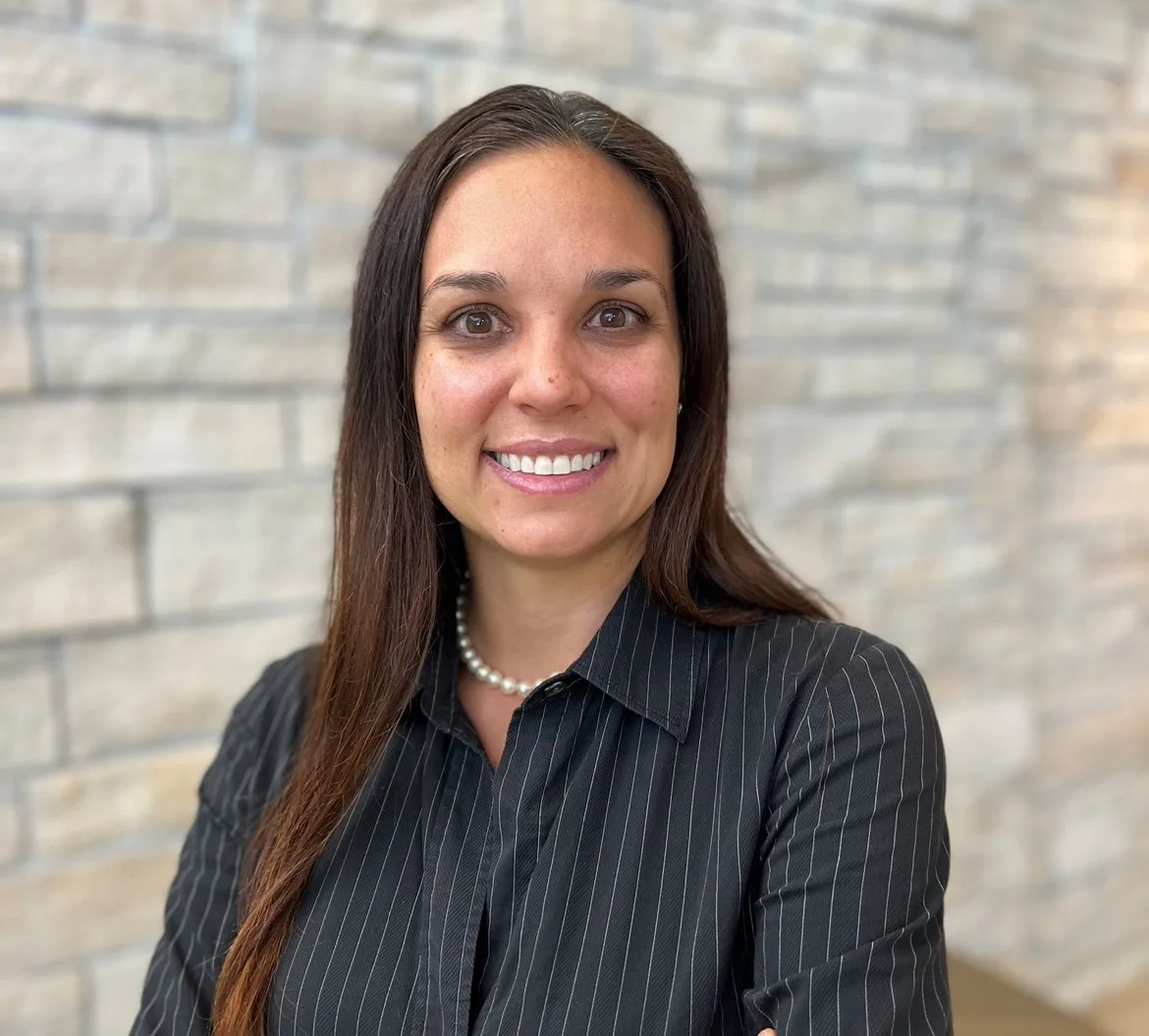
Andrea Shaffran is an Executive Assistant to eight executives, the District Secretary for the Board of Directors, and the Designated Election Official for the Aspen Valley Hospital District. In this episode of The Leader Assistant Podcast, Andrea talks about her role supporting eight executives, and the additional roles she has in her organization, how she manages the workload, and tips for making an impact on company culture.
Leadership Quote
“If your actions inspire others to dream more, learn more, do more and become more, you are a leader.”
John Quincy Adams
About Andrea
Andrea Shaffran is an Executive Assistant to eight executives, the District Secretary for the Board of Directors, and the Designated Election Official for the Aspen Valley Hospital District. She currently serves as the Western Healthcare Alliance Executive Assistant Peer Network Chair. This organization helps 30 rural hospitals in Colorado, Utah, and Michigan find collaborative solutions, including resource sharing, to help save its members money to keep healthcare in rural communities local and sustainable. Andrea also serves on the Employee Housing Committee for the hospital to find creative solutions for providing staff with affordable housing options. She is also spearheading the redevelopment of the beloved Volunteer Program, allowing the hospital to reconnect with the community post-COVID and enhancing employee morale. Andrea holds a Bachelor of Science in Business Administration from the University of Central Florida with a minor in management and she is currently pursuing her Master’s in Business Administration. She is passionate about learning and actively seeks new leadership opportunities and company culture projects that leverage her strengths to create a positive impact on the organization and her community. She loves being in a position that allows her to advocate for staff while supporting the organization's strategic plan. Last month, Andrea was awarded the 2023 American Society of Administrative Professionals Impact Award for her problem-solving, resourcefulness, and dedication to enhancing staff morale. The executive team refers to her as the “Swiss army knife of the hospital.”
Episode links
Transcript
Read the full transcript4,262 words
Andrea · 0:00
Hi, my name is Andrea Shaffran. Today's leadership quote is by John Quincy Adams, and it is, If your actions inspire others to dream more, learn more, do more, or become more, you are a leader.
Speaker 3 · 0:20
The Leader Assistant Podcast exists to encourage and challenge assistants to become confident, Game-Changing Leader Assistant.
Jeremy · 1:01
Hey friends, welcome to The Leader Assistant Podcast. It's your host Jeremy Burrows and welcome to episode 244. You can check out the show notes for this episode at leaderassistant.com/244. leaderassistant.com/244. And today I am speaking with Andrea Shaffran. Andrea is an executive assistant to eight, yes, you heard that right, eight executives. And she also holds multiple roles and titles and we'll let her kind of walk through that. But Andrea, welcome to the show.
Andrea · 1:37
Hi, thank you. Thanks for having me. This is an honor.
Jeremy · 1:41
Yeah, what city are you in?
Andrea · 1:44
We're in Aspen, Aspen, Colorado.
Jeremy · 1:47
Aspen, nice. So the movie Dumb and Dumber is probably, you know, kind of your guys' favorite movie, right? It's all about Aspen.
Andrea · 1:55
Yes, and Aspen Extreme, they love that too.
Jeremy · 1:58
Nice, nice, awesome. Well, let's jump right in then. I first wanted to hear a little bit about you personally. What's your favorite hobby? Do you have a favorite book or drama show or comedy movie that you're into these days?
Andrea · 2:20
So my favorite hobby, I actually have quite a few of them. I'm very outdoorsy being in Aspen.
Jeremy · 2:28
Yes.
Andrea · 2:29
We love hiking, camping, whitewater rafting, rock climbing, pretty much anything outside. My favorite book, I'm currently taking my MBA course, so I don't really have any time for reading outside of that, but I'm getting an MBA, so that's really exciting. Thank you. My favorite movie is an older one, but I still love it. It's Jurassic Park. I'm really into paleontology and archaeology, although they're not totally correct.
Jeremy · 3:05
Right. Right in the movie.
Andrea · 3:07
But it's still a fun movie.
Jeremy · 3:09
Oh, yes.
Andrea · 3:10
Love it.
Jeremy · 3:11
Love that movie. Classic. Watch it with my boys a couple of times. Love it. Love it. Well, yeah, thanks for being on the show again. What was your career journey like and how did you end up being an assistant?
Andrea · 3:30
So I ended up getting my EMT certification in 2011, and I became a ski patroller for six years, as well as overlapping, working in an ER for six years. We had several years of overlap between the two. And then I ended up in this position because I applied for a different one, and they came back and said, I'd be perfect for this role and wanted me to apply. I kind of fell into this on accident, but it was an incredible journey to get here. And I also used to teach the EMT classes at the community college, which was a lot of fun as well. But I ended up in this position and it really clicked, and it fell into the first time I'm really using my degree, which was in BS in business administration with a major in management.
Jeremy · 4:26
Nice. So you're the first assistant role, and you're still in it eight years later.
Andrea · 4:34
Exactly. Well, this is two years in this position.
Jeremy · 4:36
Same organization. Yeah. Yes.
Andrea · 4:40
Yep.
Jeremy · 4:42
That's great. So what's your favorite part about being an assistant?
Andrea · 4:47
I, besides loving my ET members, I have eight incredible ET members, which is I'm really blessed for that. But I like taking on, in addition to all my other roles that I have, I really enjoy the cultural, organizational projects that enhance culture and morale. That is really what I thrive on. I love it.
Jeremy · 5:16
So, okay, you said eight executives and I'm sure there's an assistant listening. Hopefully, they're being safe as they're driving to work or driving home and listening to this name. Didn't swerve off the road when you said eight executives. That's how many you support. But there's also probably another assistant that's like, well, hey, well, I support nine, technically, so, you know, that's nothing. What, like, how did that happen? Did you start off as an assisting eight? Did you start off as assisting a department, which kind of involved a bunch of people? How did that come to be?
Andrea · 5:52
So it started out as eight right off the bat. I had nobody to train me. This position was vacant, I think, for six months because of COVID. They just didn't hire anybody new. And then I got hired for eight. And then I'm also the district secretary for the five board of directors and on the designated election official for the Aspen Valley Hospital Special Taxing District.
Jeremy · 6:22
So were those roles tacked on over the years? Nope.
Andrea · 6:29
That was this role. And as far as I know, it was the role I applied for and I received. I didn't really know too much about the position before I applied and read the job description.
Jeremy · 6:45
So you knew what you were signing up for, is the point.
Andrea · 6:48
I did, but it was pretty funny because in my interview, I even looked at them and I was like, reading this job description looks like I need an assistant. And they all laughed.
Jeremy · 6:58
That's actually was going to be my next question. You know, it's been, you know, a few years now. Like what have you gotten to the point where you're like, no, I literally need an assistant. Or, yeah, how have you navigated the workload?
Andrea · 7:14
Depends on the week that you ask me. Oftentimes, I do think I need my own assistant or just a second assistant. It would be nice. But like I said, I take on extra projects. I don't do well with downtime. So in the rare event, I find downtime. I tend to find a staff morale project to fill it. And then it always takes longer to accomplish than the two weeks I had available. But it becomes my favorite part of my job. I just continue to do it. I halfway bring it upon myself, all the extra, just because I love seeing the difference in staff morale and the appreciation it brings.
Jeremy · 7:59
Well, so what's maybe the best, speaking of like company culture and staff morale, what's maybe the biggest thing that you've seen done poorly at organizations or companies or teams that's negatively impacted staff morale?
Andrea · 8:17
I, in my opinion, I think one of the quickest ways to deflate staff morale is to not show recognition and appreciation for the work that is done, as well as, I'm sure, other companies as well and organizations during COVID. People that were able to retire did retire, leaving remaining staff required to pick up the additional work through extra hours, and that alone increases burnout. This was a hospital, so we clearly had our own set of challenges in addition to the rest of the world with COVID and trying to figure out how to navigate it, which is what led to the Zen Den that I created to help with support for that.
Jeremy · 9:13
Okay, so what is Zen Den?
Andrea · 9:17
So the Zen Den is a room that, I was here in this position my first week. I started in 2021 and I noticed a huge group of people that were upset and the situation was tense, the stress levels were high, the staff morale was low, like I said, a bunch of people retired. And we were always used to being in the 90 percentile for staff satisfaction nationwide across other hospitals. So having a little morale wasn't something we were used to, we took it extremely seriously. And I was like, we need to create a Zen Den, we need a place for staff to go decompress, relax, and just start new in their shift. So we weren't sure if people were going to use it. So I originally started with a $300 budget. I was like, how am I going to do this on a $300 budget? I wanted massage chairs, massage guns, aromatherapy, second machines, yoga mats, stretch bands, foam rollers, artwork, ambiance, all this stuff. I'm like, I have $300?
Jeremy · 10:34
That's like one massage table.
Andrea · 10:37
Exactly. So I had to be very resourceful. So I went to my directors and I was like, this is our one chance to make this happen. So I asked what they can donate. And I was surprised how many people were very eager to contribute to this cause and make my vision a reality. I opened it up in a week with $200 spent. It was incredible. So May marked our one year anniversary. It took me a few months to get the approval. May marked our one year anniversary. And it has been so well received that it has become part of our culture. And I just want to say to all the other companies and everything else, the psychological benefits, me being an EMT, I thought of it, of massage, aromatherapy, and relaxation are immense. It helps with anxiety, depression, anger, frustration, fatigue. There's also physical benefits. It's lower blood pressure, reduced muscle tension, all kinds of things. And it's been great because you walk around and people are so excited to have this. And it was something so easy to implement. And it created so much staff morale and became part of the culture. It was just amazing. Stories that poured in from people saying, oh, I just was on my feet for six hours in a long surgery. I couldn't wait to get a foot massage. Or, oh, I have an hour and a half ride home. I went and got a 15-minute massage and I was able to be comfortable on my drive. Or 15 minutes later, I could go back to my desk and be more productive. Amazing.
Jeremy · 12:22
Wow, that's awesome. So what's the kind of guideline or policy about it? Is it essentially just you can use it whenever you're on your break or you're before or after work? Do you have to book time in the room? I'm sure there are assistants like me that are thinking of all the logistics. Well, you've got a certain amount of employees and you've got this one room and they're all fighting over it or somebody's maybe you've got that one person that you're thinking is going to just be there all the time. How do you navigate that?
Andrea · 12:55
So it's a little bit of all the above. We do have obviously the regulars. I did create all the sign-ins and so far it's worked out really well because we have four chairs in there plus the massage guns and all the other equipment. We haven't had to implement a sign-in sheet. It's worked pretty well. Sometimes you go in there and all the chairs are used and you come back in 15, 20 minutes later and there's a spot. So we haven't had to do a sign-in, but I have one if we get to that point. But it's been great. I mean, people love it, which makes me feel good because all the extra work and love that went into it and I actually maintain it every day on the one that goes in there and make sure the aromatherapy is in and that it's living up to its full potential. So it's been wonderful.
Jeremy · 13:49
Nice work. Nice work. And then I heard you won an award related to this project. Is that right?
Andrea · 13:57
I did. I did. Last month on October 24th, I think, it was the Administrative Professionals Conference by the American Society of Administrative Professionals. They awarded me the 2023 Impact Award for Excellence in Innovation. I'm extremely honored.
Speaker 3 · 14:18
So thank you so much.
Andrea · 14:19
It was an incredible experience.
Jeremy · 14:23
That's great. Well, congrats again. Thank you. And way to contribute and make impact on your company culture. Cool. Well, let's talk a little bit about back to your primary roles and having multiple primary roles. Are there any stories or times or seasons when they conflicted with each other or those different hats that you wear, if you will, were up against each other and battling for your time? Or is that like every day?
Andrea · 15:04
No, I wouldn't say every day. I think it ebbs and flows, but the busiest time for me is during elections, because that has to take precedence over everything else. Those get run through the Colorado Secretary of State. That is one phone call I don't want to receive. Those have very specific state statutes. That has to take priority, and that's usually when most of my conflicts come in. Everything else I can time manage pretty appropriately. I'm not saying I'm the ideal candidate of representing work-life balance. I'm sure a lot of us suffer with that. So yes, I do put in extra hours to get some of this stuff done. But for the most part, most days, I can usually work what I really need to in each week. If I have to put something off a couple of days to finish something else, obviously anything with the board meetings, those also take precedence over even some of my executive requests that come in because we have to have it for public meetings. Getting that stuff done also is pretty important. And then with my executives, I really have to just look at what requests are coming in, what the deadlines are. Is there anyone else that I can have help with some of these tasks? But usually, some of them, and not everybody, requires my full attention. There are people that are very independent and just need me for special events or planning some sort of project. So that's also nice. And I, being the person that likes to have tangible results, I love the project. So when I get those special projects that you could actually tick off boxes, that things are, that's done, that was fun. It makes the job way more exciting. So I tend to like taking on that sort of stuff. It's a lot of the scheduling, I think, can be a challenge when you're trying to get 13 people because you need all the ET members and the directors. Or when you need, it's the scheduling is honestly one of the hardest parts, trying to manage that many people's schedules.
Jeremy · 17:47
Oh, yeah, that's, I was going to actually ask you because, you know, you're assisting eight executives. Are they all, are like half of them at one level and the other half at another level as far as like org chart goes?
Andrea · 18:01
So I have the CEO. And that's my direct report. But then I assist all of his direct reports. Well, I guess all of his chiefs, I should say. He has other direct reports that aren't on the chief level. But I assist them. A lot of them are pretty self-sufficient. Again, unless it's seasonal projects. So it's more... I help everybody. And then I get the directors that come in for all of these eight that are like, I need help with this. And we have, I think, 40 or 50 directors that we have. So I'm never bored at work.
Jeremy · 18:49
Right. You're never bored. So have you heard of the... And I don't know if this is in the hospital world. I don't know if this is a common or not common title, but have you heard of the Chief of Staff title? And is that something that you've thought of? Or is that very different because it's in the medical world?
Andrea · 19:11
It is very different because it's in the medical world. It has to be a physician. Unless I go back to med school.
Jeremy · 19:18
Right, right.
Andrea · 19:19
That's what can happen for me.
Jeremy · 19:22
So your title is Executive Assistant. That's the assistant title you have, right? Plus those other things.
Andrea · 19:30
Correct.
Jeremy · 19:31
And so it's like District Secretary for the Board of Directors, Designated Election Official, Western Health Care Alliance Executive Assistant, Peer Network Chair. Is that kind of a separate thing? It is.
Andrea · 19:48
And we actually work with the WHA is what they call it. There's a whole bunch of hospitals. It's 30 rural hospitals in Colorado, Utah and Michigan. And we try to collaborate and share resources to keep our costs lower for patients and for hospital. There's more buying power in greater numbers. And as you can imagine, rural hospitals are smaller and don't have the buying power that these major trauma centers in the big cities have. So this is our way to try and maintain costs and make sure health care is affordable and viable in rural communities.
Jeremy · 20:31
And then, do you... So I guess the reason I asked about the Chief of Staff, and I know, again, it's different in the medical world, but some people would listen to all these things that you've got your hands in, and they would say, well, you're more of a Director of Operations or, you know what I mean? Like, whatever the, you know, insert different title in there, do you feel that the multiple roles and the multiple titles kind of covers that and it's not necessarily necessary for you to have this kind of overarching title that encompasses all of that? Does that make sense?
Andrea · 21:16
It does make sense. I think I'm in a great place at the moment. As I'm comfortable with my position, I'm learning new stuff every day. I've grown tremendously across all of these roles that I've had. So I'm super grateful for that. But I am getting my MBA. So we'll see what happens and we'll see who retires and see if there's anything that opens up that I'd be perfect for. I want to keep my options open, you know, but I love that. I love where I'm at right now. I love the people I work with. As my team starts to retire, my feelings may evolve.
Jeremy · 21:58
Yeah, good answer. Good answer. Cool. Well, what's maybe, you know, there are a lot of assistants that support multiple executives. I talked to a couple the other day. One was like, oh, I support four. One was like, I support three. The other one was like, I support six. What's been maybe, maybe just like a top time management or executive management, energy management tip, productivity tip, whatever you want to call it, for those listening who do have more than one executive they support.
Speaker 2 · 22:41
Are you ready to elevate your career in 2024? I'm Maggie Olson, founder of Nova Chief of Staff Certification, the first of its kind online course for aspiring and existing Chiefs of Staff. With curriculum taken directly from on-the-job responsibilities, Nova's self-paced learning modules provides you with hands-on experience so you can feel competent and confident moving into a Chief of Staff style role. It's the perfect next step for executive assistants. Head to leaderassistant.com/nova to learn more, grab the syllabus and enroll today.
Andrea · 23:18
So for me, that to me is very subjective. I think everyone has to find their own style. They have to stick with it and they have to grow with it and they use it repetitively because that's what's gonna make you more productive is just working like a well-oiled machine. Until you outgrow your system, then you have to evolve your system. So I kind of think for me, when I got hired, because I was thrown into this situation with eight executives, starting a new position that I had never done before, I had experience in a lot of various parts of the job. I served on my own board of directors for HOAs and other things like that for almost a decade. So I had experience with all of that. I had a lot of experience in various parts of it, which is I think why my transition was pretty smooth into this. But I think that for me, I was really nervous having eight executives that would all have their own expectations of how something should be done. So I went and created an executive assistant, or not executive assistant, but an executive interview questionnaire. When I told, they asked me when I was going into my interview, if I got this position, what would I need from them? And I told them I would need 30 minutes of their time in my first week. I wanted to interview them and ask them all kinds of questions. I knew that there'd be a learning curve, there would be growing pains, but why not make them as quick and painless as possible? So the things I asked them were their strengths, their weaknesses, what kind of calls they liked. If they didn't want to take certain calls, who should I give them to in their absence? Or I wanted to know what they thought would be my hardest challenge and what they would need most for me to make it as easy as possible. I wanted to know their pet peeves. I didn't want to be sitting at my desk and doing something that is causing someone to fester ill will towards me that I didn't even know was there. I wanted to get that out of the way immediately. If you do a lot of travel, ask them for their frequent flyer miles or do they prefer aisles or is there an airline they like? Ask them about their anniversaries, birthdays, all that kind of stuff is nice to have so you can even remind them, hey, just so you know this is coming up, don't forget. So there's a lot of, it was a very, it was a great way to learn my position and learn each individual, something that would take me years to learn, even one person, let alone eight, it really sped the process up and then they also knew I took my transition into this position extremely seriously. So they also were building trust with me right off the bat knowing that I was there to have their back.
Jeremy · 26:55
Yeah, that's great. And I know you shared this in our Leader Assistant Circle community. And so I'll link to that in the show notes so people can check out that template. I think it's a super helpful resource, executive team member questionnaire. And again, you can check out the show notes with that link and others on leaderassistant.com/244, leaderassistant.com/244 to check out that resource. Awesome. Well, Andrea, what's the maybe one thing that you would want to say to all assistants of the world if you could put it on a billboard on the busiest highway in the world, or if you could put it in a 30-second Super Bowl ad commercial? What's kind of the one quick, inspirational, or challenging, or encouraging note that you'd like to say to the assistants listening?
Andrea · 28:06
Empathy and active listening go a long way. But also remember that I heard a quote, which I thought was really great because on those challenging days, even a plane has to take off going into the wind. And I thought it was really interesting concept, because we do face a lot of challenges. There's a lot of problem-solving. So even the bad days, you can learn something from. Learn from it, take learning opportunities, leadership opportunities, embrace it all, because you're really investing in yourself. And I think that would probably be my biggest thing is I like to learn. I'm very much a learner, so use every experience as an opportunity.
Jeremy · 29:07
Well said. And you said you're taking your MBA. Obviously, that shows that you like to learn as well. What would you say to those that have considered that? I know there's a lot of assistants that have done that or considering, should I get my MBA? What was the thing that pushed you over the edge to actually follow that path?
Andrea · 29:29
I've wanted to for a good bit of a decade, and I started applying for MBA programs, and then I ended up getting this role, and I knew that this role was going to be a challenge to learn. So I put it on hold. And now that I'm comfortable in the role and I know what to expect, I just knew if I didn't do it now, it might not ever happen. So I decided to do it, and I'm extremely grateful that I'm taking this opportunity that I have.
Jeremy · 30:01
How long have you been in the MBA process?
Andrea · 30:05
I just started. Yeah, I have just started, but the program I chose is great because it's 100% competency-based. So you can move through it as quickly as you can master the material.
Jeremy · 30:23
Well, thank you so much, Andrea, for being on the show. Thanks for sharing a little bit of your story and really appreciate the work you're doing in Aspen and just the impact you're having on your team. What's the best place for those listening to reach out if they want to say hi?
Andrea · 30:43
I'm on LinkedIn. Awesome. Yeah, I'm on LinkedIn with Andrea Shaffran.
Jeremy · 30:49
Great. Well, I'll put that in the show notes. Again, leaderassistant.com/244. Be sure to reach out, say hi to Andrea and thank her for being on the show. Thanks so much. Best of luck to you and your multiple executives and multiple roles and multiple hobbies as well. We really appreciate your time.
Andrea · 31:10
Thank you so much for having me. This has been an honor.